

Germany offers exceptional scenic drives spanning medieval castle routes to Alpine mountain passes, Rhine Valley vineyards to Baltic Sea coastlines. These legendary touring routes combine breathtaking landscapes with cultural treasures creating unforgettable road trip experiences.
Well-maintained highways, picturesque back roads, and themed routes enable comfortable exploration through diverse terrain. From fairytale villages to modern autobahn stretches, German roads deliver both efficiency and scenic beauty.
This comprehensive 2026 guide explores Germany’s finest scenic drives through detailed route descriptions covering Bavaria’s Alpine roads, Romantic Road medieval charm, Black Forest mountain passes, and hidden touring gems. Plan unforgettable driving adventures through Germany’s most spectacular landscapes.
Please note that this article contains affiliate links. Learn more about it on our Disclosure page. We use ads to support our small business – we hope you don’t mind them too much.
Top 12 Scenic Drives Across Germany
Germany offers incredible scenic drives that showcase mountains, rivers, forests, and charming towns. These top 12 routes provide breathtaking views and cultural experiences, presented in no particular order.
From winding alpine roads to peaceful countryside lanes, each drive presents unique landscapes and attractions. Exploring Germany by car along these scenic routes promises adventure, relaxation, and memorable journeys.
Bavaria’s Legendary Routes for Road Trips
Bavaria offers some of Germany’s most picturesque driving routes. From alpine valleys to medieval towns, these iconic roads provide scenic views, cultural experiences, and unforgettable journeys for every traveler.
Travelers can enjoy charming villages, historic landmarks, and natural beauty along each route. Exploring Bavaria by road allows freedom, adventure, and a true taste of the region’s iconic landscapes.
1. The Romantic Road (Romantische Straße)
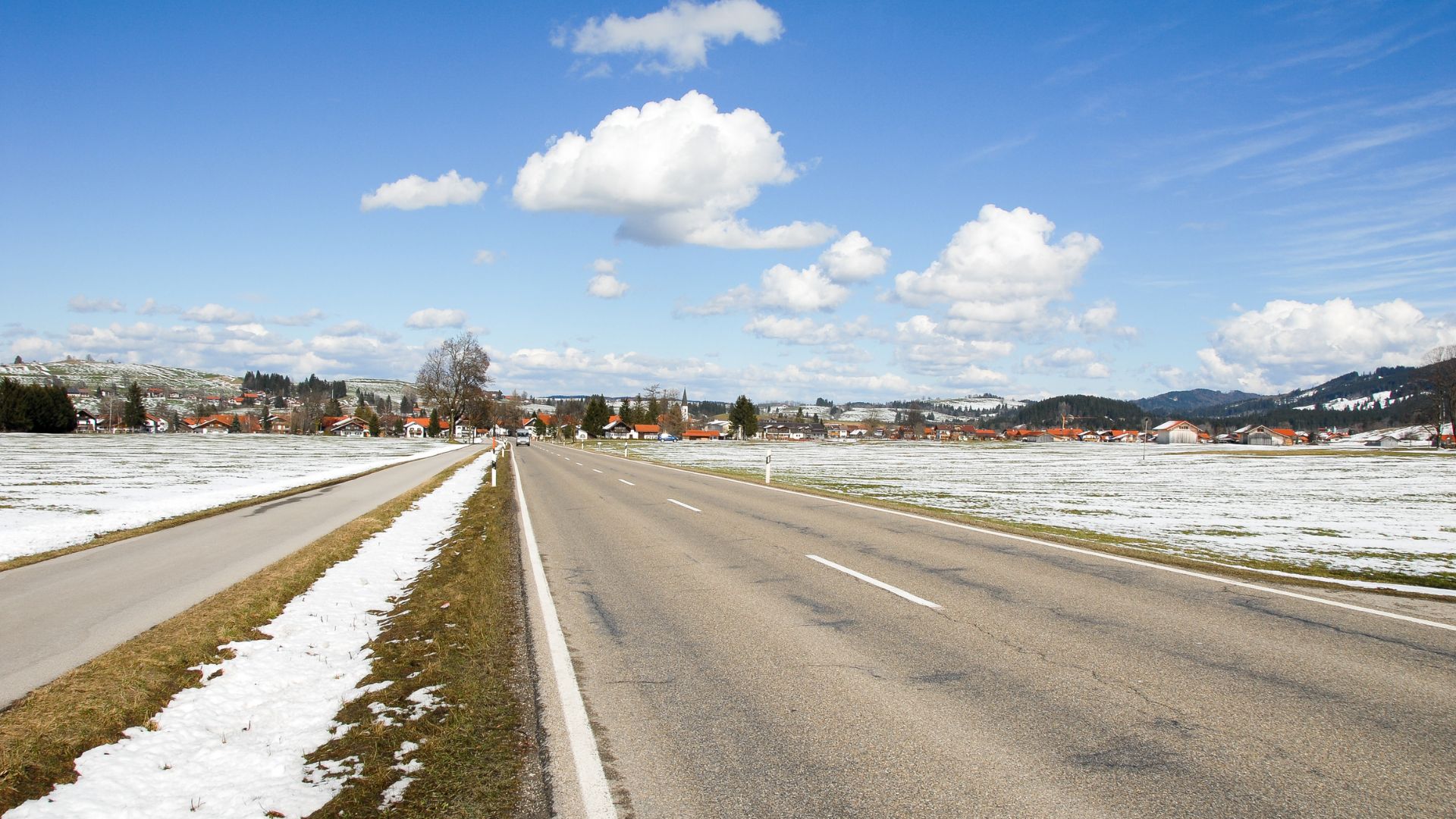
Germany’s most famous scenic route stretches 460 kilometers from Würzburg through medieval Franconia into the Bavarian Alps, ending near Füssen. This legendary drive delivers exactly what the name promises—romantic landscapes, fairytale castles, and storybook villages.
The route traces ancient Roman trade paths connecting northern and southern Germany, though modern designation dates to 1950 when tourism authorities created themed touring concepts. Today, it remains Germany’s most traveled holiday route.
Romantic Road Highlights:
- Distance: 460 km (286 miles)
- Duration: 3-5 days recommended
- Start: Würzburg
- End: Füssen
- Major stops: Rothenburg, Dinkelsbühl, Augsburg, Neuschwanstein
- Best season: May-October (avoid peak July-August)
Würzburg’s Residenz palace provides a magnificent starting point—this UNESCO baroque masterpiece features Tiepolo’s ceiling frescoes and elaborate court gardens. The historic Prince-Bishops’ residence demonstrates power and artistry.
Rothenburg ob der Tauber represents the Romantic Road’s medieval crown jewel, where completely preserved town walls surround cobblestone streets unchanged since the 14th century. Photographers capture Germany’s most iconic fairytale imagery.
Dinkelsbühl rivals Rothenburg’s preservation without overwhelming tourist crowds, maintaining an authentic small-town atmosphere. The completely intact 16th-century fortifications create an architectural time capsule.
Neuschwanstein Castle near Füssen provides a dramatic finale—King Ludwig II’s 19th-century fantasy inspired by Disney’s Sleeping Beauty castle. The white limestone towers against the Alpine backdrop create a perfect conclusion.
2. German Alpine Road (Deutsche Alpenstraße)
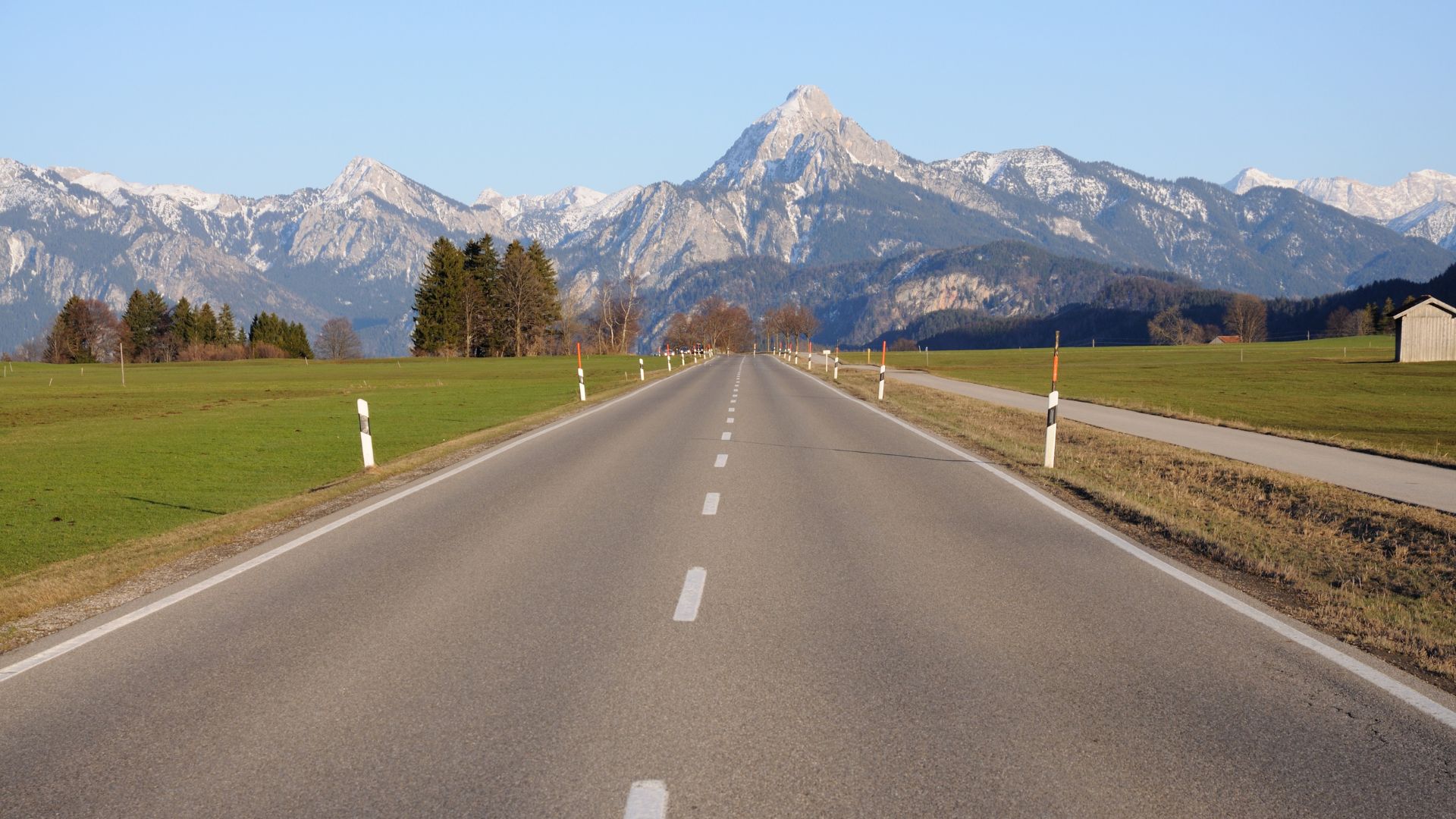
Stretching 450 kilometers from Lake Constance to Königssee, Germany’s oldest touring route (established 1927) winds through Bavaria’s most spectacular mountain scenery. This drive delivers Alpine magnificence without requiring mountain driving expertise.
The route parallels the Austrian border through the Allgäu and Upper Bavaria regions, connecting pristine lakes, baroque churches, traditional villages, and mountain resorts. Views rival Switzerland while maintaining distinctly Bavarian character.
Alpine Road Essentials:
- Distance: 450 km (280 miles)
- Duration: 4-7 days ideal
- Start: Lindau (Lake Constance)
- End: Berchtesgaden (Königssee)
- Elevation: 450m to 1,200m
- Highlights: Füssen, Oberammergau, Garmisch, Chiemsee
Lindau’s island old town occupies Lake Constance shores where Germany, Austria, and Switzerland converge. The harbor’s Bavarian Lion statue and lighthouse create a distinctive entrance.
Oberammergau displays elaborate Lüftlmalerei facade paintings depicting religious scenes and trompe-l’oeil architectural details. The village hosts the decennial Passion Play (next 2030) attracting worldwide attention.
Garmisch-Partenkirchen combines Olympic winter sports heritage with Zugspitze access—Germany’s highest peak (2,962m) reaches via cable car. The twin town balances ski resort energy with Bavarian traditions.
Königssee’s emerald waters reflect surrounding mountains in Berchtesgaden National Park. Electric boats maintain a pristine environment while demonstrating famous echo effects against Watzmann’s eastern face.
3. Castle Road (Burgenstraße)
This 1,200-kilometer route connecting Mannheim to Prague ranks as Germany’s longest themed road, passing over 70 castles and palaces. The western German section delivers concentrated medieval architecture through Franconia.
The route intersects with Romantic Road at Rothenburg, enabling combination itineraries. Castle enthusiasts dedicate 7-10 days exploring thoroughly, though selective highlights enable shorter trips.
Castle Road Highlights:
- Distance: 1,200 km total (780 km in Germany)
- Major cities: Mannheim, Heidelberg, Rothenburg, Bamberg, Bayreuth
- Castles: 70+ fortresses and palaces
- Best for: History enthusiasts, photographers
- Duration: 5-10 days Germany section
Heidelberg Castle ruins dominate early route sections, where Renaissance grandeur crumbles romantically overlooking Neckar River. The partially destroyed palace inspired Romantic movement artists.
The route passes numerous smaller hilltop castles between major cities, many operating as hotels or museums. These fortresses demonstrate medieval defensive architecture evolution.
Bamberg’s seven hills support multiple castles while UNESCO-protected Old Town preserves exceptional medieval character. The bishop’s residence and traditional smoked beer (Rauchbier) enhance cultural experiences.
Driving Through Rhine and Moselle Landscapes
The Rhine and Moselle valleys showcase Germany’s stunning river landscapes, historic towns, and lush vineyards. These scenic routes provide travelers with breathtaking views, cultural experiences, and memorable road trip adventures.
Visitors can enjoy wine tasting, riverside walks, and charming villages along the way. Exploring these valleys by car offers a perfect mix of nature, history, and authentic German culture.
4. Romantic Rhine (Romantischer Rhein)
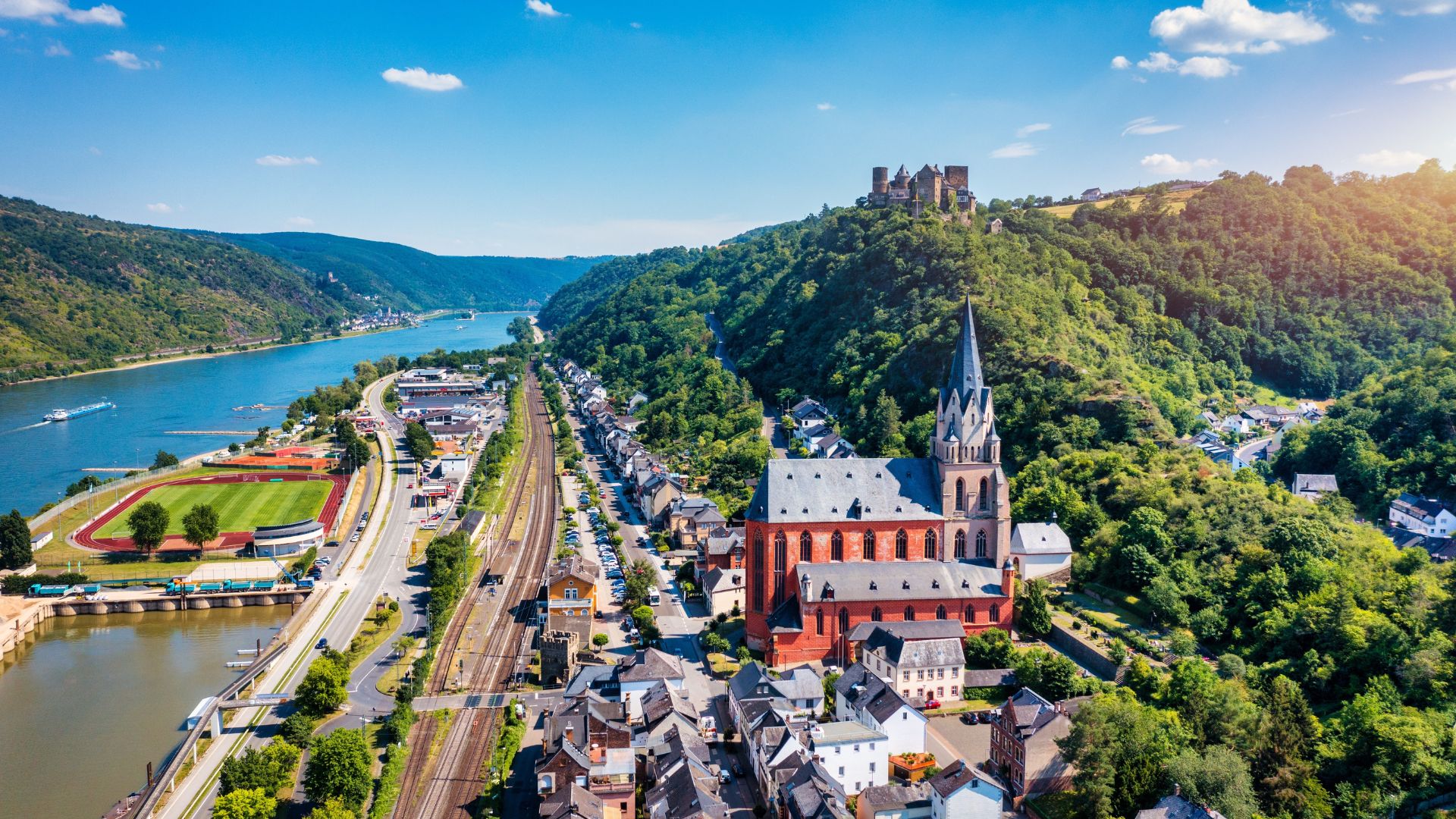
The 65-kilometer UNESCO World Heritage Rhine Gorge between Bingen and Koblenz concentrates over 40 castles along dramatic riverside cliffs. This legendary stretch delivers Germany’s most romantic river scenery.
Vineyard-covered slopes produce exceptional Riesling wines while medieval fortresses crown nearly every hilltop. The narrow gorge created strategic importance throughout history, evidenced by fortress density.
Romantic Rhine Details:
- Distance: 65 km gorge (155 km full route)
- Start: Mainz
- End: Koblenz
- Major towns: Rüdesheim, Bacharach, St. Goar, Boppard
- Best viewpoint: Loreley Rock
- Wine region: Rheingau, Mittelrhein
The Loreley Rock rises 132 meters above the Rhine’s narrowest point, where legend describes siren luring sailors to shipwreck. The dramatic cliff provides panoramic valley perspectives.
Burg Rheinfels above St. Goar represents the Rhine’s largest castle ruins, with extensive underground tunnels and casemates exploring. The fortress demonstrates 16th-century military architecture.
Rhine cruises provide optimal valley appreciation though driving the riverside roads (B9 and B42) enables flexible village stops and winery visits. Ferry crossings connect both banks.
5. Moselle Wine Route
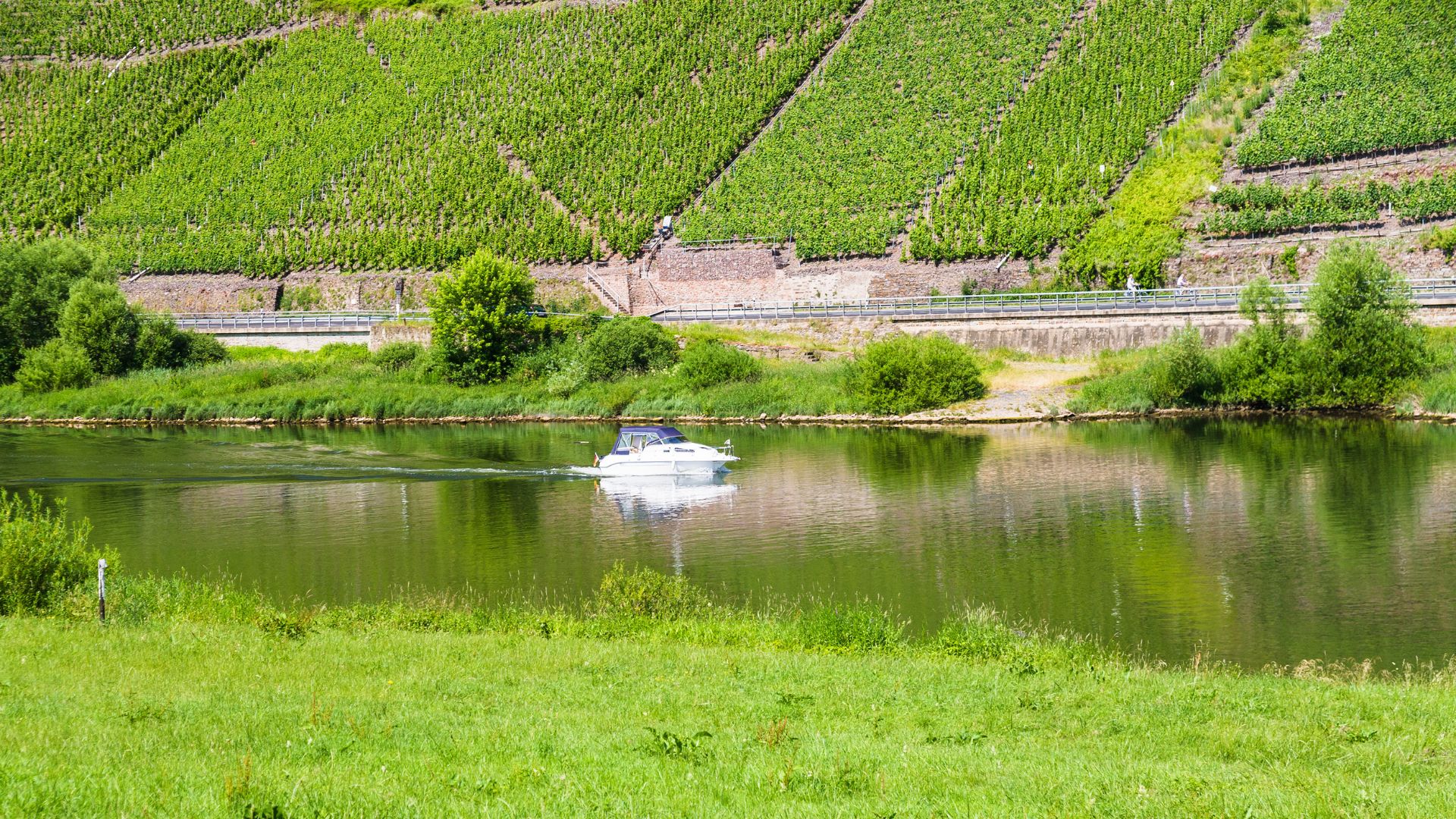
The Moselle River winds 195 kilometers through Germany’s steepest vineyard slopes (up to 70 degrees), creating dramatic landscapes and exceptional Riesling production. The route follows the river from Trier to Koblenz.
Medieval wine villages cluster at valley bottoms where half-timbered houses and Gothic churches preserve authentic character. The gentle riverside road suits leisurely driving with frequent tasting stops.
Moselle Route Highlights:
- Distance: 195 km
- Start: Trier (Roman heritage)
- End: Koblenz (Deutsches Eck)
- Major stops: Bernkastel-Kues, Cochem, Beilstein
- Steepest vineyard: Calmont (68-degree slope)
- Wine focus: Riesling production
Bernkastel-Kues preserves medieval market square surrounded by half-timbered houses and Renaissance fountains. The Doctor vineyard produces Germany’s most expensive wines from 75-degree slopes.
Cochem’s Reichsburg Castle crowns a rocky outcrop above town where neo-Gothic reconstruction creates a fairytale silhouette. Evening illumination enhances the romantic atmosphere.
Burg Eltz occupies a stunning side-valley position surrounded by forests—this privately-owned medieval fortress never fell to enemies, preserving authentic character. The same family maintains ownership for 850+ years.
Picturesque Roads Across the Black Forest
The Black Forest region offers scenic routes winding through dense forests, rolling hills, and charming villages. Travelers can enjoy breathtaking landscapes and peaceful drives along Germany’s iconic natural region.
Along the routes, visitors encounter traditional towns, historic landmarks, and serene nature. Exploring the Black Forest by car provides adventure, cultural experiences, and unforgettable views of Germany’s most famous forested landscapes.
6. Black Forest High Road (Schwarzwald-Hochstraße)
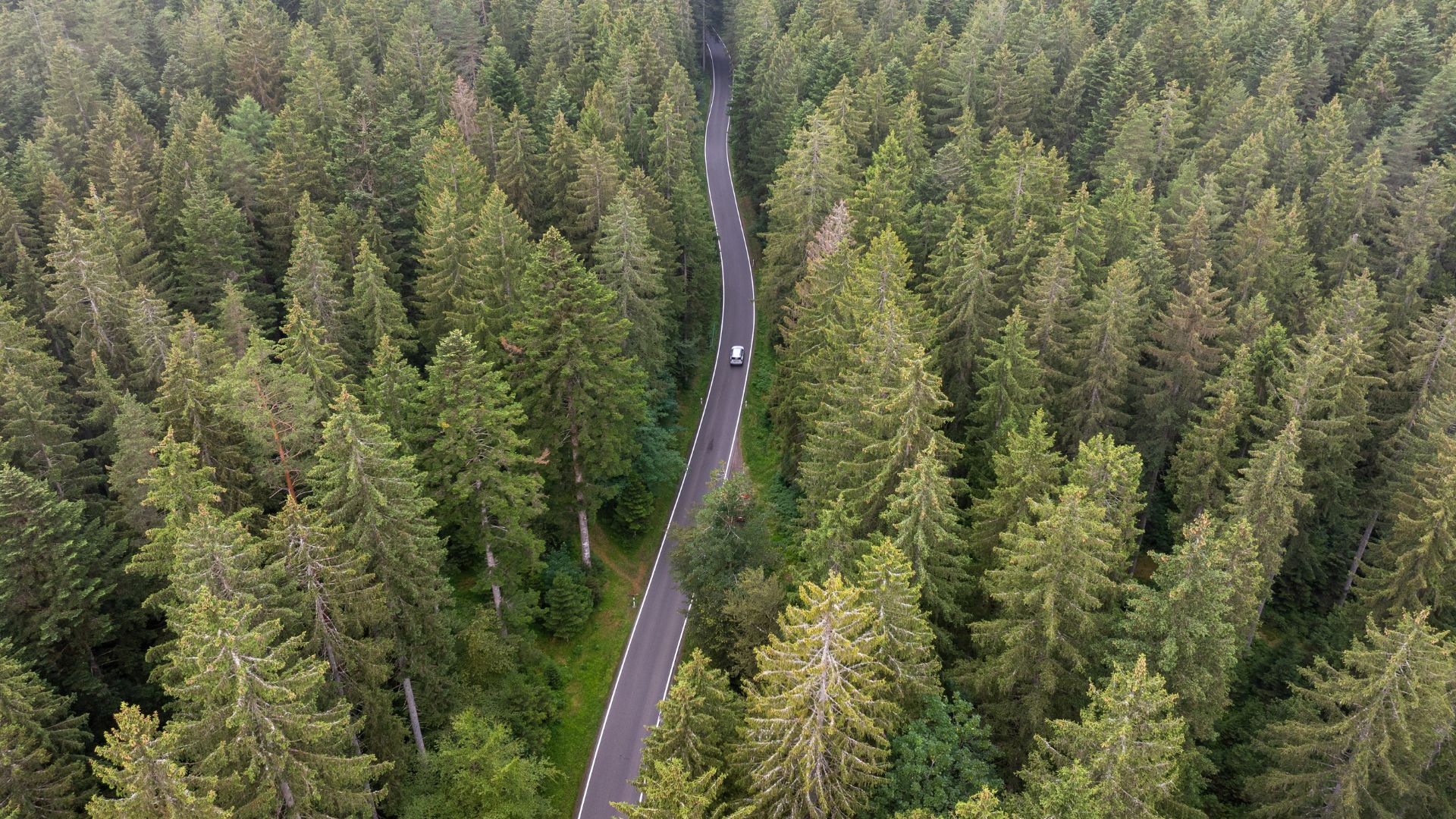
This 60-kilometer mountain ridge road connects Baden-Baden to Freudenstadt through dense evergreen forests offering panoramic views toward Rhine Valley and Vosges Mountains. Germany’s oldest scenic route (1930s) maintains classic character.
The well-maintained B500 road climbs to 1,000+ meters elevation providing overlooks, waterfall access, and hiking trailheads. The route demonstrates Black Forest’s characteristic deep-forest atmosphere.
Black Forest High Road Features:
- Distance: 60 km
- Route: Baden-Baden to Freudenstadt
- Elevation: 600m to 1,100m
- Major stops: Mummelsee, Hornisgrinde viewpoint
- Character: Dense forest, ridge-top driving
- Best season: May-October
Mummelsee glacial lake occupies a hollow surrounded by forest at 1,036 meters elevation. Local legends describe water nymphs inhabiting the mysterious dark waters.
Hornisgrinde viewpoint (1,164m) provides Black Forest’s highest road-accessible point, offering panoramas across Rhine Valley to French Vosges on clear days. The observation tower extends views further.
The route passes numerous traditional Black Forest farmhouses demonstrating distinctive architecture with massive hipped roofs and carved wooden details. Seasonal decoration enhances photographic opportunities.
7. Black Forest Valley Route
Alternative to the ridge-top High Road, the valley route (B28, B294) follows lower elevations through traditional villages, past lakes Titisee and Schluchsee, and medieval Freiburg.
This less dramatic but equally scenic alternative suits travelers preferring gentler terrain while accessing Black Forest attractions. The route combines nature with cultural destinations.
Valley Route Highlights:
- Freiburg Gothic cathedral and old town
- Titisee lake resort activities
- Triberg waterfalls (Germany’s highest)
- Cuckoo clock workshops
- Traditional Black Forest cake origins
Road Trips Through Northern and Eastern Germany
Northern and eastern Germany offer diverse landscapes, from coastal shores to rolling plains. Scenic routes through these regions provide travelers with unique cultural experiences and breathtaking natural views.
Visitors can explore historic towns, seaside villages, and vibrant countryside along the way. Traveling these routes by car allows freedom, adventure, and a true taste of Germany’s northern and eastern charm.
8. Fairy Tale Road (Märchenstraße)
Following Brothers Grimm connections, this 600-kilometer route from Hanau north to Bremen links towns, forests, and castles inspiring famous fairy tales. The literary theme creates a unique touring concept.
Landscapes evolve from gentle Hesse hills through Weser Renaissance towns to northern Bremen maritime atmosphere. The route emphasizes cultural heritage over dramatic scenery.
Fairy Tale Road Details:
- Distance: 600 km
- Start: Hanau (Grimm birthplace)
- End: Bremen (Town Musicians)
- Major stops: Kassel, Hameln (Pied Piper), Bodenwerder
- Theme: Grimm Brothers fairy tales
- Best for: Families, literary enthusiasts
Sababurg Castle (“Sleeping Beauty”) occupies an isolated forest position where tours explain fairy tale connections. The atmospheric ruins and surrounding Reinhardswald forest enhance magical associations.
Hameln (Hamelin) celebrates Pied Piper legend through daily reenactments, statuary, and tourist attractions. The well-preserved medieval center provides an authentic atmosphere.
9. Baltic Coast Route
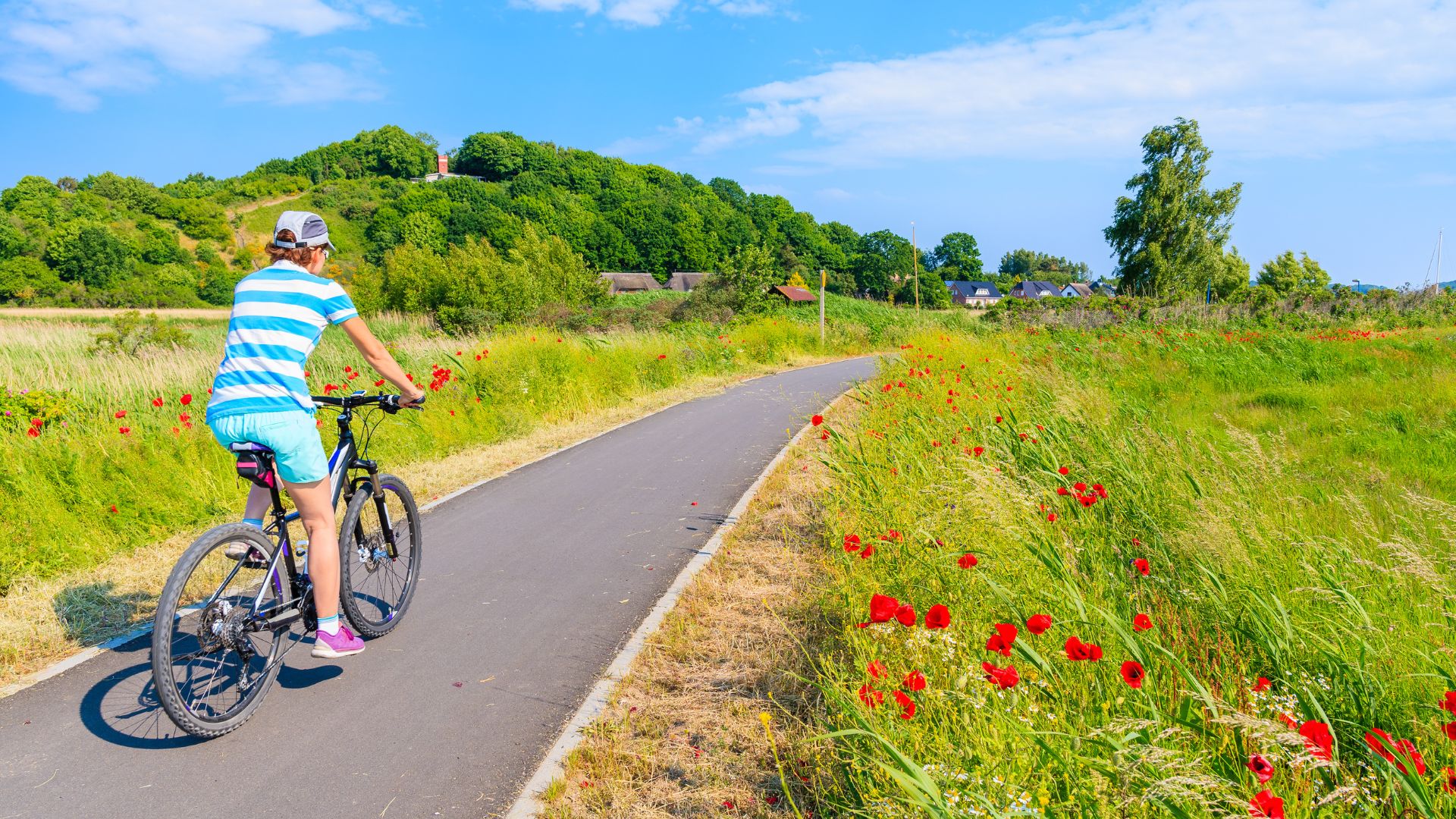
Germany’s northern coastline offers distinctive scenery through historic Hanseatic cities, white chalk cliffs, and sandy beaches. This 700-kilometer route reveals Germany’s maritime heritage and beach resort culture.
The route connects Lübeck through Wismar, Stralsund, and Rügen Island to the Polish border. Baltic Sea views alternate with inland forests and lake districts.
Baltic Coast Highlights:
- Distance: ~700 km
- Major cities: Lübeck, Wismar, Stralsund
- Rügen Island chalk cliffs
- Usedom Island beaches
- Hanseatic brick Gothic architecture
Rügen Island’s Jasmund National Park protects dramatic chalk cliffs rising 118 meters above turquoise Baltic waters. Caspar David Friedrich immortalized these formations through Romantic paintings.
Must-Know Driving Information for Germany
Understanding Germany’s driving rules, road signs, and speed regulations is crucial for a smooth trip. Proper planning ensures safety and a stress-free experience on scenic routes across the country.
From knowing rest stops and fuel stations to packing essentials and navigation tips, practical driving information helps travelers enjoy their journey comfortably while exploring Germany’s beautiful landscapes by car.
Planning Your Route
German scenic routes require 3-10 days depending on length and thoroughness. Strategic planning balances driving time with exploration stops.
Route Planning Tips:
| Route | Minimum Days | Ideal Days | Daily Driving |
| Romantic Road | 3 | 4-5 | 100-150 km |
| Alpine Road | 4 | 5-7 | 80-120 km |
| Castle Road | 5 | 7-10 | 100-150 km |
| Romantic Rhine | 2 | 3 | 50-80 km |
| Black Forest | 2 | 3-4 | 60-100 km |
Avoid rushing—these routes reward leisurely pacing with village exploration, castle visits, and wine tastings. Plan overnight stops strategically accessing multiple attractions.
Best Driving Seasons
| Season | Advantages | Considerations |
| Spring (Apr-May) | Blooming landscapes, fewer crowds | Variable weather, some passes closed |
| Summer (Jun-Aug) | Best weather, full services | Peak crowds, higher prices, traffic |
| Fall (Sep-Oct) | Autumn colors, wine harvest, ideal temps | Shorter days, variable weather |
| Winter (Nov-Mar) | Snow scenes, Christmas markets | Mountain passes closed, short days |
September-October delivers optimal conditions—comfortable temperatures, autumn foliage, wine harvest celebrations, and diminished summer crowds. Alpine routes particularly shine.
May-June provides spring blooms and comfortable weather before peak summer crowds. Alpine passes typically open mid-May enabling mountain route access.
Rental Cars and Transportation
Major international rental companies operate throughout Germany with one-way rentals enabling point-to-point touring. Book advance for summer season and automatic transmissions.
Rental Considerations:
- Automatic vs Manual: Automatics cost €10-20 daily premium
- Size: Compact adequate most routes; upgrade for comfort
- GPS: Essential for off-route exploration
- Insurance: Comprehensive coverage recommended
- Fuel: Diesel often cheaper, more efficient
- One-way fees: €50-150 between cities
German highways (Autobahn) feature unlimited speed sections though scenic routes emphasize leisurely B-roads and Landstraßen (country roads) through villages.
Accommodation Along Routes
Scenic routes offer accommodation ranging from castle hotels to family pensions, with advance booking essential for summer and festivals.
Accommodation Options:
- Castle hotels: €100-400/night (Romantic Road, Castle Road)
- Boutique hotels: €80-180/night
- Guesthouses: €50-100/night
- Vacation rentals: €60-150/night
- Camping: €20-40/night
Many half-timbered buildings operate as boutique hotels combining historical atmosphere with modern amenities. These properties book months ahead for peak season.
Driving Tips and Rules
German Driving Essentials:
- Right-hand traffic
- Autobahn: No general speed limit (recommended 130 km/h)
- B-roads: Typically 100 km/h outside towns
- Villages: 50 km/h or less (30 km/h zones)
- Alcohol limit: 0.05% BAC (essentially zero tolerance)
- Winter tires: Required conditions (Nov-Apr)
Environmental zones (Umweltzonen) restrict older vehicles in major cities—rental cars include required emission stickers. Urban parking proves challenging and expensive.
GPS navigation handles route-finding though paper maps provide backup. Smartphone apps offer real-time traffic and routing alternatives.
Additional Roads Offering Stunning Views
Germany is filled with countless scenic routes beyond the popular ones. These additional roads reveal hidden gems, charming towns, and landscapes that make every drive an unforgettable experience.
Travelers can enjoy peaceful countryside, rivers, forests, and mountains along these extra routes. Exploring them by car provides adventure, freedom, and a deeper appreciation for Germany’s diverse natural beauty.
10. German Wine Route (Deutsche Weinstraße)
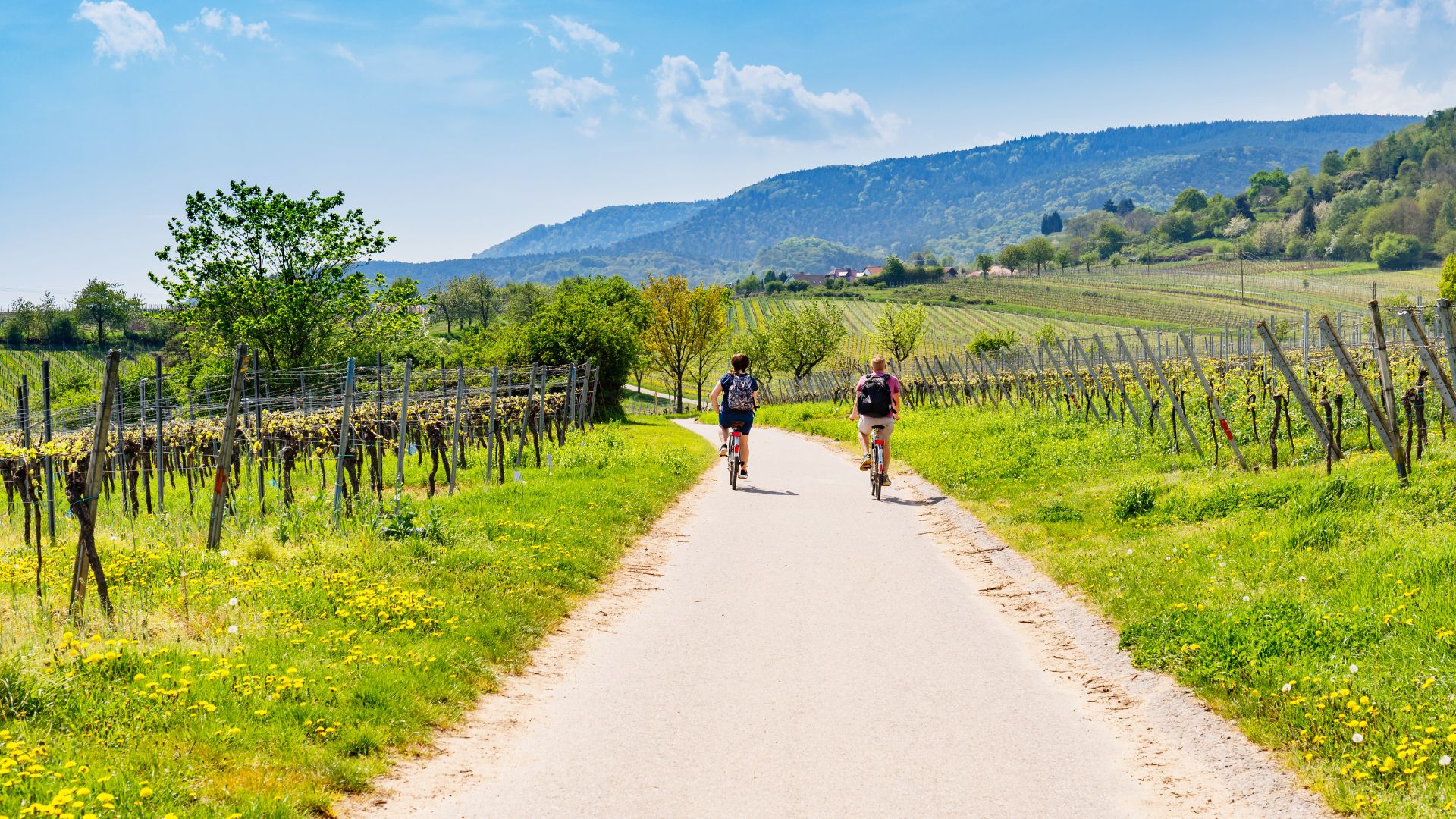
Germany’s oldest designated wine route stretches 85 kilometers through Palatinate vineyards between Bockenheim and Schweigen on the French border. This sunlit region produces exceptional Riesling and Pinot varieties.
Rolling vineyard-covered hills create gentle landscapes contrasting dramatic Rhine gorges. Traditional wine villages host festivals celebrating harvest traditions throughout autumn.
Wine Route Features:
- Distance: 85 km
- Region: Pfalz (Palatinate)
- Climate: Germany’s warmest, sunniest
- Villages: Deidesheim, Bad Dürkheim, Neustadt
- Wine focus: Riesling, Pinot Blanc, Pinot Noir
- Festivals: September-October harvest celebrations
The Deutsche Weinstraße designation dates to 1935, making it Germany’s first themed touring route. Roadside gates mark northern and southern endpoints.
Deidesheim preserves Renaissance architecture while hosting premium wineries. The compact village center enables walking exploration between historic courtyards and modern tasting rooms.
Bad Dürkheim hosts the world’s largest wine festival (Wurstmarkt) attracting 600,000+ visitors annually in September. The massive wine barrel restaurant seats 450 people beneath 1.7 million liter capacity.
11. German Timber-Frame Road (Deutsche Fachwerkstraße)
This network route spanning 3,000+ kilometers connects over 100 half-timbered towns across seven German states. The comprehensive circuit requires weeks though regional sections enable focused explorations.
The route demonstrates German timber-frame architecture evolution from medieval through baroque periods. Each region displays distinctive construction techniques and decorative patterns.
Timber-Frame Road Highlights:
- Total length: 3,000+ km (regional sections)
- States: 7 federal states
- Towns: 100+ half-timbered villages
- Architecture: Medieval to baroque
- Regional variations: Franconian, Hessian, Lower Saxon styles
Quedlinburg concentrates over 1,300 half-timbered houses creating a UNESCO-recognized ensemble. The Harz Mountains town demonstrates northern German construction traditions.
Alsfeld’s fairy-tale marketplace features elaborate timber framing with carved details and colorful paint. The compact center permits thorough exploration within one hour.
12. Orange Route (Oranier-Route)
Following the House of Orange-Nassau heritage, this 440-kilometer route connects the Netherlands border through Hesse to Rhineland-Palatinate. The historical theme traces the Dutch royal family’s German origins.
Castle-hopping combines with forest drives and spa town visits creating diverse experiences. The less-traveled route rewards with authentic atmospheres avoiding mass tourism.
Orange Route Details:
- Distance: 440 km
- Theme: House of Orange heritage
- Major castles: Dillenburg, Siegen, Nassau
- Terrain: Hilly Westerwald, Taunus forests
- Best for: History enthusiasts, quiet touring
Nassau’s castle ruins occupy a strategic hilltop commanding Lahn Valley views. The ancestral seat demonstrates Orange family’s medieval origins before Dutch ascendancy.
Frequently Asked Questions
Which is Germany’s most scenic drive? Subjective preferences vary though German Alpine Road and Romantic Road earn consistent nominations. Alpine Road delivers dramatic mountain scenery spanning Lake Constance to Königssee. Romantic Road provides concentrated medieval charm through fairytale villages. Rhine Gorge combines 40+ castles with river vineyard landscapes in compact 65 kilometers.
How long does each route take? Most routes require 3-7 days for thorough exploration without rushing. Romantic Road needs 4-5 days ideally covering 460 kilometers. Alpine Road warrants 5-7 days for 450 kilometers. Rhine Gorge accomplishes in 2-3 days. Castle Road’s 1,200 kilometers requires a week-plus.
Can I drive scenic routes in winter? Some routes close or become challenging during winter months. Alpine passes typically close November-May with exact dates weather-dependent. Black Forest routes remain accessible with mandatory winter tires. Christmas markets enhance winter Romantic Road and Rhine Valley visits despite cold temperatures.
Do I need an international driving permit? North American, Australian, and EU license holders don’t require international permits for Germany stays under six months. Other nationalities verify requirements through the German embassy. Always carry a passport alongside a license when driving.
Are scenic routes well-signposted? Major themed routes feature brown tourist signs with distinctive route symbols—half-timbered house for Romantic Road, Alpine scene for Alpine Road. However, GPS navigation is strongly recommended as signage gaps occur especially at intersections. Tourist offices provide free route maps.
Can I combine multiple routes? Absolutely. Romantic Road and Alpine Road connect seamlessly at Füssen enabling natural combinations. Castle Road intersects Romantic Road at Rothenburg creating opportunities. Strategic planning enables multi-route tours without excessive backtracking.
What about fuel costs in Germany? Expect €1.60-1.90 per liter (roughly $6-7 per gallon equivalent) for gasoline. Diesel typically costs 10-20 cents cheaper per liter. Budget €50-80 daily fuel for average scenic touring. Autobahn high-speed consumption exceeds economical B-road cruising.
Can regular cars handle these routes? Yes, routes require no special vehicles or 4WD capabilities. Standard rental cars handle all roads comfortably. Sports cars or convertibles enhance open-road enjoyment though completely unnecessary. Even small economy cars manage perfectly.
Do I need reservations for overnight stops? Essential for summer season (June-August) and shoulder months (May, September-October) along popular routes. Book accommodations 6-8 weeks advance. Off-season and midweek travel permits more spontaneity. Castle hotels require earliest booking.
What about speed limits on scenic routes? Village speed limits: 50 km/h or less (30 km/h zones increasingly common). Rural B-roads: Typically 100 km/h outside settlements. Autobahn sections: No general limit though 130 km/h recommended, enforced limits construction zones. Scenic routes emphasize enjoyment over speed.
Summary: Your German Road Trip Awaits
Germany’s scenic drives deliver extraordinary variety combining natural splendor with cultural richness, creating road trip experiences rivaling famous European routes. These legendary touring roads showcase landscapes impossible to fully appreciate from trains or buses.
The 2026 season brings continued infrastructure improvements, enhanced sustainable tourism initiatives, and excellent road maintenance standards. Germany maintains its position among Europe’s premier driving destinations through efficient highways and spectacular scenic routes.
Start planning scenic drive adventures today, selecting routes matching personal interests—medieval castles, Alpine peaks, wine country, or literary themes. Book accommodations early for summer peak season when popular properties fill months in advance.
These routes provide foundations for memorable German journeys—spectacular landscapes, rich culture, and endless rewards. Deutschland’s scenic treasures await your discovery from the driver’s seat. The open road calls—answer it through Germany’s legendary scenic drives.
Hi, I’m Preeti Negi, a content writer who loves mixing creativity with smart strategy.
I have 3 years of experience writing about travel, digital marketing, and study abroad topics. I create content that is easy to read, engaging, and designed to connect with people while also performing well on Google.
When I’m not writing, I enjoy exploring new trends, learning new things, and thinking about fresh ideas for my next piece.
