

Germany rewards those who take their time. While day trips offer a quick taste, a full weekend lets you slow down, settle in, and genuinely connect with a destination in a meaningful way.
From the misty peaks of the Bavarian Alps to the windswept Baltic coast, Germany offers an extraordinary range of weekend options. Every type of traveller will find something perfectly suited to their taste and style.
This guide covers 15 of the best weekend getaways in Germany. Each one is numbered without any proper specific preference, fully described, and packed with practical ideas for how to spend your two days in the most rewarding way possible.
Please note that this article contains affiliate links. Learn more about it on our Disclosure page. We use ads to support our small business – we hope you don’t mind them too much.
Quick Overview Table
| # | Destination | State | Best For | Best Season |
| 1 | Berchtesgaden | Bavaria | Alpine scenery & lakes | Summer/Winter |
| 2 | Rügen Island | Mecklenburg-Vorpommern | Baltic beaches & chalk cliffs | Summer |
| 3 | Rothenburg ob der Tauber | Bavaria | Medieval town & Christmas charm | Year-round |
| 4 | Black Forest | Baden-Württemberg | Forest walks & spa towns | Year-round |
| 5 | Bamberg | Bavaria | Beer, architecture & canals | Year-round |
| 6 | Mosel Valley | Rhineland-Palatinate | Wine, castles & river cruises | Summer/Autumn |
| 7 | Potsdam | Brandenburg | Royal palaces & gardens | Spring/Summer |
| 8 | Freiburg im Breisgau | Baden-Württemberg | University city & Black Forest | Year-round |
| 9 | Quedlinburg & Harz | Saxony-Anhalt | Medieval towns & steam railway | Year-round |
| 10 | Sylt Island | Schleswig-Holstein | North Sea beaches & luxury | Summer |
| 11 | Regensburg | Bavaria | Roman history & Danube old town | Year-round |
| 12 | Lake Constance | Baden-Württemberg | Lakeside beauty & islands | Summer |
| 13 | Weimar | Thuringia | Goethe, Bauhaus & culture | Year-round |
| 14 | Passau | Bavaria | Three rivers & Baroque city | Year-round |
| 15 | Saxon Switzerland | Saxony | Rock formations & hiking | Spring/Summer |
Germany Travel Guide: 15 Best Weekend Escapes
Germany offers countless options for quick escapes, from scenic villages and forest retreats to lakeside towns and historic cities. Weekend getaways let travelers recharge while discovering unique landscapes and local culture.
These 15 destinations provide diverse experiences for every traveler. Whether seeking relaxation, adventure, or cultural immersion, each getaway promises memorable moments, charming scenery, and a refreshing break from daily routines in Germany.
1. Berchtesgaden — The Ultimate Alpine Weekend
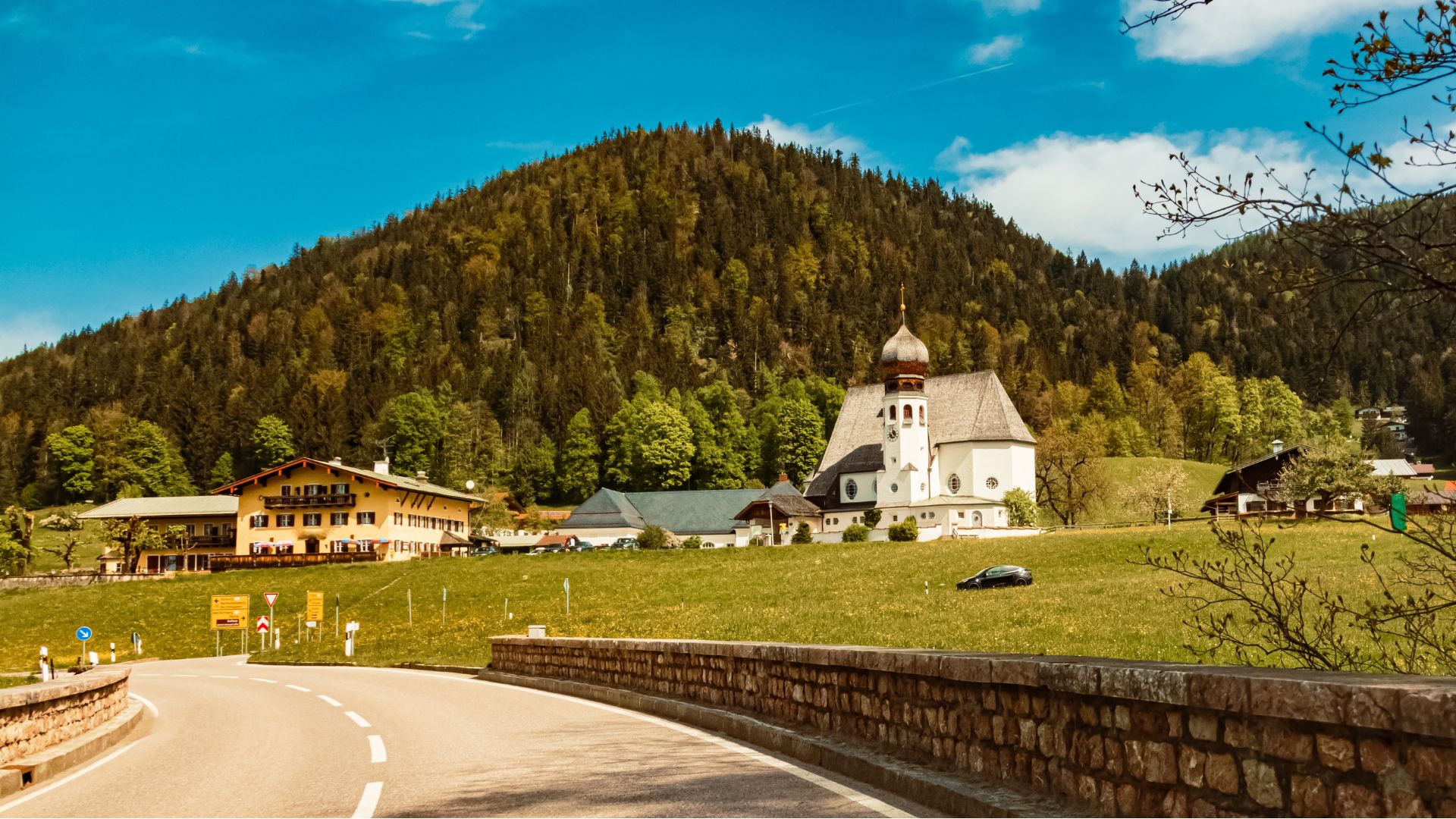
Berchtesgaden in the Bavarian Alps is one of Germany’s most dramatically beautiful destinations. Surrounded by jagged peaks, ancient beech forests, and crystal-clear alpine lakes, it offers a weekend of pure natural and historical wonder.
The Königssee is the centrepiece of any Berchtesgaden weekend. Electric-powered boats glide silently across its emerald-green waters, enclosed by sheer vertical cliff faces rising directly from the lake surface on every side.
The Eagle’s Nest sits at 1,834 metres above sea level. It is reached by a specially built mountain road and a brass-lined elevator blasted through solid rock, with a breathtaking 360-degree Alpine panorama waiting at the top.
Berchtesgaden National Park offers superb hiking on well-marked trails. The route from Königssee to the Obersee waterfall through ancient beech forest is one of the most beautiful and accessible short hikes anywhere in Bavaria.
The Dokumentation Obersalzberg museum adds essential historical depth to the weekend. It tells the full story of the Nazi presence on the mountain honestly, providing an important counterpoint to the extraordinary natural beauty surrounding the town.
Weekend Itinerary:
Day 1: Arrive and take the electric boat trip across Königssee to St Bartholomä church. Walk the trail to the Obersee waterfall. Enjoy dinner in Berchtesgaden town centre in the evening.
Day 2: Head up to the Eagle’s Nest for morning panoramas. Visit the Obersalzberg Documentation Centre. Explore the Salzbergwerk salt mine before heading home in the late afternoon.
Things to do in Berchtesgaden:
- Take the electric boat tour across Königssee to the stunning pilgrimage church of St Bartholomä
- Visit the Kehlsteinhaus Eagle’s Nest for extraordinary 360-degree views of the surrounding Alps
- Tour the Dokumentation Obersalzberg museum and the underground Nazi bunker system beneath the complex
- Hike Berchtesgaden National Park trails through ancient beech forest and beautiful alpine meadow landscapes
- Visit the Salzbergwerk salt mine and experience 400 years of underground salt mining history on a guided tour
How to get there: Direct trains from Munich to Berchtesgaden take approximately 2.5 hours with one change at Freilassing.
2. Rügen Island — Baltic Beaches and White Chalk Cliffs
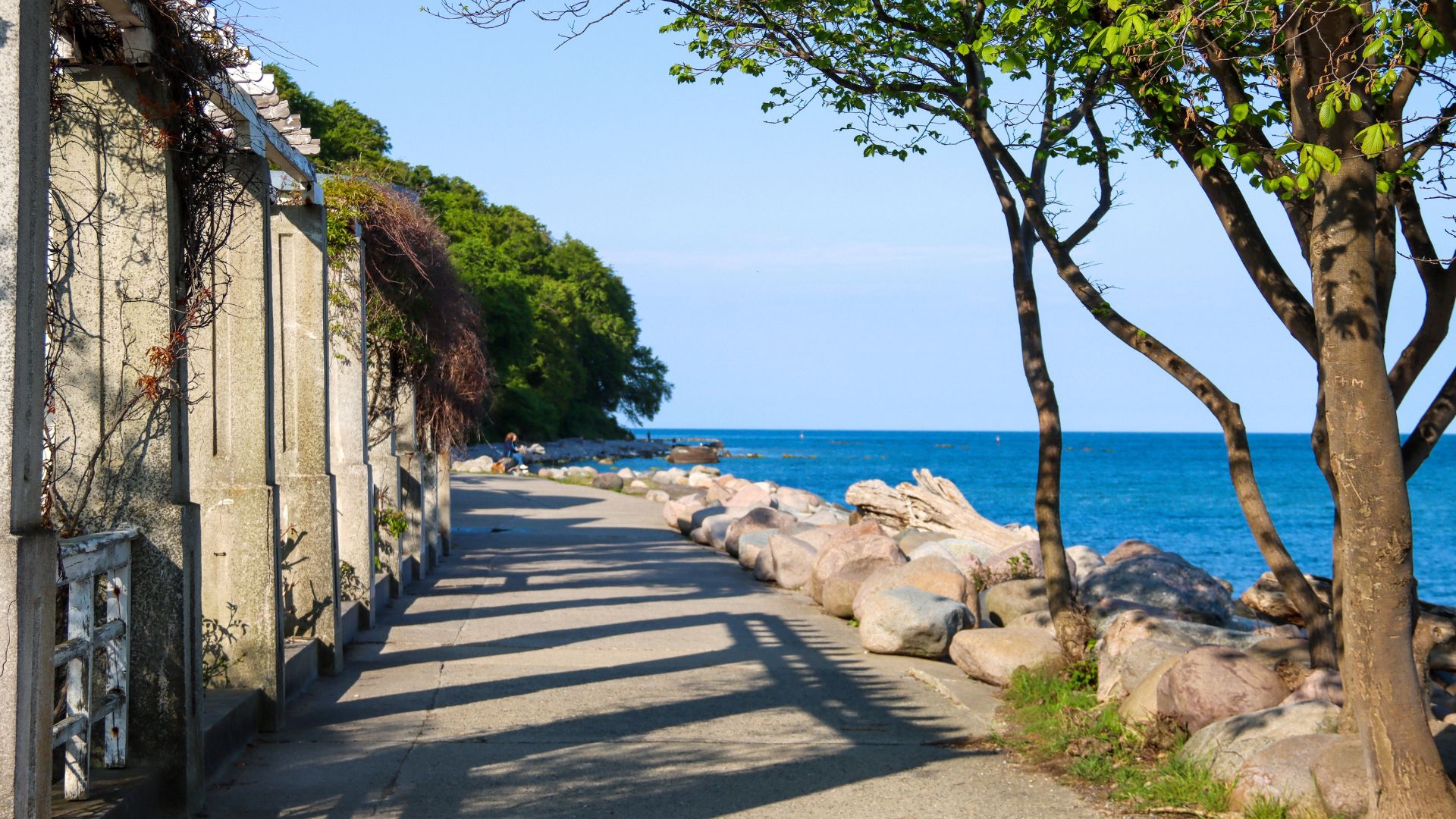
Rügen, Germany’s largest island, sits in the Baltic Sea off the Mecklenburg coast. White chalk cliffs, sandy beaches, beech forests, and elegant spa resort towns all share this remarkably varied and rewarding island landscape.
The chalk cliffs of Jasmund National Park are the island’s most iconic feature. Rising over 100 metres above the Baltic Sea, they were immortalised by the Romantic painter Caspar David Friedrich and remain one of Germany’s most dramatic natural landscapes.
The elegant resort town of Binz retains rows of perfectly preserved white-painted Bäderarchitektur villas from the late 19th century. Its long sandy beach, lined with traditional colourful beach chairs, is one of the finest and most relaxed in northern Germany.
Cape Arkona at the island’s northern tip is one of Rügen’s most atmospheric corners. Ancient Slavic earthworks, twin lighthouses, and sweeping Baltic views create a windswept and elemental landscape that feels entirely different from the resort towns further south.
A weekend on Rügen divides perfectly between nature and relaxation. Spend one day exploring the chalk cliffs and beech forests of Jasmund, and the second day cycling the island’s flat paths and enjoying the beach at your own pace.
Weekend Itinerary:
Day 1: Arrive in Binz and walk the beach promenade. Explore the Bäderarchitektur villas in the afternoon. Hike to Königsstuhl viewpoint above the chalk cliffs in Jasmund National Park before dinner.
Day 2: Cycle north to Cape Arkona and visit the lighthouses and Slavic earthworks. Return via the beautifully planned Neoclassical town of Putbus and its ornamental park before heading home.
Things to do on Rügen Island:
- Hike to Königsstuhl viewpoint in Jasmund National Park above the dramatic white chalk cliffs
- Walk the beach promenade in Binz and admire the beautifully preserved Bäderarchitektur spa villas
- Cycle to Cape Arkona and visit the twin lighthouses and ancient Slavic earthworks at the island’s tip
- Relax on the long sandy beach at Binz or Sellin with traditional Baltic beach chairs in the sunshine
- Explore the elegant Neoclassical town of Putbus with its theatrical circular Markt and ornamental park
How to get there: Direct trains from Berlin to Bergen auf Rügen take approximately 3.5 hours with a connection to Binz.
3. Rothenburg ob der Tauber — Medieval Magic for a Full Weekend
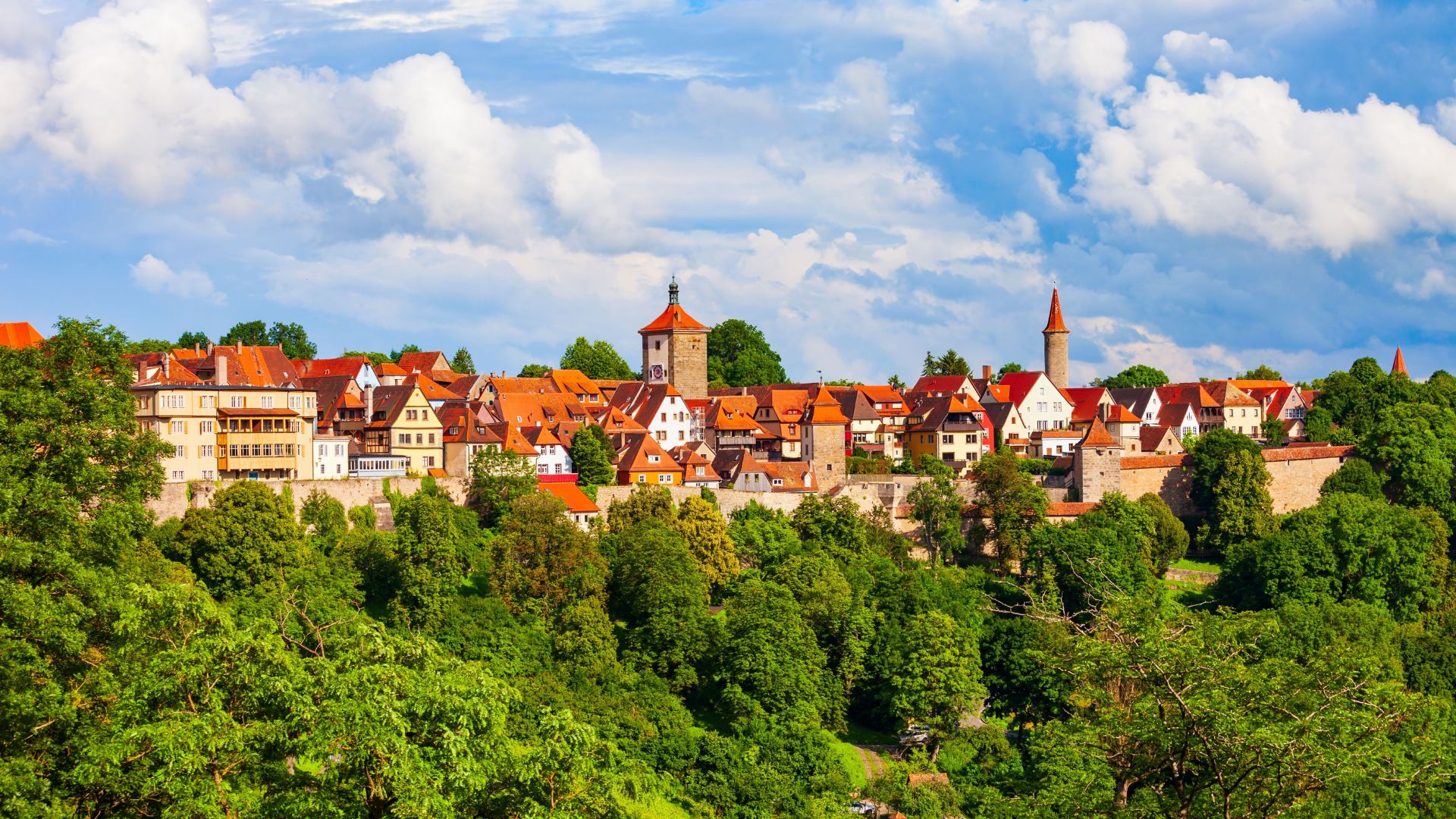
Most visitors come to Rothenburg for a single afternoon and leave wishing they had stayed much longer. A full weekend gives you the time to experience this perfectly preserved medieval walled town properly and unhurriedly.
The town walls are the first priority for any visitor. Walking the full 3.5-kilometre circuit along the top of the ramparts, passing through towers and covered walkways, reveals the town from an entirely different and rewarding perspective.
The Medieval Crime Museum on Burggasse is one of Germany’s most fascinating and unusual museums. Its extensive collection of torture instruments, punishment contraptions, and medieval legal documents is genuinely eye-opening and surprisingly humorous in parts.
The Tauber Valley below the town is a hidden pleasure that day trippers almost never discover. A path descends from the Burgtor gate through vineyards and orchards to the valley floor, passing the Double Bridge and the Kobolzeller Church below.
Evenings in Rothenburg are magical once the day visitors have departed. The restaurants and wine bars along Herrngasse fill with overnight guests enjoying Franconian cuisine as the floodlit medieval streets glow beautifully in the darkness outside.
Weekend Itinerary:
Day 1: Arrive early and walk the complete town wall circuit before crowds arrive. Explore the Marktplatz and Rathaus tower. Afternoon at the Medieval Crime Museum followed by dinner on the Herrngasse.
Day 2: Morning walk into the Tauber Valley via the Burgtor gate. Visit the Christmas Museum. Browse the independent shops and artisan studios throughout the afternoon before departing for home.
Things to do in Rothenburg ob der Tauber:
- Walk the complete 3.5-kilometre medieval town wall circuit early in the morning before the crowds arrive
- Climb the Rathaus tower for a sweeping panoramic view over the red rooftops and the Tauber Valley
- Visit the Medieval Crime Museum for its fascinating and extensive collection of medieval punishment artefacts
- Walk down into the Tauber Valley through vineyards to the Double Bridge and Kobolzeller Church below
- Try the famous Schneeballen pastry and explore the Christmas Museum on Herrngasse at your leisure
How to get there: Regional trains from Nuremberg to Rothenburg take approximately 1 hour with one change at Steinach.
4. The Black Forest — Forests, Spa Towns, and Cuckoo Clocks
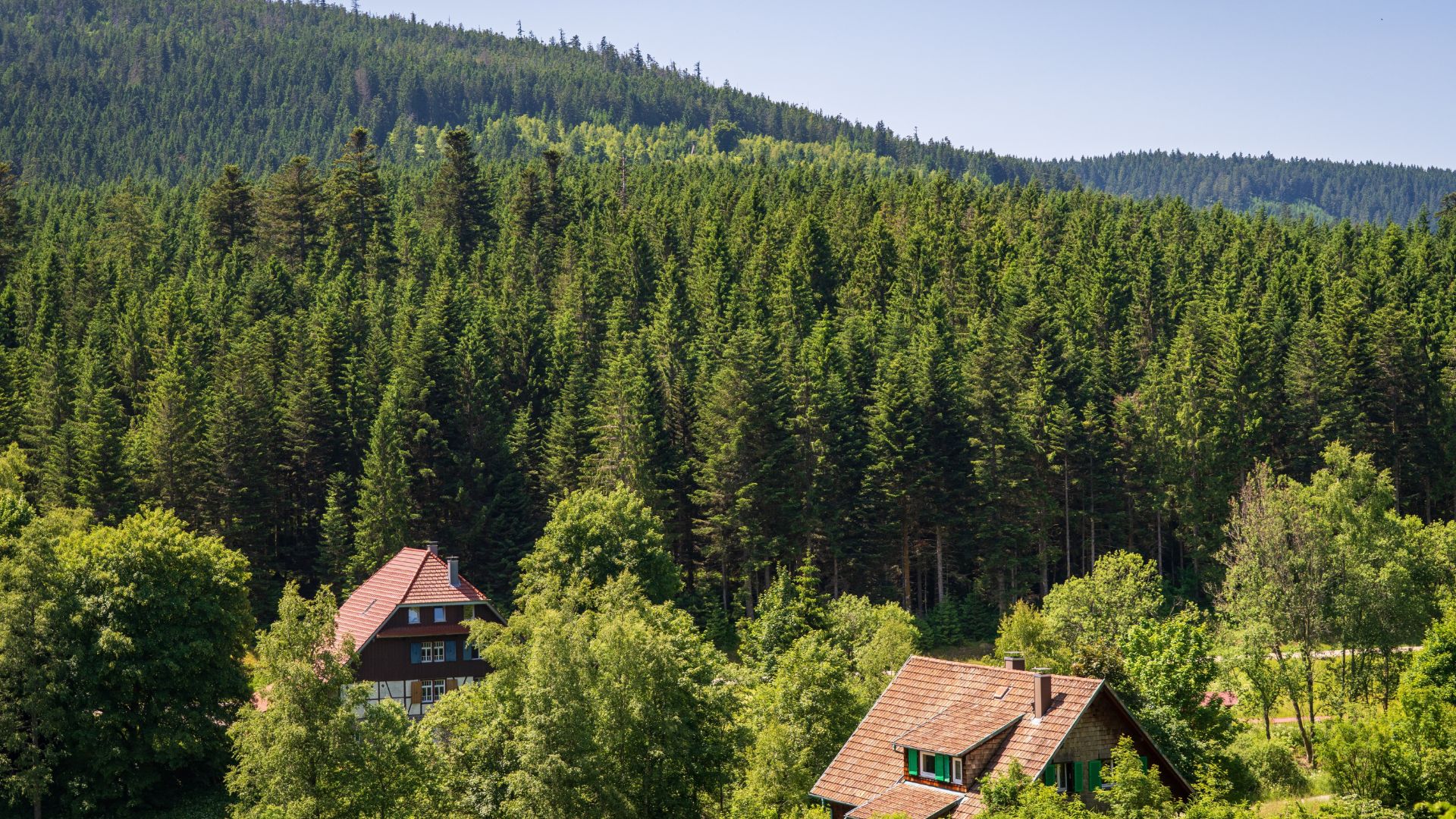
The Black Forest in Baden-Württemberg is one of Germany’s most iconic and rewarding weekend destinations. Dense fir forests, rolling green valleys, half-timbered farmhouses, and elegant spa towns combine to create a genuinely restorative and deeply pleasant experience.
Baden-Baden at the northern edge is one of Europe’s great spa towns. Its thermal baths, grand casino, and colonnaded promenades carry the elegance of a 19th-century European resort perfectly preserved and fully accessible to all modern visitors today.
The Triberg Waterfalls in the central Black Forest are Germany’s highest accessible waterfalls, dropping 163 metres through spectacular cascades. The surrounding town of Triberg is the self-proclaimed home of the cuckoo clock, with dozens of shops selling genuine handmade examples.
Titisee lake in the southern Black Forest is a beautiful glacial lake surrounded by forested hills. Paddleboats, kayaks, and swimming make it a perfect summer destination, while surrounding hiking trails offer excellent walks through classic Black Forest landscapes in every season.
The Black Forest High Road, the Schwarzwaldhochstrasse, runs along the northern forest ridge between Baden-Baden and Freudenstadt. Driving or cycling this route on a clear day through panoramic viewpoints and traditional farmhouses is one of Germany’s great scenic journeys.
Weekend Itinerary:
Day 1: Arrive in Baden-Baden and take the thermal waters at the Friedrichsbad or Caracalla Therme. Evening stroll along the Lichtenthaler Allee and dinner in the elegant old town centre.
Day 2: Drive the Black Forest High Road south to Triberg for the waterfalls and cuckoo clock shops. Continue to Titisee for a lakeside lunch and afternoon paddle before heading home.
Things to do in the Black Forest:
- Take the thermal baths at the magnificent Friedrichsbad or the modern Caracalla Therme in Baden-Baden
- Visit the Triberg Waterfalls and browse genuine handmade cuckoo clocks in the surrounding village shops
- Swim or paddle on Titisee lake surrounded by the forested hills of the southern Black Forest landscape
- Drive or cycle the Schwarzwaldhochstrasse ridge road for panoramic views over the Rhine Valley below
- Hike the Westweg long-distance trail through classic Black Forest landscapes of fir forest and open moorland
How to get there: Direct trains from Frankfurt to Baden-Baden take approximately 1.5 hours. A car is recommended for exploring the forest itself.
5. Bamberg — Beer, Architecture, and Canals for a Full Weekend
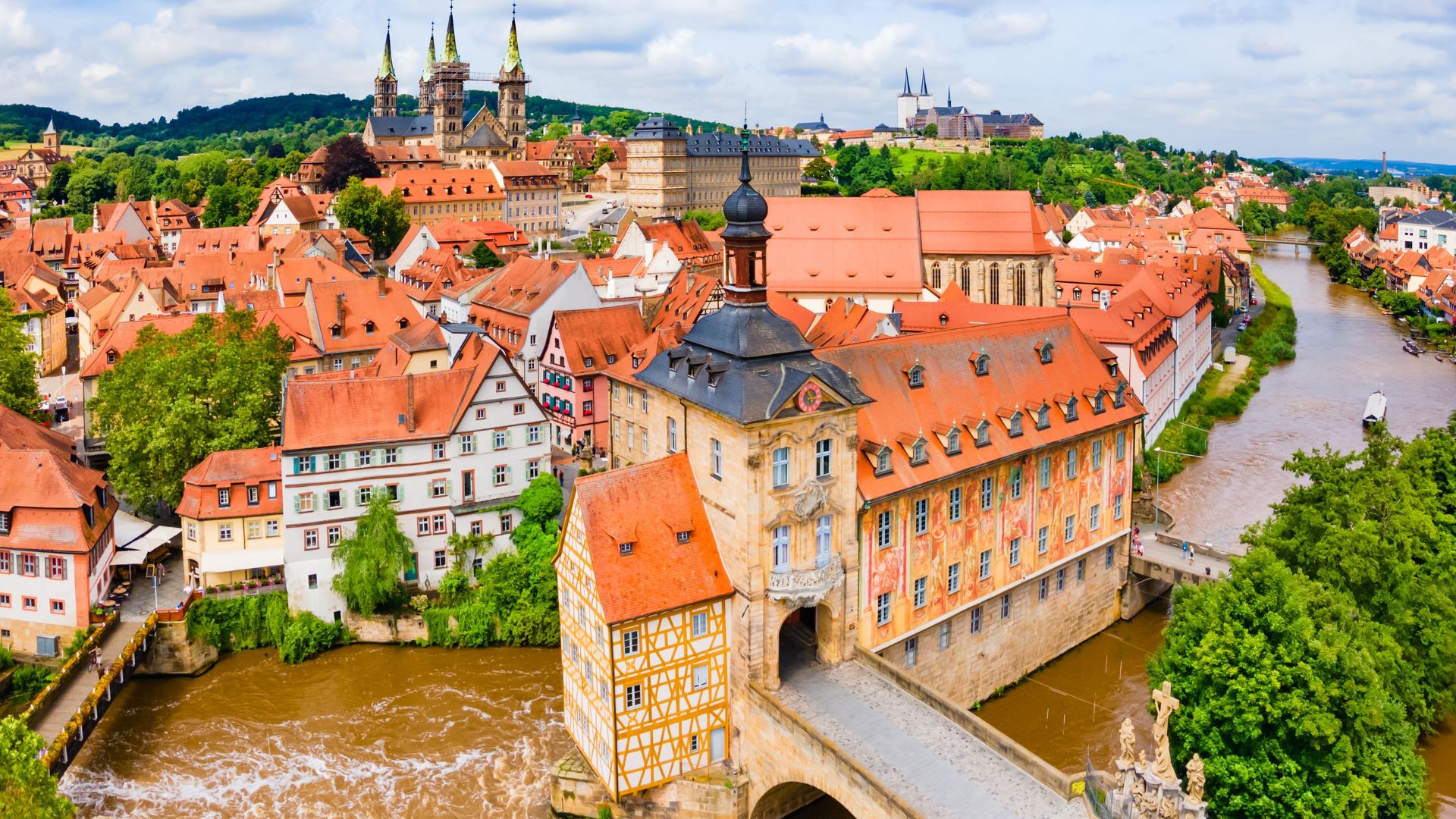
Bamberg in northern Bavaria improves the more time you spend in it. A weekend gives you the chance to explore its extraordinary UNESCO-listed old town thoroughly, discover its unique beer culture, and venture into the surrounding Franconian countryside.
The old town spans seven hills on the Regnitz River and survived the Second World War entirely intact. Its extraordinary mix of Romanesque, Gothic, Baroque, and Renaissance architecture, accumulated over ten centuries, gives Bamberg a visual richness that is genuinely astonishing.
Bamberg’s unique Rauchbier, smoked beer brewed to centuries-old recipes, is the city’s most distinctive contribution to German beer culture. The nine breweries within the city limits each produce their own version, and a weekend is the perfect time to explore them systematically.
Klein Venedig, the Little Venice quarter along the Regnitz River, is one of Germany’s most photographed urban scenes. Pastel-coloured fishermen’s houses perched on wooden stilts above the river create extraordinary charm, best photographed from the Seven Arches Bridge at golden hour.
The New Residence palace on Cathedral Square offers a magnificent state apartment tour and a rose garden with views over the red-roofed old town. Cathedral Square itself, ringed by the Dom and the New Residence, is one of Germany’s finest ecclesiastical squares.
Weekend Itinerary:
Day 1: Arrive and walk around the old town. Visit Bamberg Cathedral and the New Residence rose garden. Evening brewery tour starting at Schlenkerla for the famous Rauchbier and continuing to further local breweries.
Day 2: Morning walk along the Regnitz and photograph Klein Venedig from the Seven Arches Bridge. Afternoon boat trip on the river or cycle into the surrounding Franconian countryside before departing home.
Things to do in Bamberg:
- Sample Rauchbier at Schlenkerla brewery, one of Germany’s oldest and most celebrated historic drinking establishments
- Visit Bamberg Cathedral and see the only papal tomb located north of the Alps inside it
- Photograph Klein Venedig from the Seven Arches Bridge at golden hour for the best possible shots
- Tour the New Residence state apartments and stroll through the rose garden overlooking the old town rooftops
- Take a boat trip along the Regnitz River through the heart of the beautifully preserved old town
How to get there: Direct trains from Frankfurt to Bamberg take approximately 2 hours. From Munich approximately 2.5 hours with one change.
6. Mosel Valley — Wine, Castles, and River Weekends
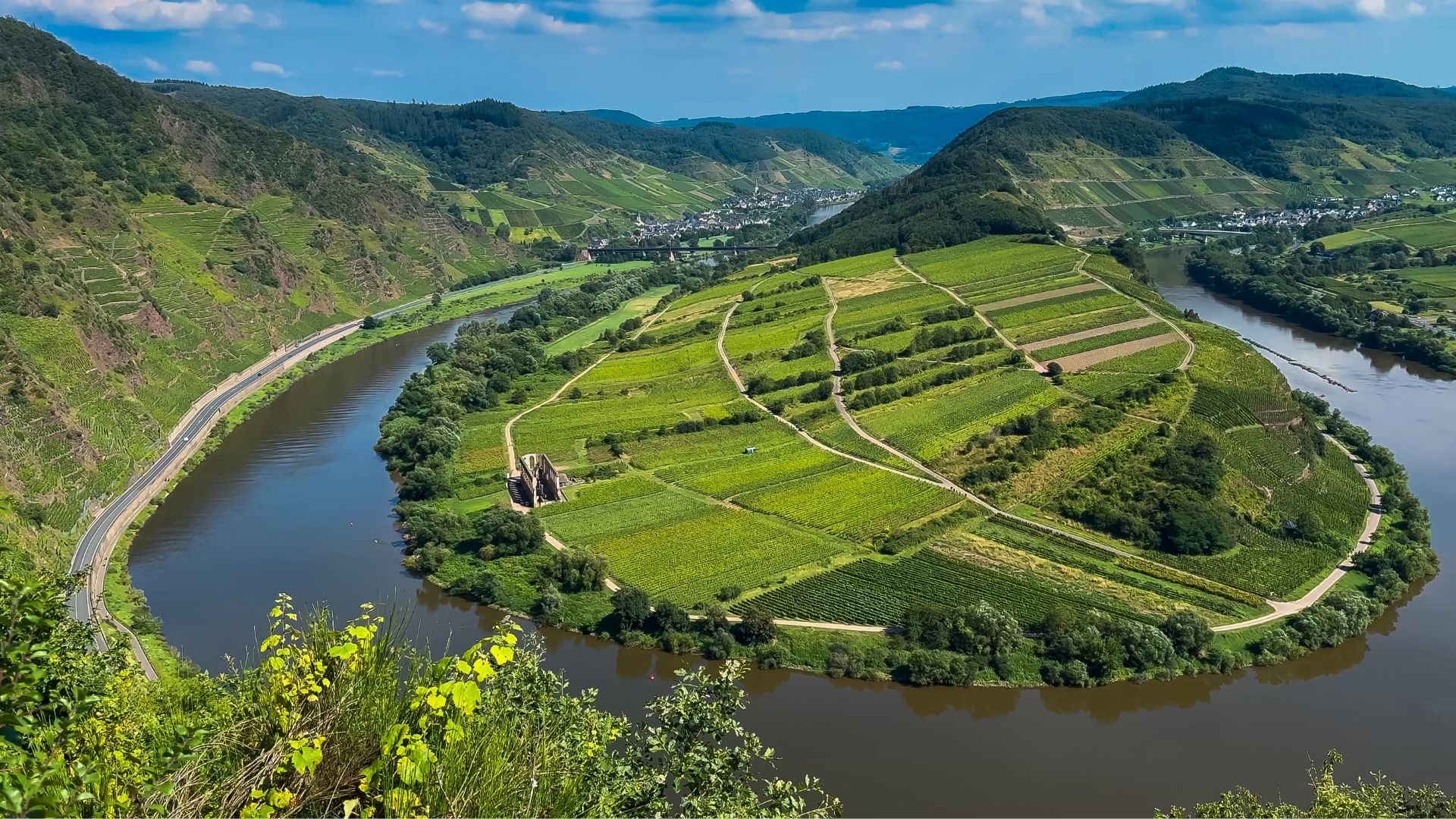
The Mosel Valley between Trier and Koblenz is Germany’s most picturesque wine region. Steep slate terraces planted with Riesling vines, medieval castles on rocky outcrops, and a winding river connecting charming wine villages create an unforgettable landscape.
Cochem is the perfect base for a Mosel weekend. Its Reichsburg Castle perches 100 metres above the river in a composition of almost theatrical perfection, overlooking a quintessential Rhineland wine village of half-timbered houses and cobbled streets.
The Mosel Cycle Route is one of Germany’s finest cycling paths. Following the river closely for over 300 kilometres, it passes vineyards, medieval villages, and ancient castle ruins on a completely flat and entirely scenic route perfect for two days.
Trier at the southern end of the valley is Germany’s oldest city. Its Porta Nigra gateway, Roman amphitheatre, Imperial Baths, and Roman Bridge collectively make it one of the most historically significant cities north of the entire Alps.
A Mosel weekend combines perfectly with wine tasting at family-run estates. Rieslings of elegant minerality and remarkable depth are produced here from vines growing on some of the steepest and most dramatic vineyard slopes in all of Europe.
Weekend Itinerary:
Day 1: Arrive in Cochem and tour Reichsburg Castle. Afternoon cycle or drive upstream to Beilstein village. Evening wine tasting at a local Riesling estate followed by dinner in Cochem town centre.
Day 2: Drive or take the train to Trier for a morning exploring the Roman monuments. Return through the valley stopping at viewpoints and a wine estate before heading home in the evening.
Things to do in the Mosel Valley:
- Tour Reichsburg Castle in Cochem and enjoy panoramic views over the Mosel River bend far below
- Cycle sections of the flat and scenic Mosel Cycle Route between the charming riverside wine villages
- Taste Mosel Riesling at a family-run estate on the steep terraced vineyard slopes above the river
- Explore the Roman monuments in Trier including the Porta Nigra, amphitheatre, and Imperial Baths
- Visit the tiny perfectly preserved village of Beilstein for one of the most unspoiled Mosel experiences
How to get there: Direct trains from Frankfurt to Cochem take approximately 2.5 hours. Trier is approximately 2 hours from Frankfurt by direct train.
7. Potsdam — Palaces, Lakes, and Prussian Grandeur

Potsdam deserves far more than the single afternoon most Berlin visitors allow it. A full weekend gives time to explore its extraordinary royal palaces, beautiful lake landscape, cultural neighbourhoods, and its fascinating history as the seat of Prussian royal power.
Sanssouci Palace and Park are the obvious starting point but should never be rushed. The park alone covers nearly 300 hectares and contains the New Palace, the Chinese House, the Orangery, and half a dozen smaller follies connected by scenic paths.
The Dutch Quarter is one of Potsdam’s great surprises. A compact neighbourhood of genuine 18th-century Dutch brick houses, it is today full of independent cafes, galleries, and boutiques that make it one of the most pleasant urban areas near Berlin.
Cecilienhof Palace is where the 1945 Potsdam Conference determined the post-war order of Europe. The conference room where Churchill, Truman, and Stalin negotiated remains preserved exactly as it was during those world-changing summer weeks.
The Havel lakes surrounding Potsdam offer a completely different dimension to the weekend. Boat trips, swimming, and kayaking reveal the palaces and parklands from a beautiful water-level perspective that makes the whole landscape feel even more extraordinary.
Weekend Itinerary:
Day 1: Arrive and spend the morning in Sanssouci Park visiting the main palace and New Palace. Afternoon explore the Dutch Quarter and its cafes. Evening dinner in the old town near the Brandenburg Gate.
Day 2: Morning boat trip on the Havel lakes. Visit Cecilienhof Palace and the Russian Colony of Alexandrowka. Afternoon free to explore the Nauener Tor area before heading back to Berlin.
Things to do in Potsdam:
- Tour Sanssouci Palace and explore the vast park connecting the New Palace and Chinese House buildings
- Walk through the Dutch Quarter and explore its independent cafes, galleries, and boutique shops throughout
- Visit Cecilienhof Palace and stand in the historic conference room from the 1945 Potsdam Conference
- Take a boat trip on the Havel lakes for water-level views of the palaces and surrounding parklands
- Visit the Russian Colony of Alexandrowka, an extraordinary preserved Russian village built in 1826
How to get there: S-Bahn S7 from Berlin Hauptbahnhof to Potsdam takes approximately 30 minutes throughout the day.
8. Freiburg im Breisgau — The Sunniest City in Germany
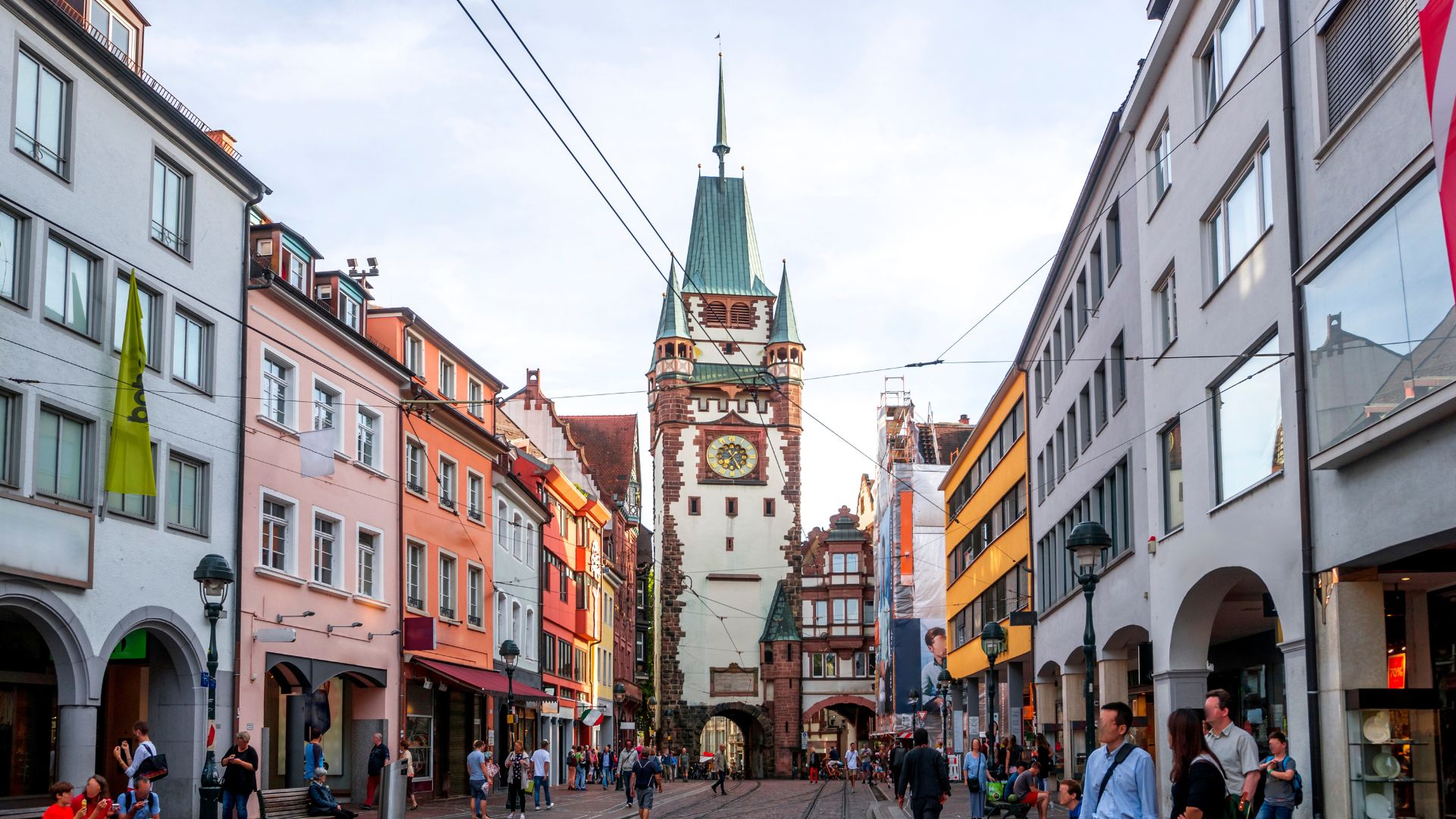
Freiburg im Breisgau is Germany’s sunniest city and one of its most enjoyable weekend destinations. Sitting at the southern edge of the Black Forest with the Rhine Valley and France visible to the west, it combines a beautiful medieval old town with an energetic university atmosphere.
The Freiburg Münster is the centrepiece of the city. Its lace-like sandstone spire, completed in 1330, has been called the most beautiful tower in Christendom and presides over a daily fresh produce market on the cathedral square below.
The famous Bächle, small channels of water running along the gutters of the old town streets, give Freiburg a unique and charming character. Legend holds that anyone who accidentally steps into a Bächle will marry a person from Freiburg.
The Schlossberg hill directly above the old town offers a cable car ride to a panoramic terrace. Views stretch across the Rhine Valley to the Vosges Mountains in France, making this one of the best urban viewpoints in all of south-west Germany.
The Black Forest begins immediately at the city’s eastern edge. The Schauinsland mountain is reachable by cable car in under 30 minutes, combining urban pleasures with immediate access to one of Germany’s greatest and most beautiful natural landscapes.
Weekend Itinerary:
Day 1: Arrive and explore the old town, the Münster market, and the cathedral interior. In the afternoon take the Schlossberg cable car for panoramic views. Evening in one of Freiburg’s excellent wine bars.
Day 2: Morning cable car up to Schauinsland mountain for Black Forest hiking. Afternoon return to the city for a final stroll through the old town and the Augustinermuseum before departing home.
Things to do in Freiburg:
- Visit the Freiburg Münster cathedral and browse the daily fresh produce market on the square below
- Ride the Schlossberg cable car for panoramic views across the Rhine Valley toward France and the Vosges
- Explore the old town Bächle water channels and the university district’s independent cafes and bookshops
- Take the Schauinsland cable car into the Black Forest for hiking and panoramic mountain views above Freiburg
- Visit the Augustinermuseum for its outstanding collection of Upper Rhine art and medieval religious sculpture
How to get there: Direct trains from Frankfurt to Freiburg take approximately 2 hours. From Stuttgart approximately 1.5 hours by direct train.
9. Quedlinburg and the Harz — Medieval Towns and Steam Railways
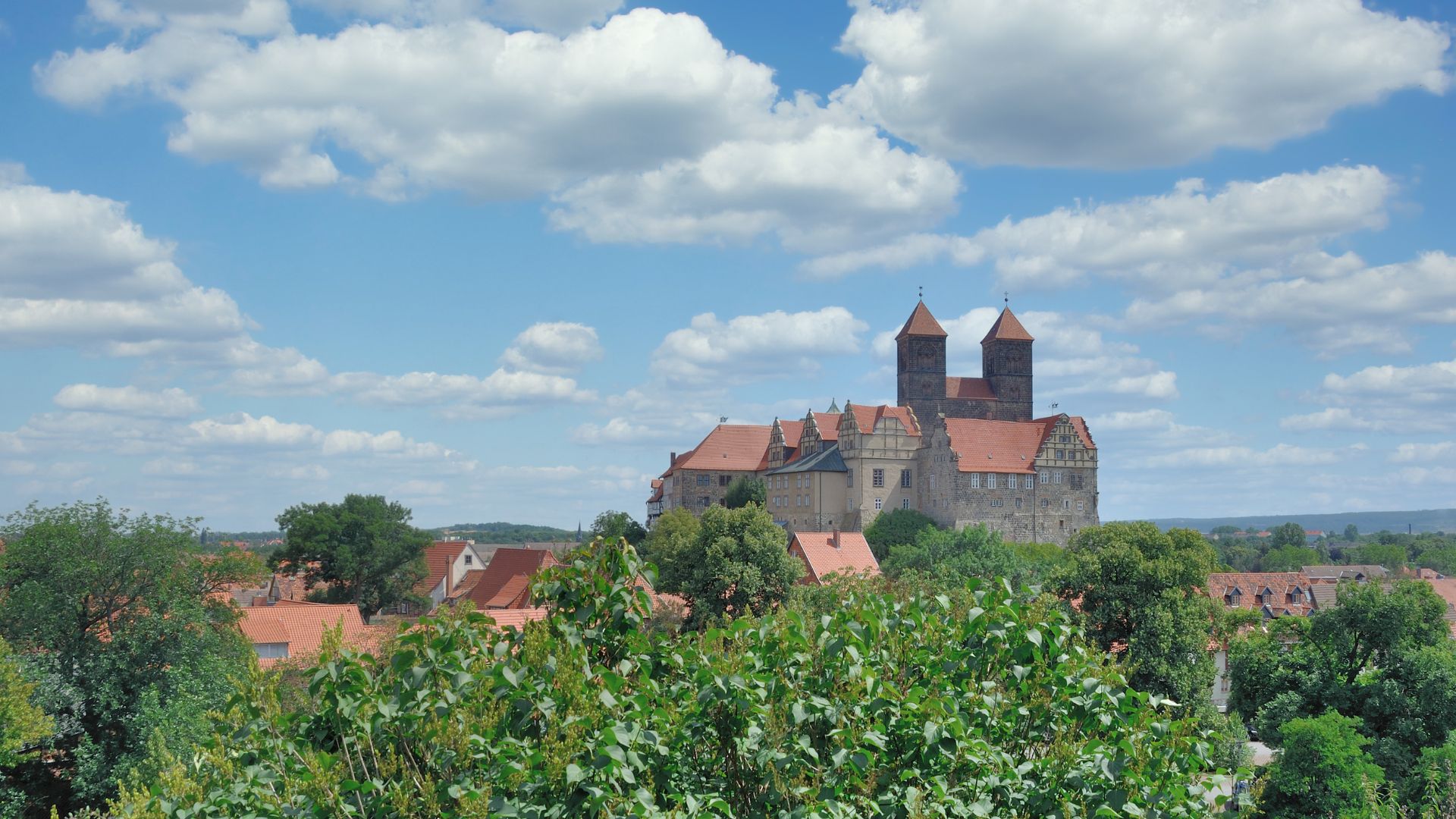
The combination of Quedlinburg and the Harz Mountains makes for one of the most varied and historically rich weekend getaways in eastern Germany. UNESCO heritage, ancient forests, steam railways, and northern Germany’s highest peak all come together in one accessible region.
Quedlinburg itself fully justifies the journey. Over 1,300 half-timbered houses fill its UNESCO-listed old town, and the Stiftskirche on the castle hill holds the tomb of King Henry I, founder of the German nation, in a crypt of extraordinary quality.
Wernigerode, just 30 minutes away, adds a second remarkable town to the weekend. Its colourful half-timbered old town, magnificent hilltop castle, and position as the starting point of the narrow-gauge steam railway network give it a deeply enjoyable character of its own.
The Harzer Schmalspurbahnen steam railway is one of Germany’s great travel experiences. The Brockenbahn line climbs through mist-shrouded forests to the Brocken summit at 1,141 metres, the legendary setting of Walpurgis Night witchcraft celebrations every spring.
The Harz National Park offers excellent hiking on well-marked trails through ancient spruce and beech forests. The Ilse Valley trail, the Rabenklippe viewpoint, and the Hexentanzplatz plateau above Thale are all outstanding natural destinations within the wider region.
Weekend Itinerary:
Day 1: Arrive in Quedlinburg and explore the UNESCO old town and castle hill. Visit the Stiftskirche and crypt. Drive to Wernigerode for dinner and a first look at the colourful old town.
Day 2: Board the Brockenbahn steam train from Wernigerode station and ride to the Brocken summit. Hike part of the return journey through the Harz forest. Final meal in Wernigerode before heading home.
Things to do in Quedlinburg and the Harz:
- Visit Quedlinburg’s UNESCO Stiftskirche and descend into the remarkable atmospheric Romanesque crypt below
- Explore Wernigerode’s colourful old town and walk up to the hilltop castle for wide Harz valley views
- Board the Brockenbahn steam train from Wernigerode and ride dramatically to the legendary Brocken summit
- Hike the trails of Harz National Park through ancient beech and spruce forest on well-marked routes
- Visit the Hexentanzplatz plateau above Thale for panoramic views and the story of Walpurgis Night celebrations
How to get there: Direct trains from Berlin to Quedlinburg take approximately 2.5 hours. Wernigerode is a further 30 minutes by regional train.
10. Sylt Island — Germany’s Most Glamorous North Sea Escape
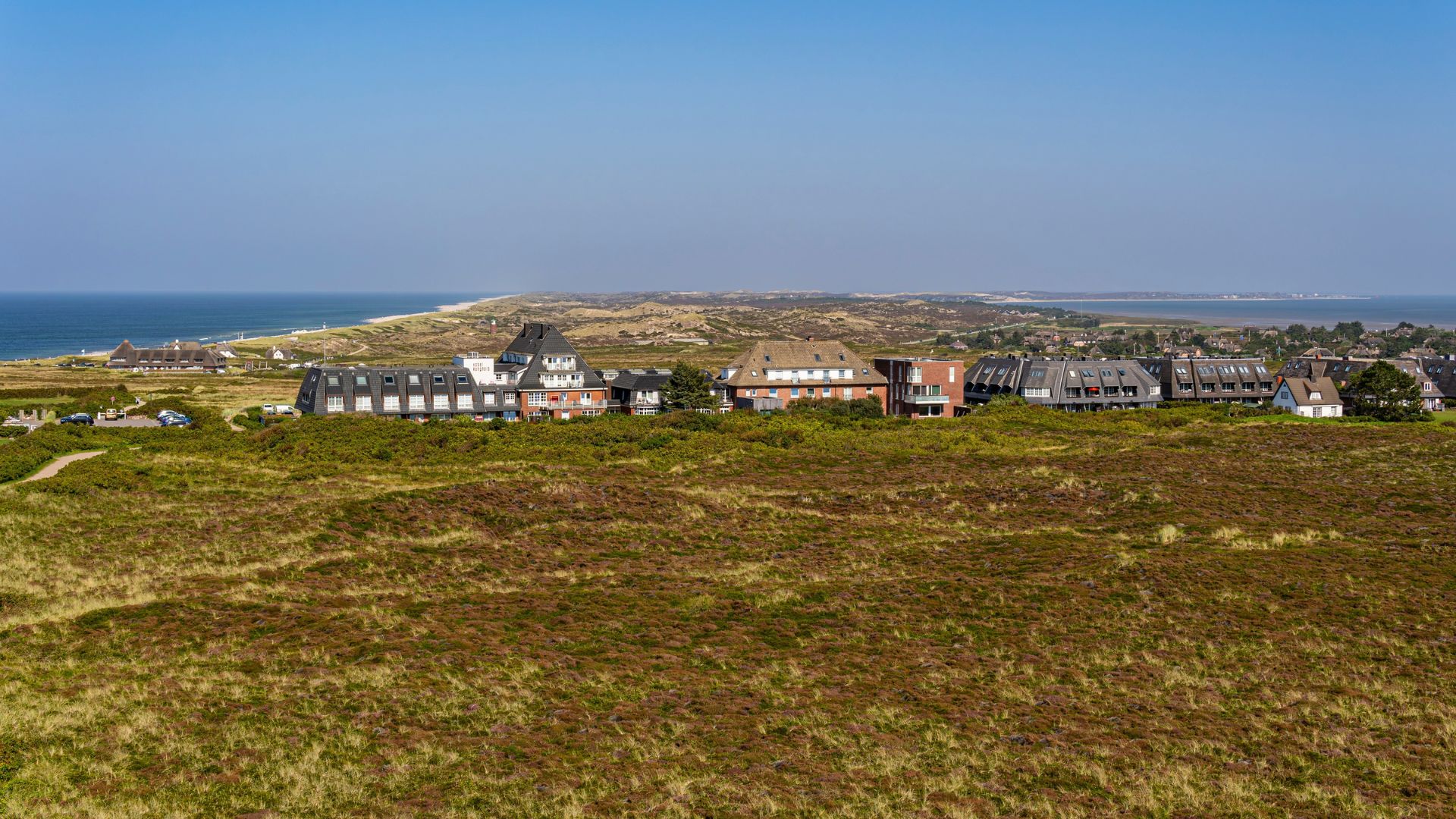
Sylt is Germany’s northernmost island, a long narrow strip of sand and heath in the North Sea. It is simultaneously Germany’s most glamorous seaside destination and one of its most wild and elemental natural landscapes, a uniquely compelling combination.
The western coast faces the open North Sea with wide, windswept beaches stretching for kilometres without interruption. The dunes at the List peninsula in the north and the Roten Kliff red sandstone cliffs near Kampen are among the most dramatic coastal landscapes in northern Germany.
Kampen is Sylt’s most fashionable village, a tiny settlement of thatched Frisian houses attracting celebrities and wealthy German visitors for decades. Its restaurants and bars are among the finest and most expensive in Germany, making dinner here genuinely memorable.
Westerland, the island’s main town, offers a more accessible and unpretentious version of Sylt. Its beach promenade, weekend market, and range of restaurants and shops serve the full spectrum of visitors from day trippers to long-stay regular seasonal guests.
The island’s interior of heath, dunes, and small lakes is best explored by bicycle. Sylt’s excellent cycling path network connects all villages through the protected heath landscape, and riding from the southern tip at Hörnum to the northern List peninsula makes for a superb full-day adventure.
Weekend Itinerary:
Day 1: Arrive by train on the Hindenburgdamm causeway. Walk the North Sea beach and explore Kampen village and the Roten Kliff red cliffs in the afternoon. Evening dinner in Kampen or Wenningstedt.
Day 2: Hire bicycles and cycle the island from south to north through the heath landscape. Lunch at the List harbour fish market. Final beach walk before boarding the train home across the causeway.
Things to do on Sylt Island:
- Walk the long windswept North Sea beach on the western coast stretching from Westerland to Kampen
- Visit the Roten Kliff red sandstone cliffs near Kampen for dramatic North Sea views from the clifftop
- Cycle the island from Hörnum in the south to List in the north through the protected heath landscape
- Eat fresh North Sea seafood at the List harbour fish market on the northernmost tip of the island
- Explore the fashionable thatched Frisian village of Kampen and its excellent restaurants and boutique shops
How to get there: Passenger trains run directly from Hamburg to Westerland in approximately 3 hours throughout the day.
11. Regensburg — Roman History and Danube Old Town
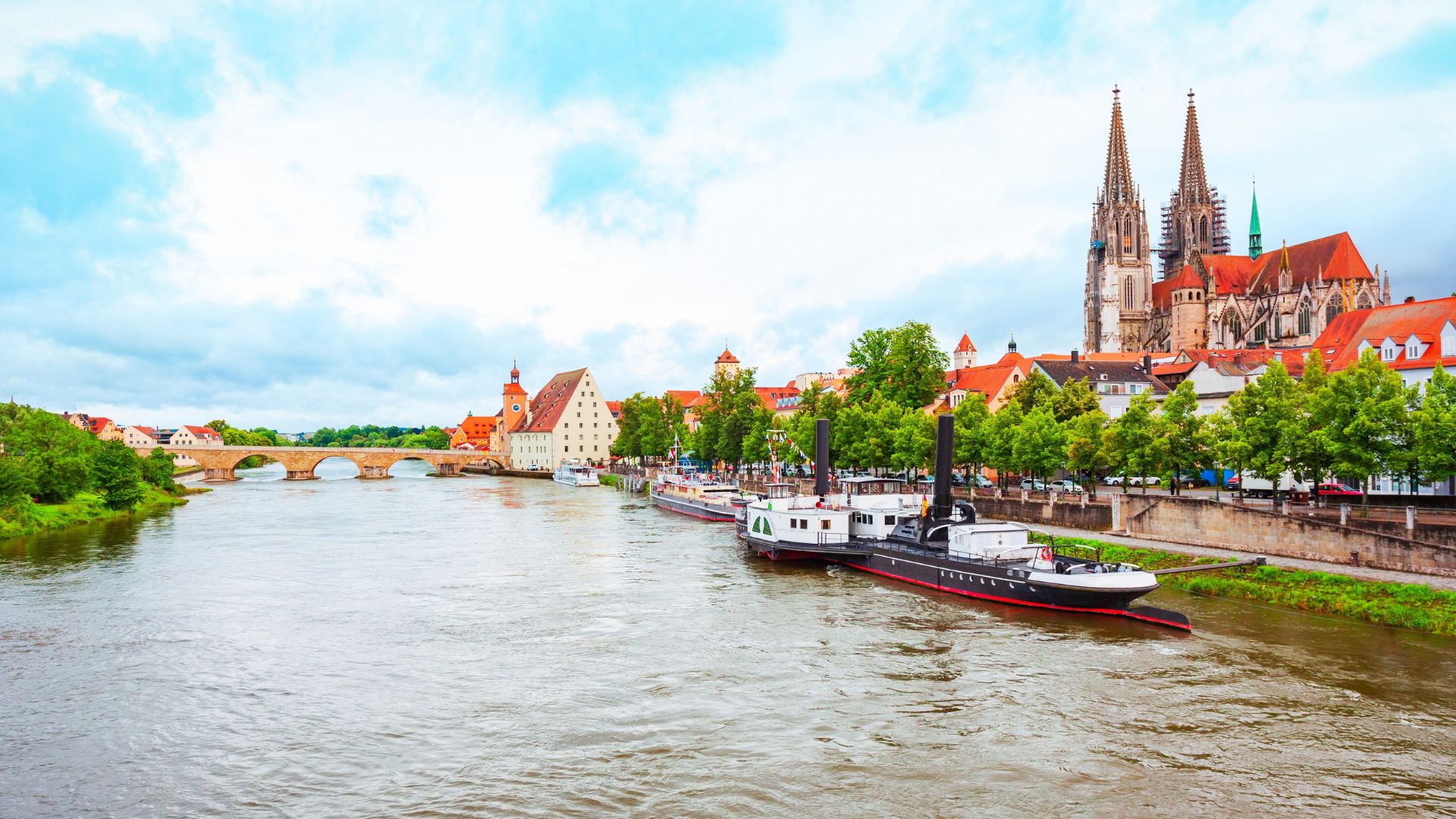
Regensburg in Bavaria is one of Germany’s most perfectly preserved and historically layered cities. A UNESCO World Heritage old town, Roman remains, a magnificent Gothic cathedral, and a vibrant food and drink scene make it an ideal weekend destination.
The Stone Bridge across the Danube, built between 1135 and 1146, is one of Germany’s oldest and most significant bridges. For centuries it was the only Danube crossing for hundreds of kilometres, making Regensburg one of medieval central Europe’s most strategically important cities.
The Cathedral of St Peter and its famous Domspatzen boys choir, one of the world’s oldest and most celebrated, give Regensburg a musical dimension. Attending a Sunday morning choral service in this Gothic masterpiece is a genuinely moving and unforgettable experience.
The Thurn und Taxis Palace, seat of the princely family that operated Europe’s first postal system, offers lavishly furnished royal apartment tours. The adjacent Emmeram Basilica, with its extraordinary crypt and royal tombs, is one of the oldest churches in Bavaria.
The Wurstkuchl sausage kitchen on the Danube bank has operated continuously since the 12th century. Eating grilled Regensburg sausages with mustard on the riverside terrace overlooking the Stone Bridge is one of the most memorable and enjoyable experiences in the entire city.
Weekend Itinerary:
Day 1: Arrive and walk the old town, visiting the Stone Bridge and the Porta Praetoria Roman gateway. Afternoon tour the Cathedral and attend choral foundations. Evening dinner in the old town centre.
Day 2: Morning tour of Thurn und Taxis Palace and the Emmeram Basilica. Lunch at the historic Wurstkuchl on the river. Afternoon boat trip on the Danube before heading home.
Things to do in Regensburg:
- Walk across the historic Stone Bridge and enjoy wide views along the Danube toward the cathedral spires
- Attend a choral service at the Cathedral of St Peter featuring the world-famous Domspatzen boys choir
- Find the Porta Praetoria, the remarkably preserved Roman gateway standing in the heart of the old town
- Eat grilled sausages at the historic Wurstkuchl, Germany’s oldest continuously operating riverbank restaurant
- Tour the Thurn und Taxis Palace apartments and the ancient Emmeram Basilica crypt and royal tombs
How to get there: Direct trains from Munich to Regensburg take approximately 1.5 hours. From Frankfurt approximately 3 hours with one change.
12. Lake Constance — Germany’s Riviera Weekend
Lake Constance, the Bodensee, sits at the meeting point of Germany, Austria, and Switzerland. Palm trees, vineyards, medieval island towns, and Alpine views combine to create a landscape of quite exceptional and internationally flavoured beauty.
Konstanz is the main city on the German shore and a lively university town with a beautifully preserved old town. Its position on the Swiss border meant it escaped wartime bombing, leaving its medieval and Renaissance centre perfectly intact and beautifully walkable.
Meersburg, a short ferry ride from Konstanz, is one of Germany’s most beautiful small towns. Its ancient inhabited castle dating to the 7th century, terraced vineyards, and lakeside promenade with Alpine views create a refined, unhurried, Mediterranean-like atmosphere.
The flower island of Mainau is covered in tropical gardens, palm trees, and extraordinary flower displays maintained by the Bernadotte family. This small island in the western Bodensee creates a strikingly exotic landscape right in the heart of central Europe.
A Lake Constance weekend can incorporate Germany, Austria, and Switzerland in a single trip. Ferries connect Konstanz with Bregenz in Austria and Rorschach in Switzerland, making a three-country boat-hopping day one of the region’s most memorable and enjoyable experiences.
Weekend Itinerary:
Day 1: Arrive in Konstanz and explore the old town. Afternoon ferry to Meersburg to walk the village, visit the castle, and taste local wine. Return to Konstanz for dinner along the lakeside promenade.
Day 2: Morning ferry to Mainau Island for the tropical gardens and flower displays. In the afternoon take a cross-lake ferry to Bregenz in Austria for a three-country experience before heading home.
Things to do at Lake Constance:
- Explore the beautifully preserved old town of Konstanz and its cathedral right on the Swiss border waterfront
- Take the ferry to Meersburg and visit Germany’s oldest inhabited castle and its surrounding wine estates
- Visit Mainau Island and walk through the extraordinary tropical gardens and lush palm tree landscapes
- Take a cross-lake ferry to Bregenz in Austria or Rorschach in Switzerland for a memorable three-country experience
- Cycle the Lake Constance Cycle Route along the German shore between Konstanz and Lindau island town
How to get there: Direct trains from Stuttgart to Konstanz take approximately 2.5 hours. From Munich approximately 3 hours with one change.
13. Weimar — Culture, Goethe, and Bauhaus in Thuringia
Weimar in Thuringia is one of Germany’s most culturally significant small cities. Goethe, Schiller, Liszt, Nietzsche, and the founders of the Bauhaus movement all lived and worked here, leaving an extraordinary and dense cultural legacy in a very compact city.
The Goethe House on Frauenplan, where Germany’s greatest writer lived for 57 years, is one of Europe’s most important literary museums. Preserved exactly as it was during Goethe’s lifetime, it offers an intimate insight into the mind of one of the greatest figures in Western literature.
The Duchess Anna Amalia Library is one of the most beautiful libraries in the world. Its circular Rococo hall, rising through three tiers of book-lined galleries to a painted ceiling, holds the largest collection of German literature from the classical period in existence.
The Bauhaus University and its associated museum tell the story of the revolutionary art and design movement founded in Weimar in 1919. The movement’s influence on modern architecture, graphic design, and furniture design is immeasurable and still felt everywhere in the world today.
Buchenwald concentration camp sits on a hill just eight kilometres from the city centre and should not be avoided. Its sobering memorial and museum are a vital and honest part of understanding the full historical complexity of Weimar’s remarkable and deeply layered history.
Weekend Itinerary:
Day 1: Arrive and visit the Goethe House and the Schiller House. Afternoon explore the Duchess Anna Amalia Library and walk the Park on the Ilm. Evening dinner in the old town near the main market square.
Day 2: Morning at the Bauhaus Museum and the original Bauhaus University building. Afternoon visit to Buchenwald Memorial. Return to Weimar for a final walk before heading home in the evening.
Things to do in Weimar:
- Visit the Goethe House on Frauenplan and explore the rooms where Germany’s greatest writer lived and worked
- See the Duchess Anna Amalia Library, one of the world’s most beautiful and historically significant Rococo libraries
- Explore the Bauhaus Museum and the original Bauhaus University building that launched a global design revolution
- Visit Buchenwald Memorial eight kilometres from the city for an essential and sobering historical experience
- Walk the Park on the Ilm along the river and visit Goethe’s Roman House in the peaceful park grounds
How to get there: Direct trains from Frankfurt to Weimar take approximately 2 hours. From Berlin approximately 2.5 hours by direct ICE train.
14. Passau — Three Rivers and Baroque Grandeur
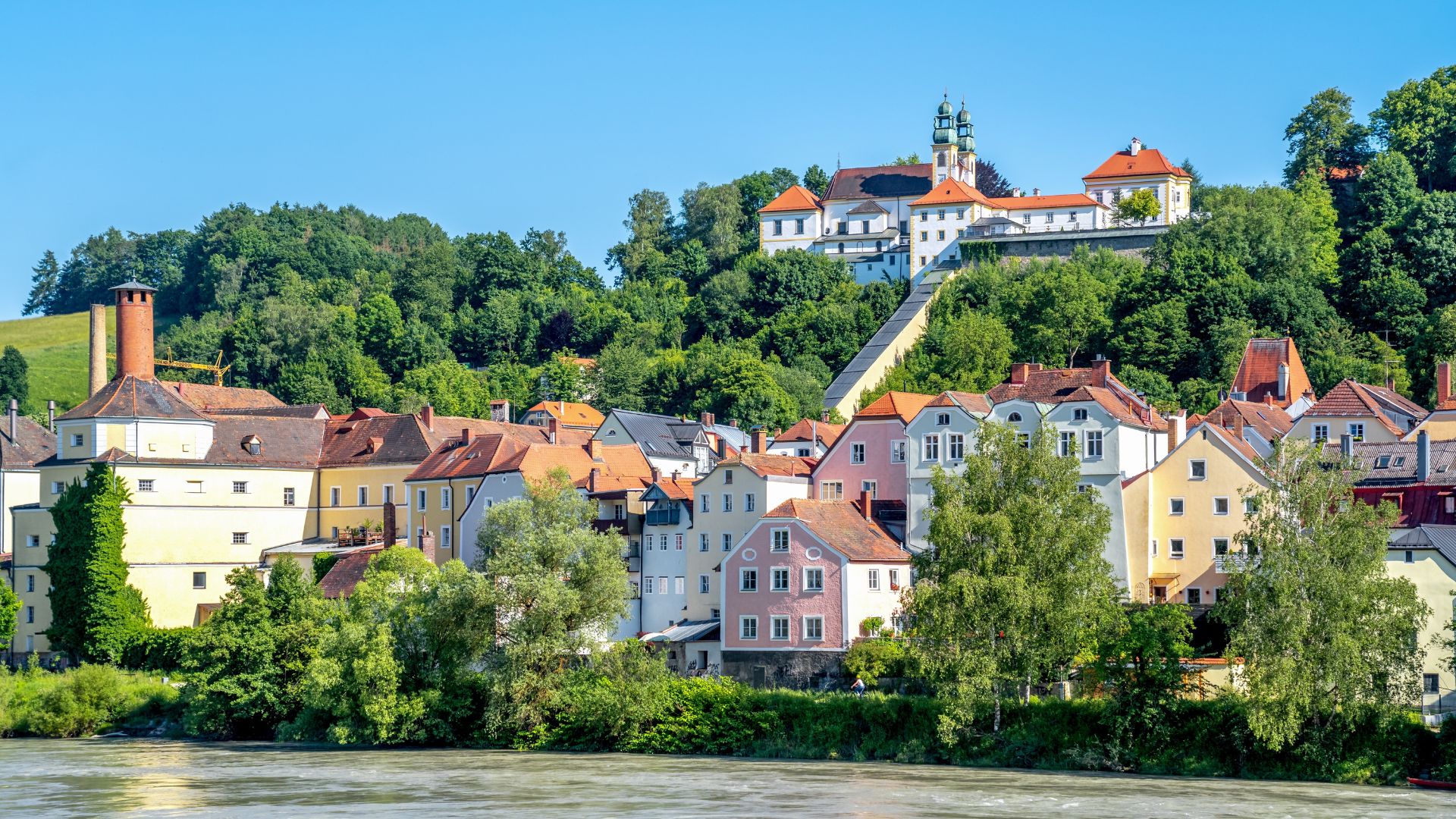
Passau in lower Bavaria sits at the confluence of the Danube, the Inn, and the tiny Ilz in a setting of extraordinary geographical and architectural drama. A full weekend here gives time to appreciate both the remarkable cityscape and the beautiful surrounding landscape.
The Dom St. Stephan holds the largest pipe organ north of the Alps with 17,774 pipes. Daily organ concerts fill the Baroque interior with overwhelming sound every weekday at noon throughout summer, making a midday visit one of the most memorable experiences in Bavaria.
Veste Oberhaus, the massive fortress on the cliff directly above the city, houses a cultural history museum. It also offers the best panoramic viewpoint over all three river confluences far below, with the walk up from the old town taking only around 20 minutes.
The Inn River south of Passau offers excellent cycling on the Inn Cycle Route heading toward Schärding and Braunau in Austria. The flat riverside path passes through beautiful countryside, historic market towns, and riverside inns serving excellent Bavarian food throughout the route.
Passau is also the starting point for Danube river cruises heading downstream toward Linz, Vienna, and Budapest. Even a short cruise of a few hours reveals the remarkable landscape of the Danube Valley in a way that no land-based journey can fully replicate.
Weekend Itinerary:
Day 1: Arrive and walk the old town peninsula. Attend the midday organ concert in Dom St. Stephan. Afternoon climb to Veste Oberhaus fortress for views over the three-river confluence below. Evening dinner in the old town.
Day 2: Morning Danube river cruise toward Linz or a shorter round trip. Afternoon cycle a section of the Inn Cycle Route toward Austria. Visit the Glass Museum before departing home in the late afternoon.
Things to do in Passau:
- Attend the midday organ concert in Dom St. Stephan and hear the largest pipe organ north of the Alps
- Climb to Veste Oberhaus fortress for a panoramic view over all three river confluences below the city
- Walk the full length of the narrow old town peninsula and discover hidden lanes between the Danube and Inn
- Take a Danube river cruise downstream toward Linz in Austria through the beautiful Danube Valley landscape
- Cycle a section of the Inn Cycle Route toward Schärding in Austria on the flat and scenic riverside path
How to get there: Direct trains from Munich to Passau take approximately 2 hours. From Vienna approximately 3 hours by direct Railjet train.
15. Saxon Switzerland — Rock Formations and Weekend Hiking
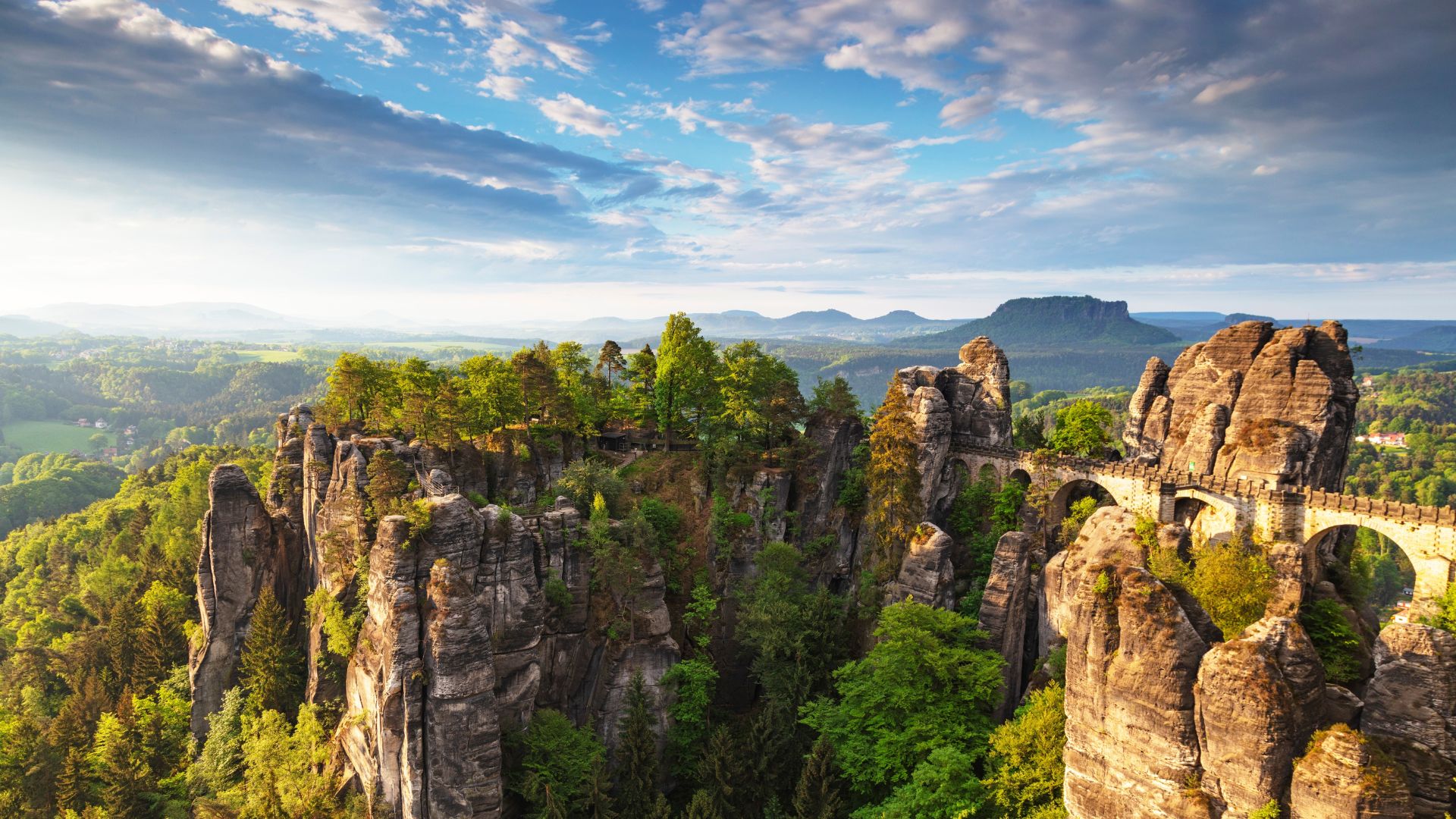
Saxon Switzerland National Park near Dresden offers one of the most dramatically beautiful and physically rewarding weekend getaways in Germany. Bizarre sandstone rock formations, deep gorges, ancient beech forests, and charming Elbe Valley villages combine into an extraordinary destination.
The Bastei Bridge and its surrounding rock pinnacles are the park’s signature image. A full weekend allows you to go far beyond the Bastei into the quieter, wilder corners of the park that day trippers from Dresden almost never have time to reach.
Königstein Fortress, perched on a flat-topped sandstone mesa above the Elbe, is one of Germany’s most impressive fortifications. Its complex of over 50 buildings spread across the vast summit plateau includes a church, a brewery, and deep cisterns used during historical sieges.
The Malerweg, the Painters Way, is the park’s most famous long-distance trail covering 112 kilometres through eight stages of spectacular scenery. Walking even two stages over a weekend reveals the park’s extraordinary variety of scenery and remarkable geological character fully.
The small towns of Bad Schandau and Königstein on the Elbe serve as excellent bases for a Saxon Switzerland weekend. Both have good accommodation, direct train connections to Dresden, and ferry crossings linking both banks for rewarding circular hiking routes.
Weekend Itinerary:
Day 1: Arrive at Bad Schandau by train. Cross the river by ferry and hike up to the Bastei Bridge from Rathen village through beech forest. Explore the rock formations and return to Bad Schandau for dinner.
Day 2: Take the riverboat to Königstein and spend the morning touring the fortress. Afternoon hike on the Malerweg trail before returning to Dresden by regional train in the early evening.
Things to do in Saxon Switzerland:
- Walk across the Bastei Bridge and explore the surrounding sandstone pinnacles and dramatic panoramic viewpoints
- Tour Königstein Fortress on its flat-topped sandstone mesa above the Elbe for extraordinary views and history
- Hike two stages of the famous Malerweg Painters Way trail through the most spectacular park landscapes
- Take the Elbe ferry between Bad Schandau and the opposite bank for rewarding circular hiking route options
- Visit the Kuhstall rock arch and the Neumannmühle valley for quieter and less visited park scenery
How to get there: Regional trains from Dresden Hauptbahnhof to Bad Schandau take approximately 45 minutes throughout the day.
Simple Tips to Enhance Travel Experiences
Traveling smoothly requires more than just packing bags—it’s about preparation, awareness, and smart planning. Practical travel tips help you navigate destinations efficiently, avoid pitfalls, and make each journey enjoyable.
From choosing the right transport and accommodations to managing time and staying safe, these tips guide travelers through real-world challenges. Applying them ensures stress-free, memorable, and seamless travel experiences.
| Category | Details |
| Best Travel Pass | Deutschlandticket at €49/month covers all regional trains and buses across Germany |
| Booking Accommodation | Book 6 to 8 weeks ahead for summer weekends and Christmas market season stays |
| Best Time to Visit | May to September for outdoor destinations; December for Christmas market weekends |
| Car vs Train | Train works well for most destinations; rent a car for the Black Forest and Mosel Valley |
| Food Budget | Budget €25 to €50 per person per day for meals including a sit-down dinner each evening |
| Packing Tip | Always bring walking shoes, a rain layer, and a reusable water bottle for any German weekend trip |
15 Best Weekend Getaways in Germany
Germany’s weekend getaway options are as varied as the country itself. Whether you prefer hiking through dramatic national parks, cycling along river valleys, exploring medieval old towns, or relaxing in a spa town, the right destination is waiting for you.
Every destination on this list offers something genuinely distinct. Berchtesgaden delivers Alpine drama, Sylt delivers North Sea wildness, Weimar delivers cultural depth, and the Mosel Valley delivers the kind of unhurried, wine-soaked beauty that stays with you long after you return home.
The best weekend getaways in Germany share one quality above all others: they make you want to come back. Pick one, plan it properly, take your time when you arrive, and let Germany do what it does best. You will not be disappointed.
Hi, I’m Preeti Negi, a content writer who loves mixing creativity with smart strategy.
I have 3 years of experience writing about travel, digital marketing, and study abroad topics. I create content that is easy to read, engaging, and designed to connect with people while also performing well on Google.
When I’m not writing, I enjoy exploring new trends, learning new things, and thinking about fresh ideas for my next piece.
