

Germany has given the world an extraordinary number of things, but few gifts have travelled as far, been adopted as enthusiastically, or brought as much universal joy as the remarkable tradition of German Christmas cookie baking. This ancient and deeply beloved tradition shapes the entire character of German festive culture throughout December.
The German word for Christmas cookies is Weihnachtsplätzchen, literally Christmas little places or Christmas biscuits, and the word itself carries centuries of cultural weight. German families begin baking in late November and early December, and the warm, spiced aromas that fill homes throughout the Advent season are as much a part of Christmas as any decoration or carol.
Today, German Christmas cookies are baked in virtually every German home throughout the Advent season and sold at Christmas markets from Hamburg to Munich in their millions. They have been adopted by bakers worldwide, and their influence on global festive baking traditions is genuinely impossible to overstate in any honest cultural assessment.
Please note that this article contains affiliate links. Learn more about it on our Disclosure page. We use ads to support our small business – we hope you don’t mind them too much.
The German Christmas Baking Calendar
German Christmas baking follows a traditional calendar that determines when specific cookies are baked, which Advent Sunday they are associated with, and how long different varieties can be stored before being eaten or given as gifts throughout the festive season.
| Period | Baking Activity | Reason |
| Mid-November | Lebkuchen baking begins | Needs weeks to mature and soften |
| Late November | Springerle and Spekulatius | Long maturing time improves flavour |
| First Advent Sunday | Main baking season officially begins | Traditional family baking day |
| Early December | Vanillekipferl, Zimtsterne | Shorter maturing time required |
| Second week of December | Stollen fruit cake baking | Needs a minimum of two weeks to mature |
| Third week of December | Butter cookies and decorated varieties | Fresh cookies for immediate eating |
| Christmas Eve | Final decorated butter cookies | Freshest possible for Christmas Day |
| Boxing Day onward | Stored cookies consumed with family | Traditional festive hospitality |
The maturing process is one of the most important and most frequently misunderstood aspects of German Christmas baking. Many traditional cookies, including Lebkuchen, Springerle, and Spekulatius, actually taste significantly better after being stored in a tin for two to three weeks, during which time the spice flavours mellow and deepen, and the texture softens to the ideal consistency.
The Advent Season and Cookie Giving Traditions
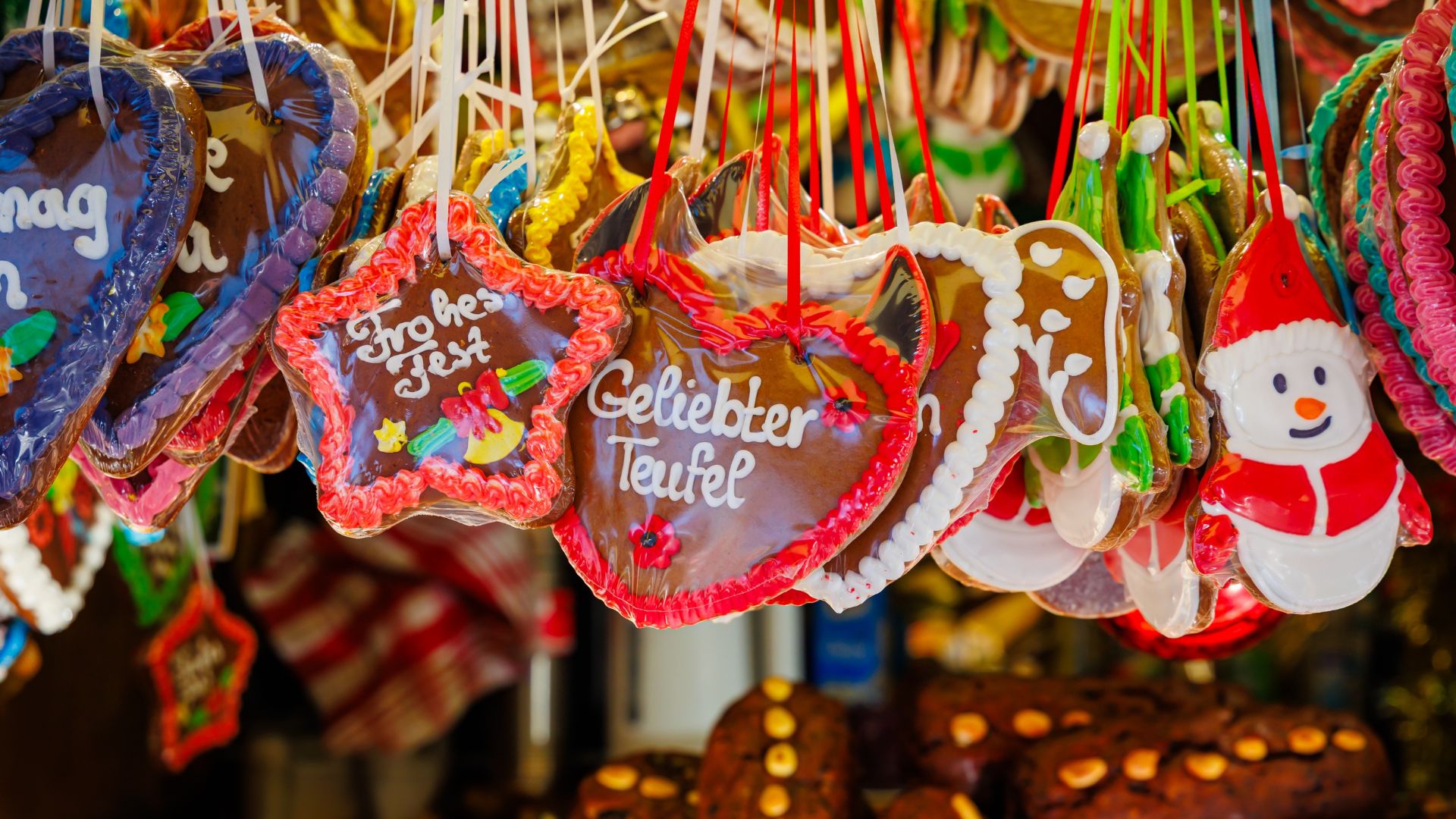
The Advent season, the four weeks before Christmas, is the heart of German Christmas cookie culture. During this period, German homes transform into fragrant spiced bakeries with trays of cookies cooling on every available surface, tins being filled and labelled for gifting, and children participating in the cherished family baking rituals that define German festive culture for generations.
Cookie gifting is one of Germany’s most deeply embedded Christmas traditions. Beautifully decorated tins filled with a carefully selected assortment of homemade cookies are given to neighbours, teachers, colleagues, and friends throughout the Advent season. The care and skill invested in the selection and presentation of these cookie tins communicates warmth and genuine affection in a way that purchased gifts rarely achieve.
Traditional cookie gifting customs:
- Beautifully decorated tins are filled with an assortment of at least six different cookie varieties
- Homemade cookies are always more highly valued than purchased ones in German gift culture
- The combination of varieties in a tin traditionally reflects the baker’s regional background
- Presentation with a ribbon, a sprig of holly, or a handwritten card is considered essential
- Returning the tin to the giver after consumption, washed and sometimes containing a small reciprocal gift, is a traditional courtesy observed in many German communities
Top 11 Traditional German Christmas Cookies to Try
German Christmas cookies are a festive tradition, bringing warmth, flavor, and holiday cheer to households across the country. Each cookie variety reflects regional recipes, family traditions, and centuries-old baking customs.
In this guide, we explore 11 must-try German Christmas cookies. These cookies are listed for reference only and are not ranked in any specific order, offering a delightful taste of Germany’s rich holiday baking culture.
1. Lebkuchen — The King of German Christmas Cookies
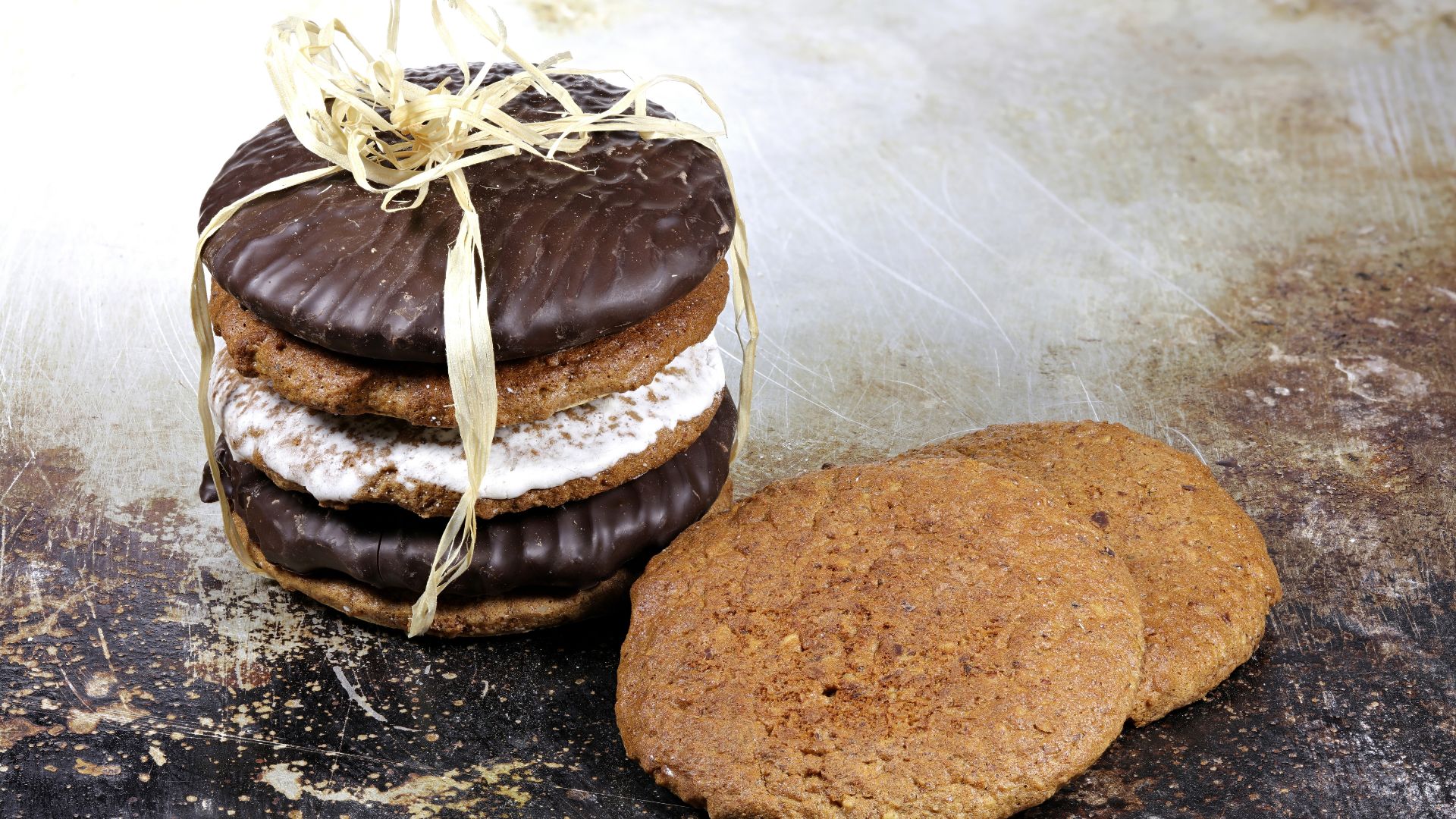
Lebkuchen is without question the most famous and most internationally recognised of all German Christmas cookies. This richly spiced gingerbread-style cookie has been produced in Germany since the 13th century, and the city of Nuremberg in Bavaria is so inseparably associated with the finest Lebkuchen production that its version carries Protected Geographical Indication status throughout the European Union.
The name Lebkuchen derives from the Latin libum, meaning flat bread, and the German Kuchen, meaning cake. The precise etymology is disputed by food historians, but the product itself is entirely unambiguous — a deeply spiced, honey-sweetened, chewy or soft biscuit enriched with ground almonds, hazelnuts, and a complex blend of traditional spices that varies between each baker and each region throughout Germany.
Nuremberg Lebkuchen, known as Nürnberger Lebkuchen, must by law contain a minimum of 25 percent nut content and be produced within the city boundaries of Nuremberg to carry the protected designation. The finest Nürnberger Lebkuchen, classified as Elisen-Lebkuchen, contain at least 25 percent almonds and hazelnuts combined with no flour whatsoever, creating a cookie of extraordinary richness and depth.
Lebkuchen varieties and their characteristics:
| Variety | Characteristics | Coating | Region |
| Elisen-Lebkuchen | Finest quality, flour-free, high-nut content | Chocolate or sugar glaze | Nuremberg |
| Nürnberger Lebkuchen | Protected designation, soft and chewy | Plain, chocolate, or iced | Nuremberg |
| Braune Lebkuchen | Brown spice cookies, firmer texture | Plain or iced | Nationwide |
| Weisse Lebkuchen | Lighter coloured, milder spice | White icing | Various regions |
| Lebkuchenherzen | Heart-shaped, decorated with icing text | Elaborate sugar icing | Nationwide |
| Pfefferkuchen | Pepper ginger spice variant | Plain or glazed | Saxony and East Germany |
The spice blend used in Lebkuchen is called Lebkuchengewürz and is one of the most complex and most regionally varied spice mixtures in all of German culinary tradition. A typical Lebkuchengewürz contains cinnamon, cloves, allspice, anise, cardamom, ginger, nutmeg, and black pepper in proportions that each baker guards as a family secret passed down through generations.
Traditional Lebkuchen spice blend:
- Cinnamon — the dominant and most recognisable warm base spice throughout
- Cloves — providing deep, pungent warmth and complexity in small quantities
- Cardamom — adding floral and citrus notes that lift the heavy spice blend
- Anise — contributing a distinctive herbal sweetness characteristic of the style
- Ginger — providing gentle heat and brightness alongside the other warm spices
- Nutmeg — adding earthy warmth and a slightly creamy aromatic dimension
- Allspice — contributing additional warmth and complexity to the overall profile
- Black pepper — the historical original spice providing subtle heat at the finish
Lebkuchen are sold throughout Germany at Christmas markets from late October onward, and the experience of buying a warm, freshly glazed Lebkuchen at a snow-dusted Nuremberg Christmas market is one of the defining sensory experiences of German festive culture that every visitor should seek out and savour completely.
2. Zimtsterne — Cinnamon Stars
Zimtsterne, cinnamon stars, are one of Germany’s most beautiful and most technically demanding traditional Christmas cookies. These elegant star-shaped meringue cookies made from ground almonds, egg whites, sugar, and generous quantities of cinnamon are recognised instantly by their distinctive white royal icing topping and their delicate chewy almond interior throughout Germany.
The origin of Zimtsterne is closely associated with the Swabian region of south-western Germany and the city of Stuttgart, though they are now baked throughout the entire country. The combination of almond paste enriched with cinnamon and topped with a glossy white meringue glaze creates a cookie of extraordinary visual elegance and genuinely complex flavour that improves significantly with several days of maturation in a sealed tin.
Making Zimtsterne is one of the more technically challenging of all traditional German Christmas cookies. The meringue topping must be applied precisely to each star before baking and must survive the oven without browning or cracking. Getting this right requires practice, patience, and the kind of methodical attention to detail that German baking culture considers both a virtue and a pleasure in equal measure.
Key characteristics of perfect Zimtsterne:
- Bright white meringue topping that remains perfectly white rather than browning in the oven
- Chewy almond interior with a pronounced cinnamon flavour throughout every bite
- Clean star shape with six well-defined points cut using a dedicated star-shaped cutter
- Thin enough to allow the cinnamon flavour to express fully without being overpowering
- Slightly moist interior texture achieved through proper almond proportion in the dough
3. Vanillekipferl — Vanilla Crescents
Vanillekipferl are among the most universally beloved and most technically satisfying of all German Christmas cookies. These delicate crescent-shaped shortbread cookies made from ground almonds or walnuts, butter, flour, and vanilla sugar practically dissolve on the tongue with a buttery richness and a fragrant vanilla warmth that makes them almost impossibly difficult to eat just one at a time.
The origin of Vanillekipferl is disputed between Germany, Austria, and the Czech Republic, all of which claim these crescents as a national Christmas tradition. In Germany, the cookies are closely associated with the festive baking traditions of Bavaria and Austria-influenced regions in the south, though they are now beloved and baked throughout every German state without exception during the Advent season.
The key to outstanding Vanillekipferl is the quality and generosity of the vanilla sugar used both in the dough and in the final coating. German Vanillezucker is made by storing vanilla pods in a jar of caster sugar for several weeks, and the resulting fragrant sugar bears no resemblance to the artificial vanilla flavouring used in lesser versions of this magnificent cookie throughout Germany.
Vanillekipferl production steps:
- Ground almonds or walnuts are combined with flour, butter, sugar, and egg yolk
- The dough is refrigerated for at least one hour to firm it sufficiently for shaping
- Small portions are rolled into logs and shaped into crescent forms by hand
- Crescents are baked at a low temperature until just set with barely any colour
- Still-warm cookies are rolled immediately in vanilla sugar to coat them completely
- Rolling in vanilla sugar a second time after cooling creates a thicker and more fragrant coating
4. Spekulatius — Spiced Shortcrust Cookies
Spekulatius are thin, crisp, spiced shortcrust cookies traditionally associated with Saint Nicholas Day on December 6th and the broader Advent season throughout Germany, Belgium, and the Netherlands. These deeply flavoured cookies are distinguished by their elaborate embossed designs pressed into the dough using carved wooden moulds that are treasured family heirlooms in many German households.
The name Spekulatius derives from the Latin speculator, meaning bishop, and the cookies were originally associated with Saint Nicholas bishop imagery. The carved wooden moulds used to create the traditional embossed designs depicted Saint Nicholas, Christmas scenes, windmills, and other seasonal imagery that transformed each cookie into a miniature work of decorative art throughout the baking tradition.
German Spekulatius differs slightly from its Belgian and Dutch counterparts in its spice balance. The German version tends toward a warmer, more cinnamon-forward spice profile while Belgian speculoos emphasises biscuit sweetness alongside the spice. Both are extraordinary in their own right and the distinction reflects the genuinely regional nature of European Christmas baking traditions across national boundaries.
Spekulatius spice characteristics:
| Spice | Role in Spekulatius | Proportion |
| Cinnamon | Primary warm spice and dominant flavour | Highest |
| Cardamom | Floral and citrus brightness | Medium |
| Cloves | Depth and pungency | Low |
| White pepper | Subtle heat | Very low |
| Nutmeg | Earthy sweetness | Low |
| Anise | Herbal complexity | Optional |
5. Springerle — Anise Relief Cookies
Springerle are among the oldest and most historically fascinating of all German Christmas cookies, dating back to at least the 14th century in the Swabian region of south-western Germany. These white anise-flavoured cookies are distinguished by their extraordinary embossed surface designs created using intricately carved wooden moulds or rolling pins that produce detailed pictorial relief on every cookie surface.
The name Springerle translates loosely as little jumper or little knight, and the cookies’ origins are connected with pre-Christian winter solstice rituals that were absorbed into Christian Advent traditions as Germany converted throughout the medieval period. The elaborate designs depicted on Springerle moulds include biblical scenes, seasonal imagery, animals, flowers, and complex geometric patterns of outstanding decorative quality.
Springerle are made from a simple dough of eggs, sugar, flour, and anise flavouring with no fat whatsoever. This unusual fat-free composition creates a cookie that dries to a hard exterior while maintaining a softer interior and that stores exceptionally well for many weeks without deteriorating in flavour or texture. This excellent keeping quality made Springerle ideal for giving as gifts at Christmas markets throughout medieval Germany.
Traditional Springerle making process:
- Eggs and sugar are beaten together for an exceptionally long time, creating a very thick, pale mixture
- Flour and anise seeds or anise extract are incorporated into the beaten egg mixture carefully
- The dough is rolled to an even thickness on a lightly floured surface with great care
- Carved wooden moulds are pressed firmly into the dough to imprint the design clearly
- Cut cookies must air dry overnight, uncovered, before baking to set the embossed design
- Baking at a very low temperature preserves the white colour and the embossed surface design
- Freshly baked Springerle are stored for at least two weeks before eating for the best flavour
6. Pfeffernüsse — Pepper Nuts
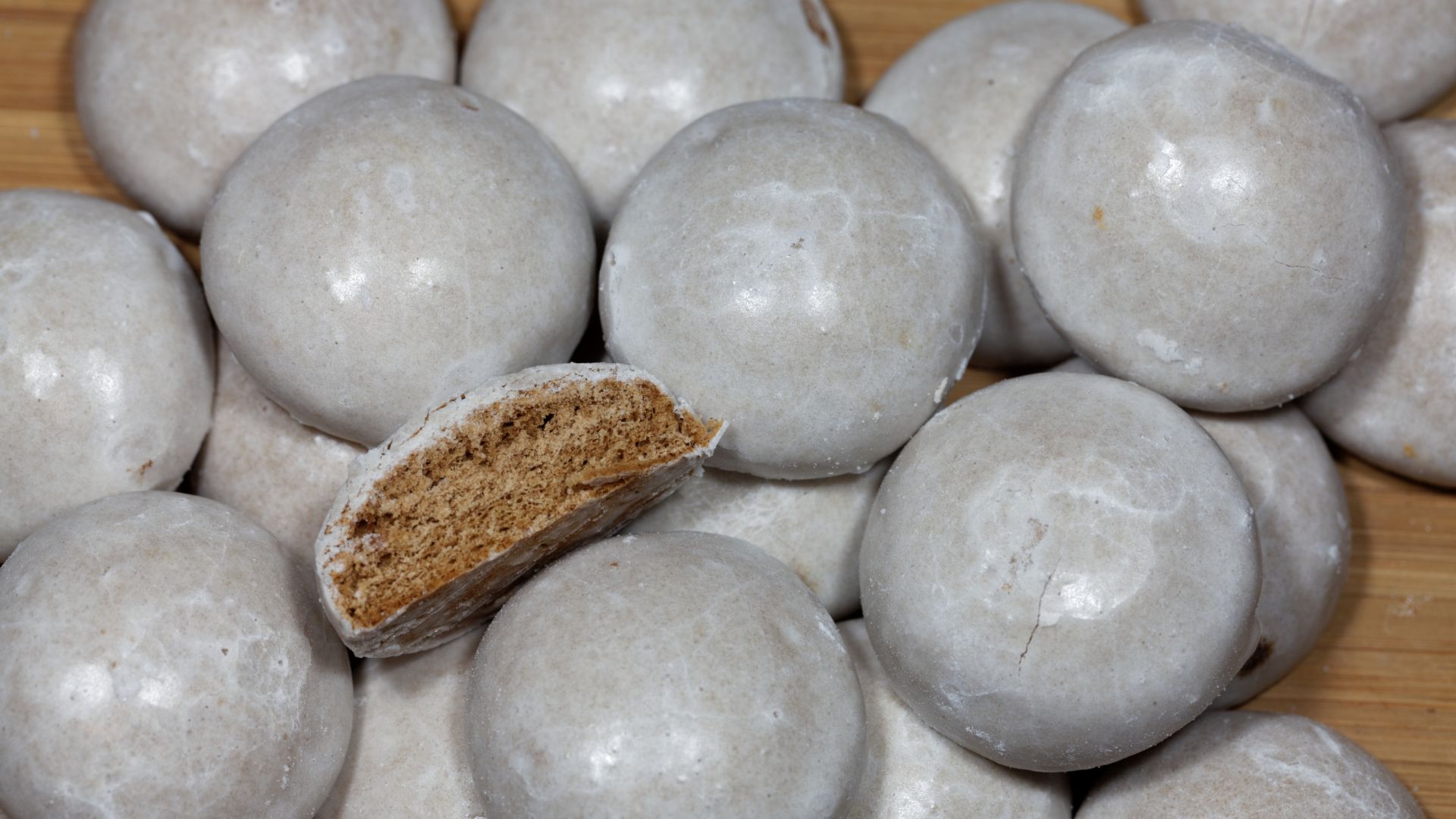
Pfeffernüsse, literally pepper nuts, are small, round spiced cookies that pack an extraordinary concentration of warm aromatic spice into a compact and satisfying bite. Despite their name suggesting a predominantly peppery character, modern Pfeffernüsse are actually a balanced blend of many spices, with black pepper playing a supporting rather than starring role throughout the flavour profile.
Pfeffernüsse are closely associated with northern Germany, particularly with the cities of Hamburg and Lübeck, where they have been produced commercially since the 19th century. The Lübeck confectionery company Niederegger is one of Germany’s most famous Pfeffernüsse producers, and their marzipan-enriched version of the cookie represents a regional variation of outstanding quality throughout the festive season.
Traditional Pfeffernüsse are glazed with a simple white sugar icing that creates a sweet, crisp shell around the intensely spiced interior. The contrast between the sweet white exterior and the dark, complex, spiced interior is one of the most satisfying textural and flavour contrasts in the entire canon of German Christmas baking throughout the country.
Regional Pfeffernüsse variations:
| Region | Variation | Distinctive Feature |
| Northern Germany | Classic glazed | White sugar icing exterior |
| Lübeck | Marzipan Pfeffernüsse | Marzipan-enriched dough |
| Saxony | Harder texture | Longer baking for more crunch |
| Bavaria | Softer version | More honey in the recipe |
| Rhineland | Chocolate glazed | Dark chocolate coating |
7. Stollenkonfekt — Mini Stollen Cookies
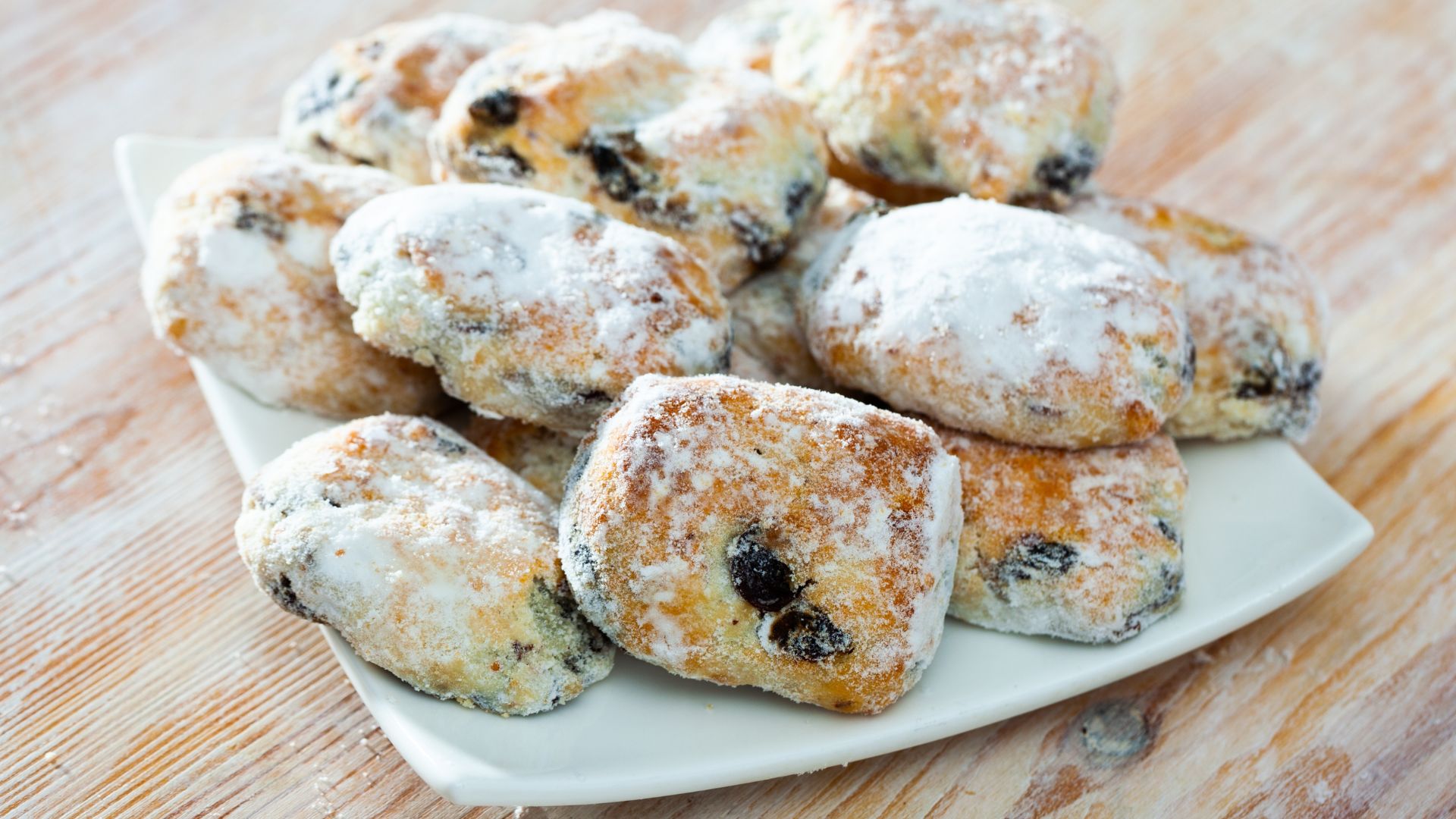
While Stollen is technically a fruit bread rather than a cookie, the miniature Stollenkonfekt version occupies a fascinating middle ground between the two categories and deserves recognition in any complete survey of German Christmas baking traditions. These small marzipan-enriched versions of the famous Dresden Christmas loaf combine the flavours of the full-size Stollen in a convenient bite-sized cookie format.
Stollenkonfekt is made from the same enriched dough as full-size Dresden Stollen, incorporating dried fruits, candied citrus peel, marzipan, and the characteristic Stollen spice blend, but shaped into small oblongs rather than the traditional folded loaf. Each piece is generously coated in butter and powdered sugar immediately after baking in the traditional Stollen manner.
8. Kokosmakronen — Coconut Macaroons
Kokosmakronen are German coconut macaroons and one of the most popular and easiest to make of all German Christmas cookies. These simple but deeply satisfying cookies made from desiccated coconut, egg whites, and sugar require no flour and no complex technique, making them one of the most accessible Christmas baking projects for beginners and children throughout Germany.
The German coconut macaroon is typically baked on a wafer base called an Oblate, a thin edible rice paper disc that prevents the sticky macaroon mixture from adhering to the baking tray and gives the finished cookie a clean, professional appearance. Oblaten are sold in every German supermarket and bakery supply shop during the Advent baking season and are an ingredient unique to German baking tradition.
Kokosmakronen variations are commonly made throughout Germany:
- Chocolate-dipped bottoms for additional richness and flavour contrast
- Cherry-topped versions with a single Maraschino cherry pressed into the centre
- Chocolate chip versions with dark chocolate pieces mixed through the coconut base
- Toasted versions, where the coconut is pre-toasted for a deeper flavour throughout
9. Spritzgebäck — Pressed Butter Cookies
Spritzgebäck are classic German pressed butter cookies made by pushing a rich butter dough through a cookie press or piping bag fitted with a decorative nozzle to create a wide variety of shapes, including rosettes, rings, stars, wreaths, and S-shapes. These buttery, delicate cookies melt on the tongue and are typically decorated with coloured sugar, chocolate, or candied cherries throughout Germany.
The name Spritzgebäck comes from the German verb spritzen, meaning to squirt or to press, referring to the technique of pressing the dough through a shaped nozzle rather than rolling and cutting. This technique creates cookies with a distinctive crisp texture and a decorative ridged surface that holds chocolate coatings, sprinkles, and other decorations particularly well throughout the festive season.
Spritzgebäck is one of the most versatile of all German Christmas cookies because the same basic dough can be flavoured in numerous ways and pressed through different nozzles to create dozens of visually distinct varieties from a single baking session. Lemon zest, vanilla, almond extract, cinnamon, and cocoa are all traditional flavour additions used by German bakers throughout the festive baking season.
10. Linzer Plätzchen — Jam-Filled Sandwich Cookies
Linzer Plätzchen are German jam sandwich cookies inspired by the famous Austrian Linzer torte, and among the most visually attractive of all traditional German Christmas cookies. These delicate shortbread rounds, sandwiched with fruit jam and dusted with powdered sugar, are distinguished by the cut-out window in the upper cookie that reveals the bright jam filling beneath through a star, heart, or round shape.
The dough for Linzer Plätzchen incorporates ground almonds or hazelnuts alongside the flour and butter, creating a cookie of distinctive nutty richness that complements the sweet and slightly tart jam filling beautifully. Red currant jam is the most traditional filling, but raspberry, cherry, apricot, and plum jams are all used throughout Germany, depending on regional preference and family tradition.
Tips for perfect Linzer Plätzchen:
- Chill the dough thoroughly before rolling to prevent the delicate nut-enriched dough from cracking
- Roll to a consistent thickness so the base and top cookies match perfectly after baking
- Cut the window in the top cookie before baking, rather than after, for cleaner edges
- Sandwich with jam only after both cookies have cooled completely to prevent sogginess
- Dust with powdered sugar immediately before serving, rather than long before, for a clean appearance
11. Lebkuchenhaus — The Gingerbread House
No discussion of German Christmas cookies and baking traditions would be complete without acknowledging the Lebkuchenhaus, the gingerbread house, one of the most iconic and most internationally recognisable symbols of German Christmas culture. The tradition of constructing elaborate edible houses from spiced gingerbread is deeply rooted in German folklore and fairy tale culture throughout the country.
The Lebkuchenhaus tradition is intimately connected with the Brothers Grimm fairy tale of Hansel and Gretel, published in 1812, but the actual practice of making edible houses from gingerbread predates the famous story by several centuries. Medieval German bakers created elaborate architectural confectionery as displays of skill and as gifts for wealthy patrons throughout the festive season.
German families traditionally build their Lebkuchenhaus together on a specific Advent weekend, assembling pre-baked gingerbread wall and roof panels using royal icing as mortar and decorating the exterior with an extraordinary variety of sweets, sprinkles, chocolate, marzipan, and sugar work. The finished house is displayed throughout the Advent season before being ceremonially demolished and eaten on or after Christmas Day.
Traditional Lebkuchenhaus decoration elements:
- Royal icing applied to the roof edges as snow and icicle effects
- Pretzels used as window frames and decorative architectural details
- Chocolate buttons creating roof tiles in overlapping scale patterns
- Marzipan figures of people, animals, and trees are placed around the house
- Coloured sugar sprinkles were scattered over the icing to simulate sparkle and light
- Candy canes flanking the doorway as traditional entrance pillars
Regional Cookie Specialities Across Germany
Germany’s Christmas cookie traditions vary significantly between regions, with each state, city, and community having its own signature cookies that reflect local ingredients, historical trade connections, and centuries of regional culinary development throughout the country.
Regional Christmas cookie specialities:
| Region | Signature Cookie | Key Characteristic |
| Nuremberg/Bavaria | Elisen-Lebkuchen | Flour-free, highest nut content |
| Saxony/Dresden | Pfefferkuchen | Pepper-forward spice character |
| Lübeck/North Germany | Marzipan Pfeffernüsse | Marzipan-enriched dough |
| Swabia/Stuttgart | Zimtsterne | Meringue-topped cinnamon stars |
| Rhineland | Spekulatius | Embossed spiced shortcrust |
| Black Forest | Springerle | Anise-flavoured embossed cookies |
| Franconia | Aachener Printen | Dark syrup-based Lebkuchen variant |
| East Friesland | Klaben cookies | Enriched with dried fruit and spice |
| Thuringia | Pfeffernüsse | Particularly firm and spicy version |
| Brandenburg | Baumkuchen derived | Tree-ring-inspired small cookies |
Essential German Christmas Cookie Ingredients
Understanding the key ingredients used throughout German Christmas baking helps explain why these cookies taste so distinctively different from the Christmas baking traditions of other countries and why German Christmas baking has developed such a globally recognised and widely imitated character throughout the world.
The essential German Christmas baking pantry:
| Ingredient | German Name | Purpose in Christmas Baking |
| Lebkuchengewürz | Christmas spice blend | Complex warm spice character |
| Vanillezucker | Vanilla sugar | Fragrant sweetener for coating |
| Bittermandelöl | Bitter almond extract | Traditional almond flavour |
| Anis | Anise seeds | Springerle and some Lebkuchen |
| Marzipan | Marzipan | Filling and enrichment |
| Oblaten | Edible wafer bases | Base for macaroons and Lebkuchen |
| Hirschhornsalz | Ammonium bicarbonate | Traditional leavening agent |
| Pottasche | Potassium carbonate | Traditional leavening for Lebkuchen |
| Zitronat | Candied citron peel | Traditional dried fruit addition |
| Orangeat | Candied orange peel | Essential in Stollen and Lebkuchen |
Hirschhornsalz and Pottasche deserve special mention as these traditional German leavening agents are still used in authentic Christmas cookie recipes and produce a distinctively different texture and flavour from modern baking powder. Both create a particularly crisp texture and a characteristic flavour note that experienced German Christmas cookie eaters recognise and associate strongly with authentic homemade quality throughout the baking tradition.
German Christmas Markets and Cookie Culture
The Christmas market, Weihnachtsmarkt, is the most important public arena for German Christmas cookie culture. These magnificent outdoor markets, held throughout Germany from late November until December 24th, are filled with stalls selling every variety of traditional Christmas cookie alongside mulled wine, roasted nuts, and an extraordinary array of traditional German Christmas foods and crafts.
Germany’s most celebrated Christmas markets for cookie lovers:
| Market | City | Famous For |
| Christkindlesmarkt | Nuremberg | World’s finest Elisen-Lebkuchen |
| Striezelmarkt | Dresden | The oldest market in Germany since 1434 |
| Weihnachtsmarkt | Cologne | Six simultaneous markets throughout the city |
| Münchner Christkindlmarkt | Munich | Bavarian traditional cookie specialities |
| Stuttgarter Weihnachtsmarkt | Stuttgart | Zimtsterne and Swabian specialities |
| Lübecker Weihnachtsmarkt | Lübeck | Marzipan and northern specialities |
| Hamburger Dom | Hamburg | Northern German cookie traditions |
| Frankfurter Weihnachtsmarkt | Frankfurt | Bethmännchen and Frankfurt specialities |
The Nuremberg Christkindlesmarkt, held since 1628 in the old city’s central market square below the famous Frauenkirche church, is the most celebrated Christmas market in the world for Lebkuchen lovers. The stalls here selling Elisen-Lebkuchen represent the pinnacle of this ancient baking tradition, and the experience of buying one fresh from a Nuremberg market stall is genuinely irreplaceable throughout all of German Christmas culture.
Tips for Baking German Christmas Cookies at Home
German Christmas cookies can be made successfully at home outside Germany with careful attention to ingredient sourcing, recipe accuracy, and the patience that these traditional recipes genuinely require. The following tips help home bakers achieve authentic results that honour the centuries-old German baking traditions these cookies represent throughout their long history.
Practical tips for home bakers:
- Source authentic German Lebkuchengewürz spice blend from German delicatessen shops or online rather than substituting with generic mixed spice, as the flavour difference is genuinely significant
- Use real vanilla sugar made with actual vanilla pods rather than artificial vanilla flavouring for Vanillekipferl and any other vanilla-flavoured varieties throughout your baking session
- Allow all doughs that specify refrigeration time to rest for the full recommended period, as shortcutting this step compromises both texture and flavour in every recipe
- Invest in proper German cookie cutters in traditional shapes, including stars, Christmas trees, hearts, and crescents, as the shape is as culturally significant as the flavour in German cookie tradition
- Store finished cookies in metal tins rather than plastic containers, as metal allows the cookies to breathe slightly, improving flavour development over the maturation period recommended in most traditional recipes
Frequently Asked Questions
What is the most popular German Christmas cookie? Lebkuchen is consistently Germany’s most purchased and most gifted Christmas cookie, with Nuremberg’s Elisen-Lebkuchen representing the premium end of a category that sells in the tens of millions throughout the Advent season. Zimtsterne and Vanillekipferl follow closely as the most beloved homemade varieties baked in German households throughout December.
How long do German Christmas cookies keep? Storage life varies considerably between varieties. Lebkuchen, Springerle, and Pfeffernüsse actually improve with several weeks of storage in sealed metal tins. Zimtsterne keep well for two to three weeks in a cool, dry location. Butter cookies and Vanillekipferl are best consumed within two weeks of baking for maximum freshness and quality throughout the festive season.
Can German Christmas cookies be made gluten-free? Several traditional German Christmas cookies are naturally gluten-free or easily adapted. Elisen-Lebkuchen made without flour, Zimtsterne made from almond meringue, and Kokosmakronen contain no flour whatsoever in their traditional recipes. Other varieties can be adapted using German gluten-free flour blends with varying degrees of success, depending on the specific recipe and technique involved.
Where can I buy authentic German Christmas cookies outside Germany? German delicatessens, specialist European food importers, and quality online retailers stock authentic German Christmas cookies throughout the Advent season. Imported Elisen-Lebkuchen, Springerle, and Spekulatius from reputable German producers are widely available internationally and represent a genuinely authentic taste of German Christmas baking culture throughout the world.
Final Thoughts
German Christmas cookies are far more than mere festive confectionery. They are edible archaeology, preserving in their recipes and their rituals the accumulated wisdom of medieval spice traders, monastery bakers, guild confectioners, and countless generations of German home bakers who found in the act of Christmas baking a profound and joyful expression of cultural identity, family love, and seasonal celebration throughout the centuries.
Every tin of Lebkuchen, every plate of Zimtsterne, and every crescent of Vanillekipferl carries within it a direct connection to this extraordinary tradition. Baking these cookies, whether in a German kitchen in Nuremberg or a home kitchen anywhere in the world, is a participation in something genuinely ancient and genuinely beautiful that transcends geography and speaks a universal language of warmth, generosity, and the human need to celebrate the return of the light during the darkest weeks of the year.
Germany has given the world many gifts, but few are as warm, as fragrant, as delicious, and as endlessly welcoming as its magnificent tradition of Christmas cookie baking throughout every corner of this remarkable country.
Hi, I’m Preeti Negi, a content writer who loves mixing creativity with smart strategy.
I have 3 years of experience writing about travel, digital marketing, and study abroad topics. I create content that is easy to read, engaging, and designed to connect with people while also performing well on Google.
When I’m not writing, I enjoy exploring new trends, learning new things, and thinking about fresh ideas for my next piece.
