

Berlin Brandenburg Airport, known universally by its IATA code BER, is one of Europe’s most talked-about airports for reasons that extend well beyond its aviation function into the realm of extraordinary infrastructure history, political controversy, and ultimately successful completion after one of the most troubled construction projects in modern German history.
The airport opened in October 2020 after a delay of eight years beyond its originally planned 2012 opening date, accumulating construction costs that rose from an initial estimate of two billion euros to a final figure exceeding six billion euros and becoming a symbol of German infrastructure planning difficulties throughout the long construction period.
Yet the airport that finally opened is a genuinely impressive, well-designed, and functionally excellent facility that serves Berlin’s position as one of Europe’s most visited capital cities with a capacity, connectivity, and a passenger experience that the old Tegel and Schönefeld airports it replaced could never collectively have matched throughout their operational histories.
Understanding BER Airport thoroughly before your visit eliminates the confusion, the wasted time, and the unnecessary stress that any unfamiliar major airport can generate and transforms the airport experience from a source of anxiety into a smooth, manageable, and occasionally genuinely pleasant component of your Berlin journey throughout your trip.
Please note that this article contains affiliate links. Learn more about it on our Disclosure page. We use ads to support our small business – we hope you don’t mind them too much.
BER Airport: Key Facts and Statistics
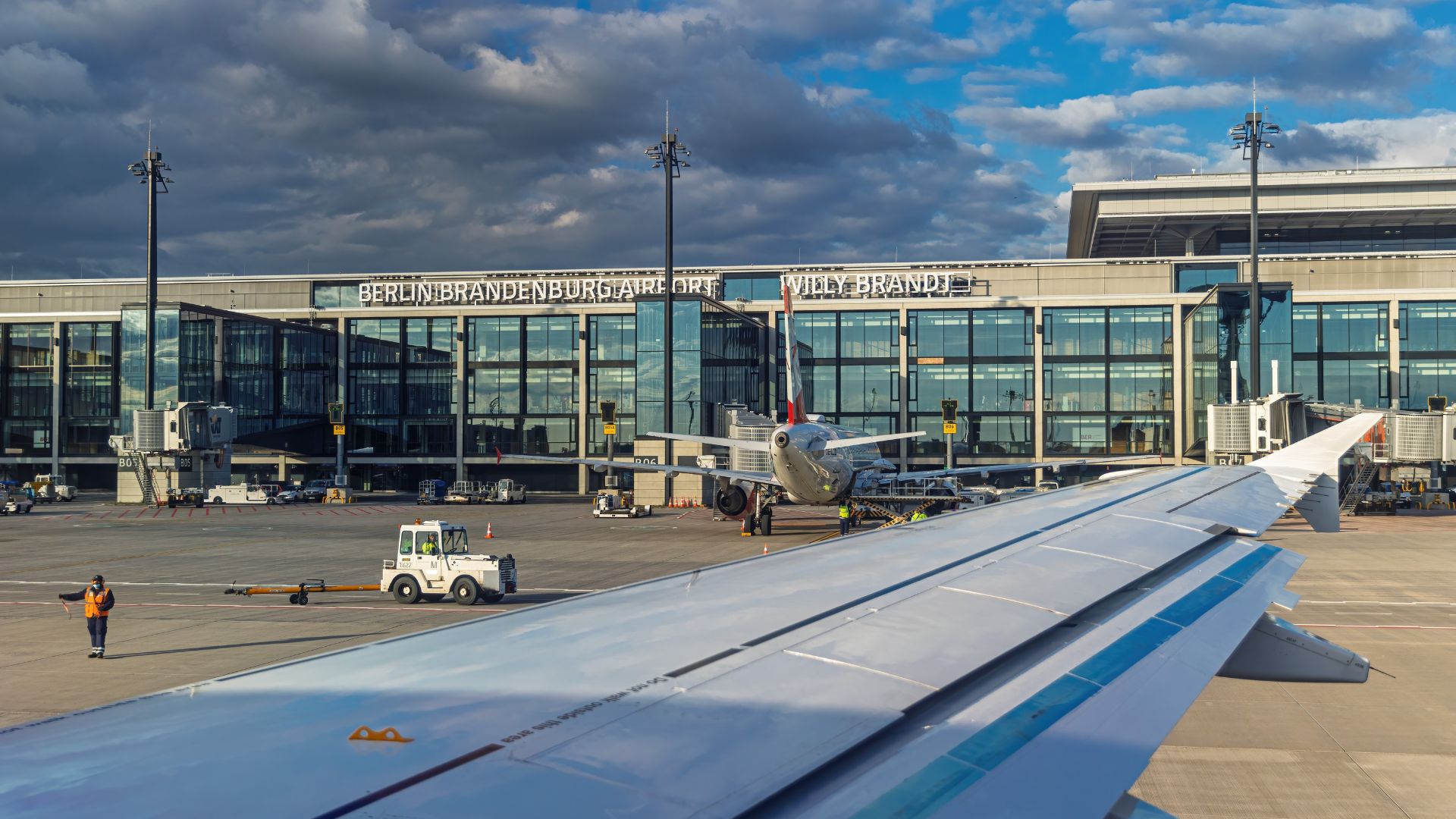
This section provides an overview of BER Airport through key facts and statistics. It highlights important information that helps readers understand the airport’s scale, role, and overall significance in Germany’s modern aviation network.
| Statistic | Detail |
| Full name | Berlin Brandenburg Airport Willy Brandt |
| IATA code | BER |
| Location | Schönefeld, Brandenburg, 18 km south of Berlin |
| Opened | 31 October 2020 |
| The original planned opening | June 2012 |
| Total cost | Approximately €6.5 billion |
| Annual capacity | 34 million passengers |
| Terminals | Terminal 1 (T1) and Terminal 5 (T5) |
| Runways | Two parallel runways |
| Airlines operating | Over 80 airlines |
| Destinations served | Over 150 destinations |
| Ownership | Berlin, Brandenburg, Federal Government |
Terminal Structure — T1 and T5 Explained
Understanding BER Airport’s terminal structure before arrival is essential because the two operational terminals are not adjacent buildings but separate facilities requiring different transport connections, different check-in procedures, and entirely different navigation approaches throughout your airport experience.
Terminal 1 is the airport’s main facility, the enormous new building that represents the entire six billion euro investment and houses the vast majority of BER’s airlines, gates, shops, restaurants, and passenger services. This is where most travellers arriving at or departing from BER will spend their entire airport experience throughout their visit.
Terminal 5 is the former Schönefeld Airport terminal building that predates the new construction by decades and continues to operate as a separate facility serving primarily low-cost carriers, including Ryanair, which stubbornly declined to move to Terminal 1 and continues operating from the older building throughout its BER operations.
The distance between Terminal 1 and Terminal 5 is approximately four kilometres, and transferring between them requires using the free shuttle bus service that runs between the terminals, making any connection involving both terminals a time-consuming process that must be factored carefully into connection planning throughout your journey.
Terminal 1 vs Terminal 5 comparison:
| Feature | Terminal 1 | Terminal 5 |
| Building age | Opened 2020 | Former Schönefeld, much older |
| Main airlines | Lufthansa, easyJet, most carriers | Ryanair primarily |
| Shopping | Extensive — full retail offering | Limited selection |
| Dining | Comprehensive — multiple options | Basic — limited choice |
| Train access | Direct — BER station underneath | Separate S-Bahn station |
| Design quality | Modern, spacious, well-designed | Functional, dated, cramped |
| Lounges | Multiple premium lounges | No dedicated premium lounges |
Terminal 1 — Complete Navigation Guide
Departures Level and Check-In
Terminal 1’s departure level is organised across two main check-in halls designated North and South, each serving specific airline groups and each accessed from the terminal’s main entrance level with clear signage throughout the building directing passengers to the correct hall for their specific airline and flight.
The check-in hall layouts at Terminal 1 follow a logical alphabetical desk numbering system that, combined with the airport’s genuinely good signage, makes finding the correct check-in area a straightforward process even for first-time visitors arriving without prior knowledge of the terminal layout throughout the building.
Security at Terminal 1 is divided between the North and South check-in halls, with separate security lanes serving each departure zone. The security lanes at BER are equipped with modern automated tray return systems and CT scanning equipment that allows liquids and laptops to remain in bags at selected lanes throughout the process.
The airside departure lounges beyond security in Terminal 1 are divided into three main pier sections — the North Pier, South Pier, and the Central Pier — each serving different gate areas and each containing its own selection of shops, restaurants, and passenger facilities throughout the airside zone.
Terminal 1 level guide:
| Level | Function | Key Facilities |
| Level 0 | Arrivals, baggage, ground transport | Baggage claim, car hire, taxi, bus |
| Level 1 | Check-in, departures entry | Check-in halls, security, drop-off |
| Level 2 | Airside retail and dining | Shops, restaurants, gate areas |
| Level 3 | Premium facilities | Business lounges, premium services |
Getting to BER Airport from Berlin City Centre
The transport connections between BER Airport and Berlin city centre are genuinely good, offering multiple options across different price points, journey times, and comfort levels that suit every traveller from the budget backpacker to the business executive throughout every hour of the day and night.
Complete transport options to BER Airport:
| Transport | Journey Time | Price | Frequency | Best For |
| Airport Express (FEX) | 30 min from Berlin Hbf | €3.80 ABC zone ticket | Every 15 min | Speed, reliability |
| S-Bahn S9 | 45–55 min from Ostkreuz | €3.80 ABC zone ticket | Every 20 min | Budget, flexibility |
| S-Bahn S45 | 40–50 min from Südkreuz | €3.80 ABC zone ticket | Every 20 min | South Berlin access |
| Taxi | 30–45 min from the city centre | €40–55 fixed | On demand | Groups, heavy luggage |
| Ride share (Uber/Bolt) | 30–45 min | €35–50 | On demand | Convenience |
| Rental car | 30–40 min | Varies | On demand | Onward road travel |
| Bus X7 | 50–60 min | €3.80 | Frequent | Budget alternative |
The Airport Express (FEX) — The Recommended Option
The FEX Airport Express train is the fastest, most comfortable, and most reliably punctual public transport connection between BER Airport and Berlin city centre, running directly from the airport’s underground station through Ostkreuz and Ostbahnhof to Berlin Hauptbahnhof in approximately 30 minutes throughout the operating day.
The FEX runs every fifteen minutes during peak hours and every thirty minutes during off-peak and late evening periods, with the first service departing before five in the morning and the last service operating after midnight, covering the vast majority of flight arrival and departure times throughout the operating schedule.
The standard Berlin ABC zone ticket costing €3.80 is valid on the FEX and covers the entire journey from the airport to any Berlin city centre destination, including onward connections on U-Bahn, trams, and buses throughout the city’s integrated public transport network.
Luggage storage is generous on the FEX with dedicated overhead racks and floor space at carriage ends designed specifically for the airport route, making even heavily laden travellers comfortable throughout the thirty-minute journey between the airport and Berlin Hauptbahnhof.
Getting to BER from Other German Cities
BER Airport is connected to Germany’s national rail network through the airport’s underground station, which is served by regional express trains and some intercity services that make the airport directly accessible from cities throughout eastern Germany without the need to travel into Berlin city centre first.
Direct train connections to BER Airport:
| Origin City | Train Type | Journey Time | Frequency |
| Berlin Hauptbahnhof | FEX/S-Bahn | 30 min | Every 15 min |
| Dresden | Regional Express | 2 hours | Several daily |
| Leipzig | Regional Express | 2.5 hours | Several daily |
| Cottbus | Regional Express | 1.5 hours | Several daily |
| Frankfurt/Oder | Regional Express | 1 hour | Several daily |
Long-distance coaches operated by FlixBus connect BER Airport directly with numerous German cities, providing a budget-friendly alternative to rail travel for passengers travelling to and from destinations throughout eastern and central Germany throughout the operating schedule.
Airlines and Destinations at BER
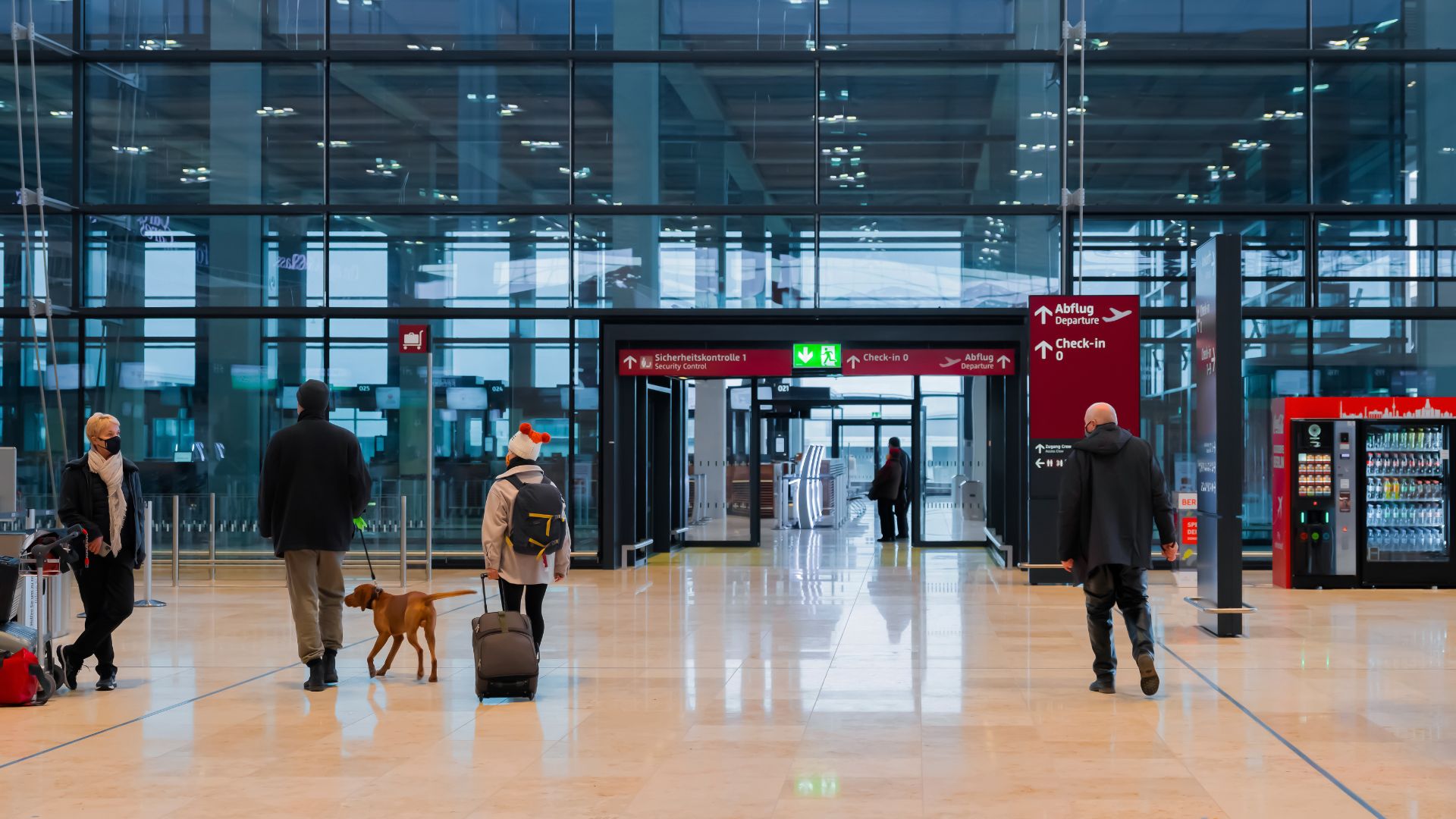
BER Airport serves as the primary hub for easyJet’s Berlin operation, the second largest base for Ryanair in Germany, and an important point on the Lufthansa Group network, collectively providing direct connections to over 150 destinations across Europe, the Middle East, Africa, and select long-haul markets throughout the year.
Major airlines operating at BER:
| Airline | Terminal | Hub Status | Key Destinations |
| easyJet | T1 | Major base | London, Amsterdam, Barcelona, Rome |
| Ryanair | T5 | Major base | Dublin, Madrid, Brussels, Milan |
| Lufthansa | T1 | Focus city | Frankfurt, Munich, Vienna, Zurich |
| Eurowings | T1 | Major base | Düsseldorf, Cologne, Stuttgart |
| Turkish Airlines | T1 | Route | Istanbul hub connections |
| Emirates | T1 | Route | Dubai hub connections |
| Air France | T1 | Route | Paris CDG |
| British Airways | T1 | Route | London Heathrow |
| Wizz Air | T1/T5 | Base | Central and Eastern Europe |
| Condor | T1 | Base | Holiday destinations worldwide |
Long-haul destinations from BER:
- Dubai, with Emirates providing connections throughout the Middle East and Asia beyond
- Istanbul with Turkish Airlines, offering connections to over 300 global destinations beyond
- Various North American destinations with seasonal charter and scheduled operations throughout the summer
- African destinations via hub connections and select direct charter operations throughout the year
Dining at BER Airport
Dining at BER Airport offers travelers a chance to enjoy a variety of food options before or after their journey. From quick bites to relaxed meals, the airport provides convenient dining experiences for different tastes.
Terminal 1 Dining Options
Terminal 1’s dining offering covers the full spectrum from quick grab-and-go options for time-pressed travellers through to sit-down restaurants where a leisurely pre-flight meal is entirely possible throughout the operating hours of the airport.
The airside dining at Terminal 1 is organised across the three pier areas with food options concentrated near the gate areas to ensure convenient access for all departing passengers regardless of which gate area their flight departs from throughout the terminal building.
Terminal 1 airside dining highlights:
| Venue | Type | Location | Price Range |
| Borchardt at BER | Fine dining — German cuisine | Central area | Premium |
| Vapiano | Italian casual dining | South Pier | Mid-range |
| ALEX | All-day dining, breakfast | Central area | Mid-range |
| Kamps Bakery | German bakery, sandwiches | Multiple locations | Budget |
| Burger King | Fast food | Multiple locations | Budget |
| Hans im Glück | Burger restaurant | Central area | Mid-range |
| Starbucks | Coffee, snacks | Multiple locations | Mid-range |
| Yormas | Deli, grab-and-go | Multiple locations | Budget |
Landside dining options in Terminal 1’s departures hall before security provide excellent alternatives for travellers with sufficient time before check-in, with several restaurant options offering a more relaxed atmosphere and generally better value than the airside equivalents throughout the terminal.
Shopping at BER Airport
Terminal 1’s retail offering is significantly better than the airports it replaced, with a well-curated selection of shops covering duty-free and tax-free goods, fashion, electronics, books, souvenirs, and specialist German food and drink products throughout the airside shopping areas.
Terminal 1 shopping highlights:
| Shop | Category | Location | Highlights |
| Heinemann Duty Free | Duty-free — full range | Central airside | Spirits, perfume, cosmetics |
| Relay | Books, newspapers, snacks | Multiple locations | International press |
| Haribo | German confectionery | Airside | German sweets and gifts |
| Nanu Nana | Gifts and souvenirs | Airside | German-themed gifts |
| Zara | Fashion | Airside | International clothing |
| Swarovski | Jewellery | Airside | Crystal gifts |
| Hugendubel | Books | Airside | German and English titles |
| WH Smith | Books, snacks, travel | Airside | English-language reading |
The Heinemann Duty Free store is BER’s flagship retail destination and one of the best-stocked duty-free operations in Germany, with a particularly impressive selection of German spirits, including excellent Schnapps, Weinbrand, and the full range of German premium whisky and gin expressions throughout the store.
German food and drink souvenirs are well represented throughout Terminal 1’s retail areas with dedicated sections for Haribo confectionery, Ritter Sport chocolate, German wine selections, and specialist German food gifts that make excellent and entirely authentic presents for travellers returning home throughout the year.
Airport Lounges at BER
BER Airport’s lounge offering has developed significantly since opening and now provides several options for premium travellers, business class passengers, and lounge membership holders that offer a genuinely comfortable alternative to the general departure areas throughout the operating hours.
BER Airport lounges overview:
| Lounge | Operator | Access | Location | Highlights |
| Lufthansa Business Lounge | Lufthansa | Business class, Miles & More | T1 North | Full service, hot food |
| Lufthansa Senator Lounge | Lufthansa | Senator status, First class | T1 North | Premium service |
| easyJet Airspace Lounge | Plaza Premium | Purchase, Priority Pass | T1 Central | Pay-per-use access |
| No. 1 Lounge | No. 1 Traveller | Purchase, Priority Pass | T1 | Open access lounge |
| Aspire Lounge | Swissport | Purchase, Priority Pass | T1 | General premium lounge |
The pay-per-use lounge options at BER are particularly valuable given the airport’s limited seating in some gate areas during busy periods, with prices ranging from approximately €35 to €50 per person providing access to comfortable seating, complimentary food and drinks, fast WiFi, and shower facilities throughout the visit.
Parking at BER Airport
BER Airport’s parking infrastructure is one of the most comprehensive and most competitively priced among major German airports, offering multiple parking options ranging from covered multi-storey facilities directly connected to Terminal 1 through to economical long-stay car parks served by regular shuttle buses throughout the operating hours.
BER Airport parking options:
| Car Park | Distance to Terminal | Daily Rate | Weekly Rate | Best For |
| P1 Multi-storey | Connected to T1 | €28–35 | €150–180 | Short stay |
| P2 Multi-storey | 5 min walk | €22–28 | €120–150 | Medium stay |
| P3 Open air | Shuttle bus | €12–18 | €65–85 | Long stay budget |
| P4 Long stay | Shuttle bus | €10–15 | €55–70 | Extended travel |
| Premium Parking | Direct T1 connection | €35–45 | — | Ultimate convenience |
| Kiss and Ride | Drop-off zone | Free 20 min | — | Drop-off only |
Pre-booking parking online through the official BER Airport website delivers savings of between twenty and forty percent compared with arriving without a reservation throughout the year and is strongly recommended for any stay longer than a few hours in the parking facilities.
Electric vehicle charging points are available throughout the covered parking facilities at BER Airport, with both standard AC charging and faster DC rapid charging available, reflecting the airport’s commitment to sustainable transport infrastructure throughout its parking operations.
Hotels at and Near BER Airport
After a long flight or before an early departure, finding a comfortable place to stay becomes important. Hotels at and near BER Airport offer convenient accommodation options, giving travelers a relaxing and practical stay close to the airport.
On-Airport Hotel
The Steigenberger Airport Hotel Berlin Brandenburg is the only hotel with direct internal connection to Terminal 1, making it the most convenient accommodation option for early morning departures, late night arrivals, long transit stopovers, and travellers who value absolute proximity to their departure gate throughout their stay.
The hotel offers 395 rooms across multiple categories from standard rooms through to suites, a full-service restaurant and bar, a fitness centre, and meeting facilities that serve both leisure and business travellers throughout the year. Prices range from approximately €120 to €250 per night, depending on season, room category, and booking lead time throughout the calendar.
Near-airport hotel options:
| Hotel | Distance | Price Range | Transport |
| Steigenberger BER | On-airport, connected | €120–250 | Direct T1 connection |
| Radisson BER | 2 min | €90–180 | Short walk or shuttle |
| Holiday Inn BER | 5 min | €80–150 | Shuttle service |
| Hampton by Hilton | 5 min | €70–130 | Shuttle service |
| Ibis Styles BER | 10 min | €60–110 | Bus connection |
Practical Information for Passengers
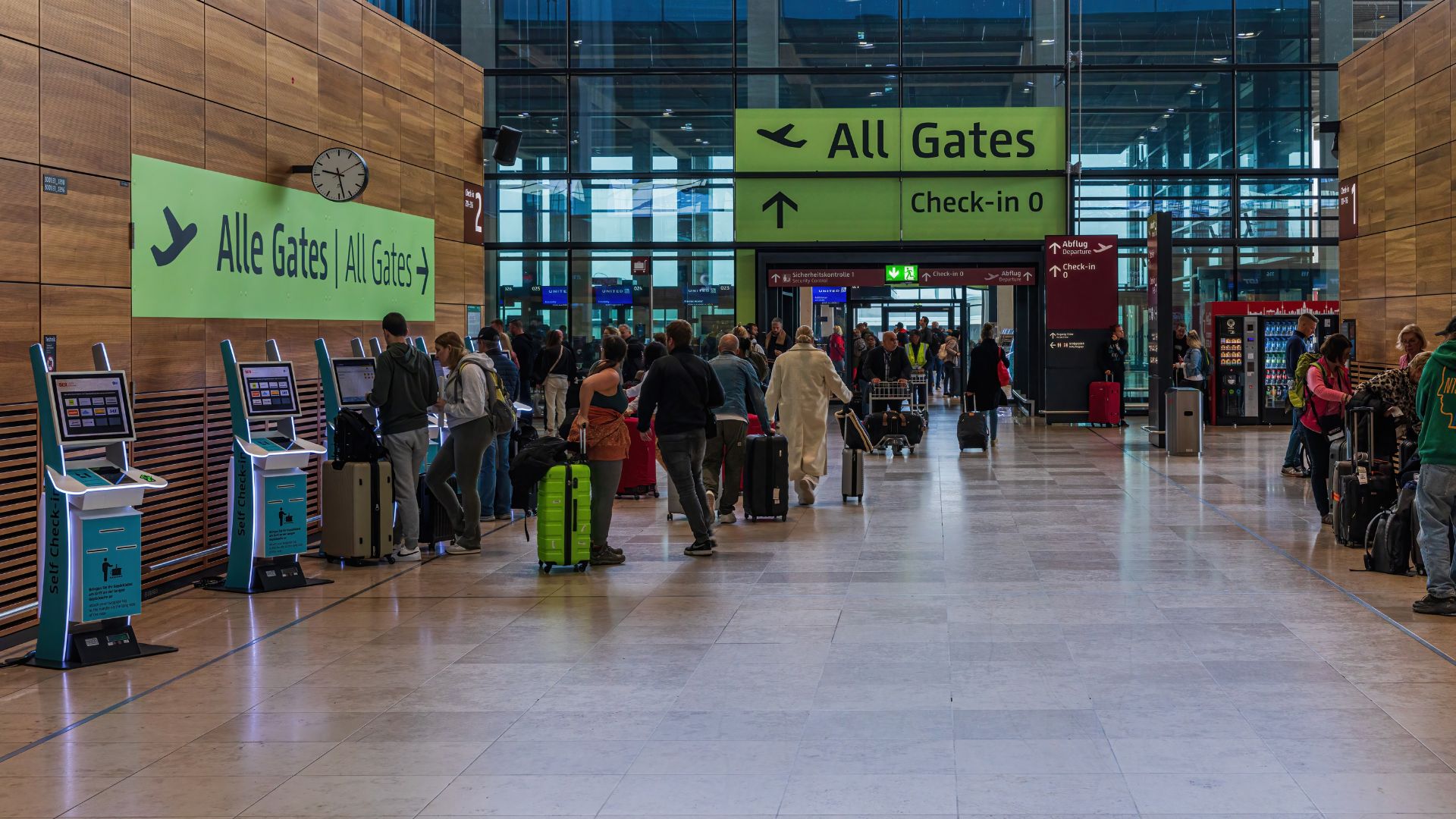
Before traveling, having the right information can make your airport experience much smoother. This section shares practical details that help passengers navigate services and facilities, and provides essential guidance for a more comfortable and stress-free journey.
Check-In and Security Timing
Arriving at BER Airport with sufficient time for check-in, security, and the walk to your gate is the single most important practical preparation for any BER departure, with the airport’s genuine size and the occasional unpredictability of security queue lengths making comfortable time allowances essential throughout the year.
Recommended arrival times at BER:
| Flight Type | Recommended Arrival | Minimum Arrival | Reason |
| European short-haul | 2 hours before | 90 minutes | Standard security wait |
| Long-haul international | 3 hours before | 2.5 hours | Additional security checks |
| During school holidays | 2.5 hours before | 2 hours | Increased passenger volumes |
| During peak summer | 2.5 hours before | 2 hours | Maximum queue times |
| Terminal 5 Ryanair | 2 hours before | 90 minutes | Older facility, different flow |
WiFi and Connectivity
Free WiFi is available throughout Terminal 1 and Terminal 5 at BER Airport, accessible without registration for the first hour and with simple email registration for extended unlimited access throughout the terminal buildings. Connection speeds are generally good throughout the main passenger areas of Terminal 1 throughout the operating hours.
Mobile charging stations are positioned throughout Terminal 1’s airside areas, providing USB-A and USB-C charging points at seating areas near gate clusters, in the main shopping and dining areas, and in the lounge zones throughout the terminal building. Power sockets using German standard two-pin plugs are also available at selected seating positions throughout.
Accessibility Services
BER Airport provides comprehensive accessibility services for passengers with reduced mobility, visual or hearing impairments, and other special needs, with the airport’s modern design incorporating accessibility features throughout Terminal 1 that represent a significant improvement over the facilities at the older airports it replaced.
Accessibility contact and services:
- Mobility assistance booking: Available through your airline at the time of booking throughout Germany
- Wheelchair assistance: Available throughout all areas of Terminal 1 from dedicated assistance desks
- Hearing loops: Installed throughout check-in areas and gate zones in Terminal 1
- Accessible toilets: Available on every level of Terminal 1 throughout the terminal building
- Guide dog relief areas: Designated areas available both landside and airside throughout Terminal 1
BER Airport for Connecting Passengers
BER is not currently a major connecting hub in the way that Frankfurt or Munich airports serve as primary Lufthansa transfer points, but the airport does handle a meaningful volume of connecting passengers on both intra-European routes and connections via Istanbul and Dubai throughout the daily schedule.
Minimum connection times at BER:
| Connection Type | Minimum Time | Recommended Time | Notes |
| T1 to T1 same terminal | 45 minutes | 60 minutes | Standard connection |
| T1 to T1 different pier | 60 minutes | 90 minutes | Security re-entry may be required |
| T5 to T1 | 90 minutes | 120 minutes | Shuttle bus transfer required |
| T1 to T5 | 90 minutes | 120 minutes | Shuttle bus transfer required |
| International to domestic | 60 minutes | 90 minutes | Passport control may apply |
Passengers with connections at BER involving Terminal 5 should treat this as effectively a connection between two separate airports and should not book itineraries with less than 90 minutes between flights involving both terminals under any circumstances throughout their travel planning.
BER Airport’s History — The Long Road to Opening
The story of BER Airport’s construction is one of the most extraordinary infrastructure narratives in modern European history, and understanding it provides essential context for appreciating the airport that finally opened in 2020 after years of delays, cost overruns, and political controversy throughout Germany.
The decision to build a new unified Berlin airport to replace Tegel and Schönefeld was made in the 1990s following German reunification, with the new airport intended to cement Berlin’s status as the capital of a unified Germany and provide the aviation infrastructure appropriate for one of Europe’s major capitals throughout the 21st century.
Construction began in 2006 with a planned opening of October 2011, but was subsequently moved to June 2012, then postponed repeatedly through 2013, 2014, 2016, 2017, and beyond as fundamental construction defects in the fire safety system, ventilation, and other critical systems proved vastly more complex and expensive to remediate than initially understood throughout the construction period.
The principal cause of the delay was a catastrophically inadequate fire safety system that failed to meet regulatory requirements and required fundamental redesign and reconstruction, combined with a project management structure that lacked the authority and expertise to identify and correct problems before they became critical throughout the construction process.
BER construction timeline:
| Year | Event |
| 1996 | Site selection and planning begin |
| 2006 | Construction officially begins |
| 2011 | First planned opening date passes |
| 2012 | The second opening date was cancelled weeks before the ceremony |
| 2013–2017 | Multiple cancelled opening dates |
| 2018 | New management appointed, realistic planning begins |
| 2020 | Airport opens October 31st — eight years late |
| 2021 | Tegel Airport is permanently closed |
Frequently Asked Questions
Which terminal do I use at BER Airport? The majority of passengers use Terminal 1, which serves Lufthansa, easyJet, Eurowings, Turkish Airlines, Emirates, and most other carriers. Ryanair operates exclusively from Terminal 5, the former Schönefeld building. Always check your booking confirmation or airline website to confirm your specific terminal before travelling to the airport throughout your journey planning.
How long does it take to get from BER to Berlin city centre? The Airport Express FEX train takes approximately 30 minutes to Berlin Hauptbahnhof and runs every 15 minutes throughout the day. The S-Bahn S9 takes 45 to 55 minutes and runs every 20 minutes. Both services use the standard Berlin ABC zone ticket costing €3.80, available from machines throughout the airport station.
Is there a direct train from BER to other German cities? Regional express trains connect BER directly with Dresden in approximately two hours and Leipzig in approximately two and a half hours without requiring a change in Berlin city centre. Long-distance ICE and IC trains do not currently stop at BER Airport station, requiring passengers to connect via Berlin Hauptbahnhof throughout their journey planning.
Does BER Airport have left luggage facilities? Left luggage facilities are available at Terminal 1 on the arrivals level, operated by Smarte Locker and offering both short-term and long-term storage solutions. Prices range from approximately €5 for the first hour to €15 for a full day, depending on locker size, throughout the operating hours at the airport.
Is BER Airport worth the journey from central Berlin? The 30-minute FEX journey and the €3.80 ticket price make BER one of the most accessible major European airports from its city centre, comparing very favourably with airports serving London, Paris, and Rome in terms of both journey time and cost throughout the year.
Wrapping Up Your Guide to Berlin Brandenburg Airport
Berlin Brandenburg Airport is a facility that has overcome its extraordinary and well-publicised troubled history to become a genuinely functional, genuinely well-designed, and genuinely impressive airport that serves Berlin and the broader northeast German region with a quality of infrastructure that the previous airport arrangement could never have provided throughout its operational life.
The airport is not without its imperfections — Terminal 5’s continued operation as a separate and inferior facility, some areas of Terminal 1 that feel underserved by retail and dining options, and the ongoing absence of direct long-distance ICE rail connections all represent areas where the BER experience falls short of the best European airport standards throughout the current operation.
But for the vast majority of travellers passing through BER on short-haul European routes, the airport delivers a smooth, well-organised, and perfectly adequate experience that compares favourably with equivalent facilities throughout Germany and Europe, and the constant improvement programme that airport management has pursued since opening continues to address the remaining shortcomings throughout the facility.
Arrive with sufficient time, use the FEX train, confirm your terminal before travelling, and approach BER with reasonable expectations, and you will find an airport that does its job competently, comfortably, and without the drama that its extraordinary construction history might lead you to anticipate throughout your Berlin travel experience.
Hi, I’m Preeti Negi, a content writer who loves mixing creativity with smart strategy.
I have 3 years of experience writing about travel, digital marketing, and study abroad topics. I create content that is easy to read, engaging, and designed to connect with people while also performing well on Google.
When I’m not writing, I enjoy exploring new trends, learning new things, and thinking about fresh ideas for my next piece.
