

Germany has a well-deserved international reputation as a meat-loving nation, with its celebrated sausage culture, its legendary Schnitzel tradition, and its Oktoberfest imagery of roast chickens and pork knuckles dominating the international perception of German food culture throughout the world.
Yet the reality of vegetarian eating in Germany in 2025 is dramatically different from this perception, with the country having undergone one of the most rapid and most comprehensive transformations in European food culture over the past decade throughout its cities and increasingly throughout its rural regions.
Germany now has more registered vegetarians and vegans per capita than almost any other European country, with approximately ten percent of the population identifying as vegetarian and a further two percent as vegan, numbers that have driven extraordinary changes throughout the restaurant and food retail landscape.
The infrastructure supporting vegetarian eating in Germany — dedicated vegetarian and vegan restaurants, comprehensive plant-based supermarket sections, vegetarian-friendly menus at mainstream restaurants, and a growing culture of meat-free eating across all demographics — makes Germany one of the most genuinely accommodating countries for vegetarian visitors throughout Europe.
Please note that this article contains affiliate links. Learn more about it on our Disclosure page. We use ads to support our small business – we hope you don’t mind them too much.
German Vegetarian Food: The Complete Overview
German vegetarian food offers a rich and varied culinary landscape shaped by regional traditions, seasonal ingredients, and evolving modern tastes. Exploring these dishes reveals how Germany balances classic recipes with contemporary vegetarian preferences across its diverse food culture.
Germany’s vegetarian food landscape at a glance:
| Category | Options | Quality | Availability |
| Traditional meat-free dishes | Broad range | Excellent | Nationwide |
| Modern vegetarian restaurants | Outstanding | Excellent | Major cities |
| Vegetarian supermarket range | Very comprehensive | Good to excellent | Nationwide |
| Hotel breakfast vegetarian | Very good | Good | Nationwide |
| Fast food vegetarian | Growing rapidly | Good | Nationwide |
| Street food vegetarian | Reasonable range | Good | Cities |
| Regional vegetarian specialities | Variable | Good to excellent | Regional |
| Fine dining vegetarian | Outstanding | Excellent | Major cities |
Traditional German Dishes That Are Naturally Vegetarian
Many traditional German dishes are naturally vegetarian, relying on potatoes, cabbage, mushrooms, grains, and dairy rather than meat. These recipes highlight regional ingredients and simple cooking methods, creating hearty, satisfying meals deeply rooted in Germany’s culinary heritage.
Germany’s Meat-Free Heritage Dishes
Germany’s food heritage contains a far larger number of naturally vegetarian traditional dishes than the international meat-focused reputation suggests, reflecting centuries of peasant food culture in which vegetables, grains, and dairy products formed the foundation of daily eating throughout the country.
Many of Germany’s most beloved and most regionally distinctive traditional dishes contain no meat whatsoever, existing independently of the sausage and schnitzel culture that dominates the international perception and providing vegetarian visitors with genuine access to authentic German food culture throughout their visit.
Understanding which traditional German dishes are naturally meat-free allows vegetarians to eat authentically at traditional German Gasthäuser and regional restaurants without requiring special modifications or substitutions, participating fully in the regional food culture throughout their experience.
The following traditional dishes represent the finest naturally vegetarian options in German food culture and appear on menus throughout the country with sufficient frequency to form the foundation of a genuinely satisfying meat-free German dining experience throughout any visit.
Käsespätzle: Germany’s Greatest Vegetarian Comfort Food
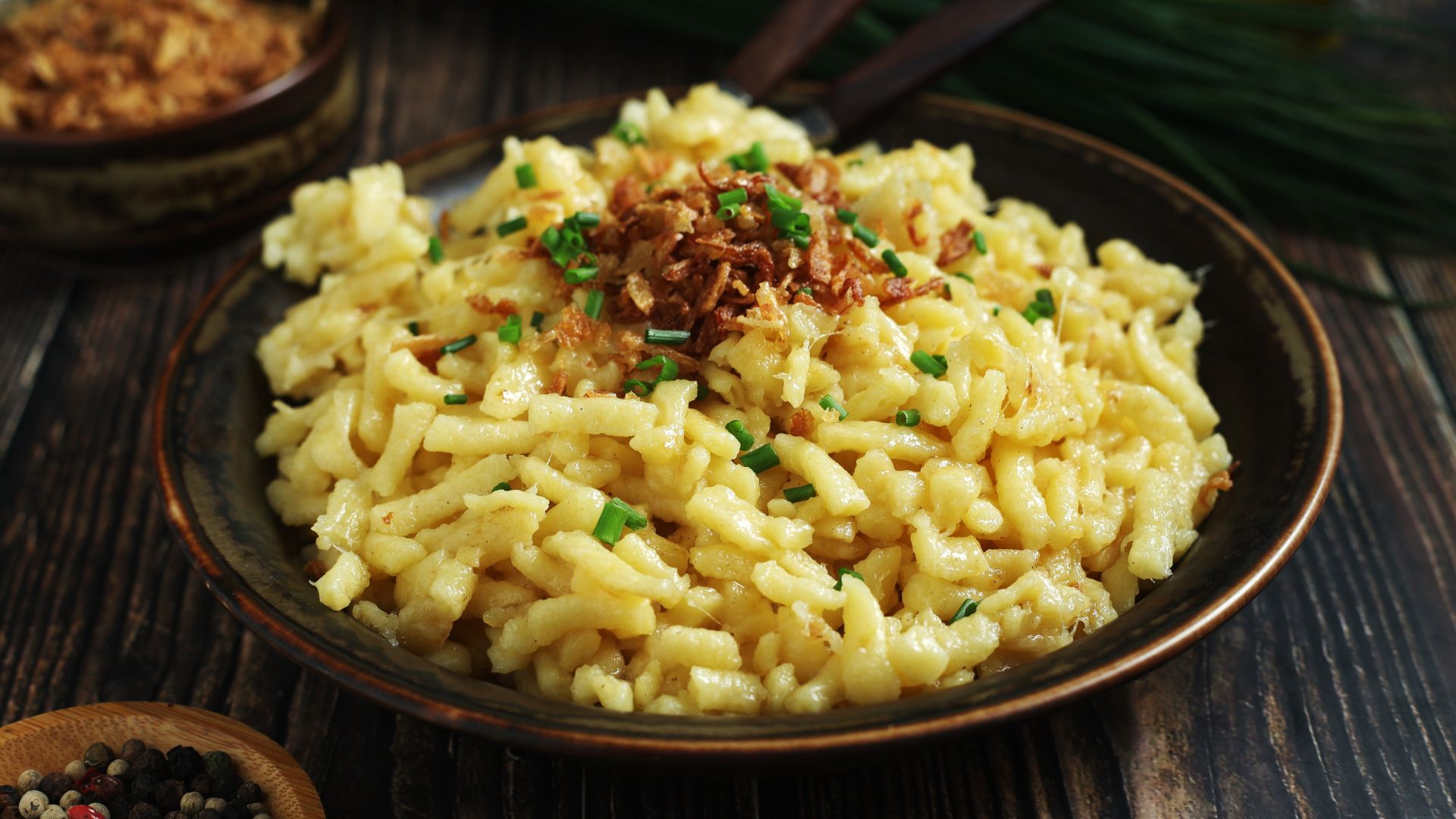
Käsespätzle is Germany’s most beloved vegetarian comfort food, a dish of soft egg noodles — Spätzle — layered with generous quantities of melted Allgäuer Emmental or Bergkäse cheese and topped with crispy caramelised onions that create one of the most satisfying and most authentically German eating experiences available anywhere.
The dish originates in Swabia and Bavaria, where it functions as both an everyday weekday meal and a celebratory Sunday dish, served in pottery or cast iron dishes that retain heat throughout the eating and presented with a generosity of portion that reflects the dish’s status as genuine comfort food throughout southern Germany.
The quality of Käsespätzle varies enormously between establishments, with the finest versions using freshly made Spätzle, authentic regional mountain cheese, and hand-caramelised onions that have been cooked slowly to genuine sweetness rather than the pale rushed version that inferior establishments produce throughout their kitchen operations.
Where to find the best Käsespätzle:
| City/Region | Best Venue Type | Price Range | Notes |
| Stuttgart | Traditional Swabian Gasthaus | €10–16 | The spiritual home |
| Munich | Bavarian restaurant | €11–17 | Excellent quality |
| Freiburg | Regional restaurant | €10–15 | Baden variation |
| Augsburg | Traditional Gasthaus | €9–14 | Authentic Swabian |
| Nationwide | Any quality Gasthaus | €10–18 | Available everywhere |
Flammkuchen: Alsatian-German Vegetarian Pizza

Flammkuchen is one of Germany’s finest and most versatile naturally vegetarian dishes when ordered in its classic formulation: a paper-thin, crisp flatbread base spread with crème fraîche and topped with thinly sliced onions, which emerge from a wood-fired oven in under two minutes, blistered and smoky throughout.
The classic Flammkuchen contains Speck smoked lardons alongside the onion, but the vegetarian version, substituting mushrooms, peppers, or additional cheese toppings for the Speck, is both widely available and genuinely outstanding, representing one of the most satisfying vegetarian options on any German restaurant’s menu.
The Baden-Württemberg and Rhineland-Palatinate regions, where Flammkuchen originates, offer the finest versions, with wood-fired ovens and quality regional crème fraîche producing a result dramatically superior to the reheated or oven-baked versions found in some mainstream restaurants throughout the country.
Flammkuchen vegetarian topping combinations:
| Combination | Toppings | Character | Availability |
| Classic vegetarian | Crème fraîche, onion, no meat | Simple, outstanding | Very common |
| Mushroom | Crème fraîche, mixed mushrooms, onion | Earthy, rich | Common |
| Cheese | Crème fraîche, Camembert, onion | Creamy, indulgent | Common |
| Herb | Crème fraîche, fresh herbs, onion | Fresh, light | Available |
| Pumpkin autumn | Crème fraîche, pumpkin, sage | Seasonal | Autumn only |
Maultaschen: Swabian Pasta Parcels
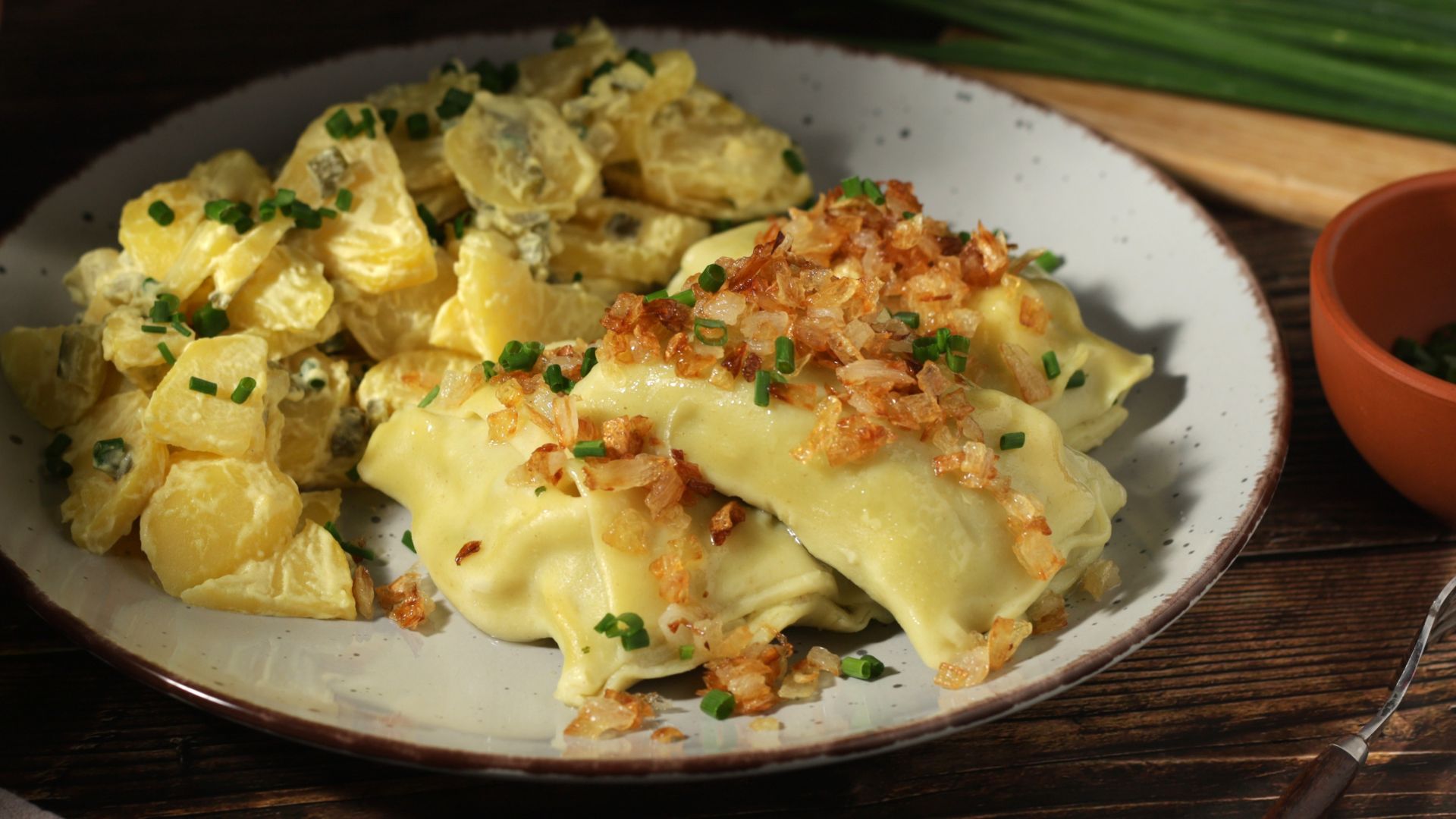
Maultaschen are Swabia’s magnificent contribution to German pasta culture, large pasta parcels with a distinctive fluted edge that enclose various fillings and that are one of the most genuinely satisfying and most regionally distinctive dishes in the entire German culinary repertoire throughout their home region.
The traditional Maultaschen filling contains spinach, Quark fresh cheese, breadcrumbs, eggs, and herbs, and while some versions also include meat, the spinach and cheese vegetarian version is the oldest and most traditional preparation of this beloved Swabian speciality throughout the Stuttgart region and beyond.
The name Maultaschen translates roughly as mouth pockets, but a more charming etymology suggests the dish was created by monks to hide meat inside pasta during Lent — a story that somewhat explains the generous spinach filling that makes the vegetarian version entirely authentic and not merely a meat substitute throughout the tradition.
Maultaschen are served in multiple ways — in clear broth, pan-fried with eggs and onions as Gebratene Maultaschen, or with butter and breadcrumbs — each preparation offering a distinct character and making this one of the most versatile vegetarian options in the Swabian restaurant repertoire throughout the region.
Reibekuchen: Rhineland Potato Pancakes
Reibekuchen are the Rhineland’s beloved potato pancakes, grated raw potato formed into flat cakes and fried in hot oil until deeply golden and crispy, served with apple sauce or sour cream in a combination that represents one of Germany’s most instinctively satisfying and most naturally vegetarian street food and restaurant dishes throughout the region.
The Rhineland knows these as Reibekuchen, while Bavaria calls them Reiberdatschi, and other regions have their own names, but the essential dish — crispy potato pancake with apple sauce — is universally understood and universally loved throughout Germany as one of the country’s finest everyday vegetarian pleasures.
The Christmas market version of Reibekuchen, served from outdoor stands with apple sauce on a paper plate throughout December, is one of the finest and most authentically German vegetarian street food experiences available anywhere in the country during the winter festival season.
The perfect Reibekuchen checklist:
- Grated raw potato — never mashed or processed throughout the preparation
- Deeply golden crust achieved through hot fat and patience throughout the frying
- Tender interior that contrasts with the crispy exterior throughout the eating
- Fresh apple sauce with subtle spicing alongside the hot pancake throughout
- Soured cream as an alternative accompaniment for those preferring a savoury version
Quarkkeulchen: Saxon Fresh Cheese Pancakes
Quarkkeulchen are one of eastern Germany’s most distinctive and most genuinely delicious naturally vegetarian dishes, Saxon fresh cheese pancakes made from a mixture of Quark, mashed potato, egg, flour, and sugar that are fried to golden perfection and served with soured cream or cinnamon sugar throughout Saxony and Thuringia.
The combination of Quark’s gentle acidity with the potato’s substance creates a pancake of remarkable complexity for such a simple preparation, and the Quarkkeulchen served at Dresden’s Christmas market and traditional Saxon restaurants represents one of the most genuine and most overlooked vegetarian regional specialties throughout Germany.
Finding Quarkkeulchen outside Saxony and Thuringia requires specifically seeking out eastern German regional restaurants, but within its home region, this dish appears on virtually every traditional menu and at every Christmas market throughout December as a beloved and entirely natural vegetarian option.
Kartoffelsuppe: Germany’s Great Potato Soup
Kartoffelsuppe — German potato soup — is one of the country’s most deeply comforting and most universally available naturally vegetarian dishes when prepared in its traditional form with vegetable stock, though visitors must check that the preparation uses vegetable rather than pork-based stock in any specific establishment throughout Germany.
Regional variations of Kartoffelsuppe span the full spectrum of German regional food culture, from the smooth Bavarian version enriched with cream and finished with chives through to the chunky Saxon version with root vegetables and the elegant Frankfurt version finished with herb oil throughout the national repertoire.
The finest Kartoffelsuppe uses floury regional potatoes, properly made vegetable stock, and a finishing element — whether cream, herb oil, or crunchy croutons — that elevates the dish from simple peasant food into a genuinely sophisticated first course throughout quality German restaurant menus.
Linseneintopf: German Lentil Stew
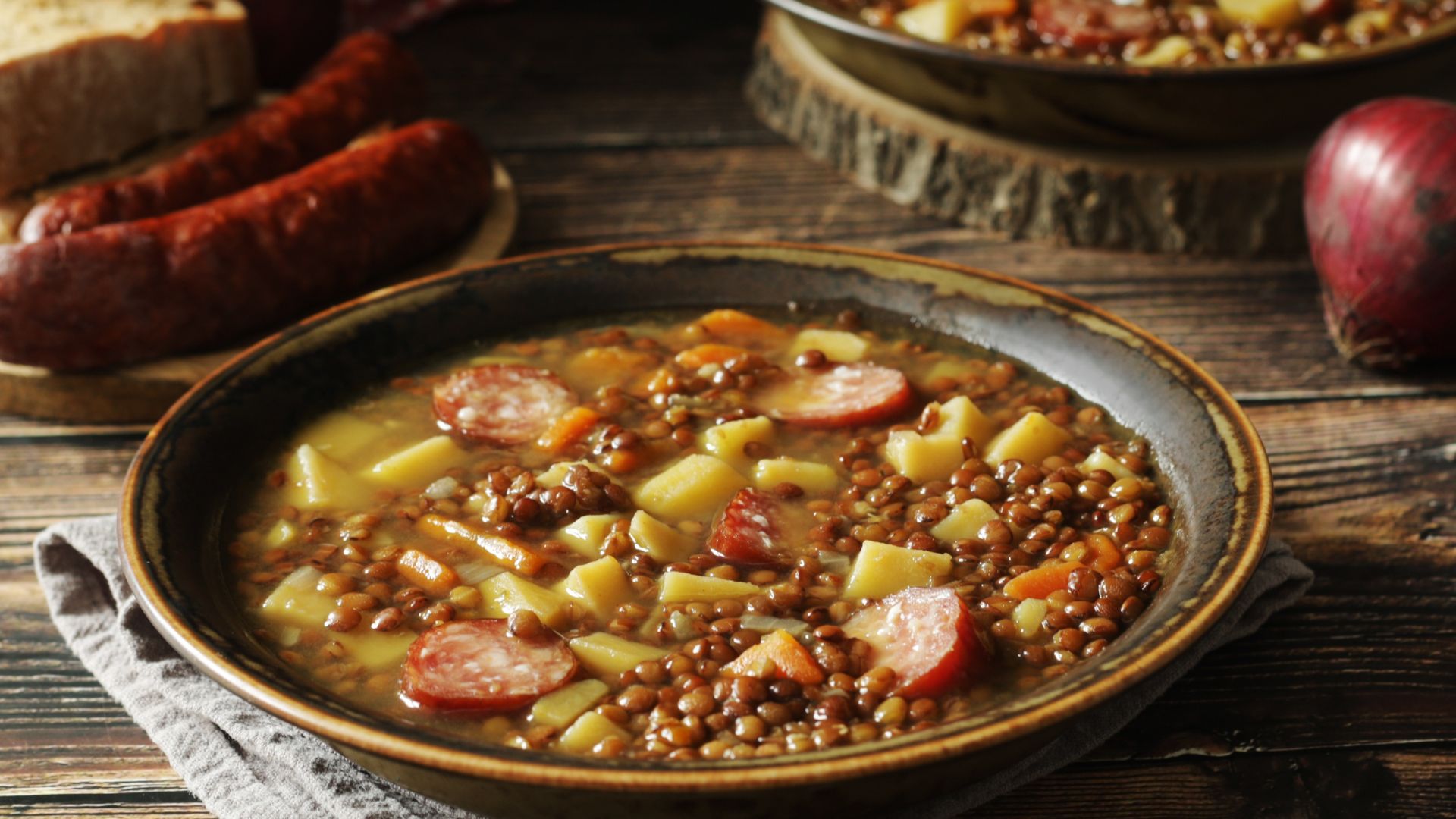
German lentil stew — Linseneintopf — is one of the country’s great everyday comfort dishes, a hearty preparation of brown lentils with root vegetables, onions, and a sharp vinegar finish that creates one of the most satisfying and most genuinely nourishing naturally vegetarian meals in the German culinary repertoire throughout the colder months.
The Swabian version of Linseneintopf with Spätzle egg noodles floated on top is the most celebrated regional variation, a dish of extraordinary heartiness that demonstrates the Swabian genius for combining humble ingredients into something genuinely extraordinary throughout the regional food tradition.
The vinegar finish — Essig — is absolutely essential to authentic German Linseneintopf, the sharpness cutting through the earthiness of the lentils and creating the characteristic flavour balance that distinguishes this dish from lentil preparations throughout other European culinary traditions.
The Modern Vegetarian Restaurant Scene in Germany
Germany’s modern vegetarian restaurant scene has grown rapidly, reflecting changing dietary preferences and innovative culinary trends. From creative plant-based cafés to upscale vegetarian dining, restaurants across the country offer diverse menus that combine tradition with contemporary flavors.
Berlin: Europe’s Vegetarian and Vegan Capital
Berlin has developed one of the most extraordinary vegetarian and vegan restaurant scenes in Europe, with a concentration of dedicated plant-based establishments in Prenzlauer Berg, Kreuzberg, Friedrichshain, and Mitte that collectively create a dining landscape of genuine international significance throughout the city.
The city’s reputation as a creative and countercultural capital has attracted chefs from throughout Europe and the world who have established Berlin as a genuinely pioneering destination for innovative plant-based cooking that goes far beyond simple meat substitution to create genuinely exciting and genuinely original food throughout the restaurant scene.
Berlin’s vegetarian and vegan restaurants range from casual street food operations and casual lunch cafés to genuinely fine dining establishments where plant-based menus are presented with the same technical ambition and ingredient quality as any other serious restaurant throughout the city’s food scene.
Berlin’s outstanding vegetarian and vegan restaurants:
| Restaurant | District | Style | Price Range |
| Cookies Cream | Mitte | Fine dining vegetarian | €€€€ |
| Kopps | Mitte | Vegan fine dining | €€€ |
| Lucky Leek | Prenzlauer Berg | Vegan bistro | €€€ |
| Brammibal’s Donuts | Multiple | Vegan donuts | € |
| Vöner | Friedrichshain | Vegan Döner | € |
| Babel | Prenzlauer Berg | Lebanese vegetarian | €€ |
| Muse | Prenzlauer Berg | Plant-based | €€€ |
| Lanyard | Mitte | Vegetarian café | €€ |
Munich: Bavarian Tradition Meets Modern Plant-Based
Munich’s vegetarian restaurant scene has developed remarkably over the past decade, moving from a small number of dedicated health food restaurants to a comprehensive and genuinely exciting range of establishments that serve outstanding plant-based food within and alongside the traditional Bavarian food culture throughout the city.
The challenge and the pleasure of vegetarian eating in Munich lies in navigating between the traditional Bavarian establishments where the naturally vegetarian options are genuinely excellent — Käsespätzle, Obatzda, Brezn, Leberkäsesemmel without Leberkäse — and the newer dedicated vegetarian restaurants that bring international influences to the Bavarian food scene throughout the city.
Munich’s best vegetarian options:
| Venue | Type | Speciality | Location |
| Tian | Fine dining vegan | Award-winning plant-based | Frauenplatz |
| Max Pett | Vegan restaurant | Full menu vegan | Pettenkoferstraße |
| Gratitude | Vegan café | Plant-based brunch | Schwabing |
| Café Jasmin | Traditional café | Vegetarian-friendly | Maxvorstadt |
| Prinz Myshkin | Vegetarian restaurant | International vegetarian | Altstadt |
Hamburg: Northern Germany’s Plant-Based Pioneer
Hamburg’s vegetarian and vegan restaurant scene reflects the city’s cosmopolitan port city character and its strong environmental consciousness, creating a food landscape where plant-based eating is both well-established and genuinely exciting throughout the Hanseatic city’s diverse restaurant districts.
The Schanzenviertel district is Hamburg’s centre of vegetarian and vegan eating, with a concentration of dedicated plant-based restaurants, vegetarian-friendly cafés, and organic food shops that make this neighbourhood one of the finest destinations for meat-free eating in northern Germany throughout the year.
Other Cities: Germany’s Growing Vegetarian Scene
Cologne’s vegetarian scene has developed strongly around the city’s student population and its cosmopolitan character, with a range of dedicated vegetarian restaurants and extensively vegetarian-friendly mainstream establishments throughout the Ehrenfeld, Sülz, and Südstadt districts that collectively provide excellent meat-free eating options throughout the year.
Frankfurt’s vegetarian options reflect the city’s international financial community and the diverse food culture that accompanies it, with outstanding vegetarian-friendly restaurants throughout the Sachsenhausen, Bornheim, and Nordend districts that serve everything from traditional vegetarian German food to sophisticated international plant-based cuisine throughout the city.
Stuttgart’s vegetarian scene benefits from the city’s strong connection to Baden-Württemberg’s agricultural heritage and organic farming movement, with quality vegetarian restaurants and outstanding vegetarian-friendly traditional establishments throughout the city that reflect Swabia’s strong tradition of vegetable and grain-based cooking.
Vegetarian Street Food in Germany
Vegetarian street food in Germany offers flavorful, convenient options found in markets, festivals, and city streets. From freshly baked pretzels to vegetable-based snacks, these quick bites highlight how traditional flavors adapt easily to vegetarian preferences.
Navigating the Street Food Scene Without Meat
Germany’s street food culture is more vegetarian-friendly than its meat-heavy reputation suggests, with several genuinely outstanding street food options that contain no meat and that provide excellent options for vegetarian visitors exploring German cities throughout the day.
Germany’s best vegetarian street foods:
| Street Food | Description | Where to Find | Price |
| Brezn | Fresh salted pretzel | Everywhere | €1–3 |
| Käsespätzle | Cheese egg noodles | Markets, festivals | €7–12 |
| Flammkuchen | Vegetarian flatbread | Markets, restaurants | €8–13 |
| Reibekuchen | Potato pancakes | Christmas markets | €3–5 |
| Obatzda with Brezn | Cheese spread with pretzel | Bavaria | €5–8 |
| Dampfnudel | Sweet steam bun | Bavaria, markets | €4–7 |
| Schmalzkuchen | Fried dough puffs | Christmas markets | €3–5 |
| Kartoffelsuppe | Potato soup | Market stalls | €4–7 |
| Mushroom roll | Sautéed mushrooms in roll | Modern markets | €5–8 |
| Crepes | Sweet or savoury | Markets, stalls | €3–6 |
The Döner Kebab — Germany’s most consumed street food — deserves specific mention for vegetarians, as the vegetarian Gemüse Döner filled with roasted vegetables, salad, and sauces is widely available throughout German cities and represents one of the finest and most genuinely satisfying vegetarian fast food options in the country throughout the day.
The Falafel Döner, a natural evolution of the Turkish-German street food tradition, is available at virtually every Döner Imbiss throughout German cities and provides outstanding protein-rich vegetarian street food at exceptional value throughout every meal period throughout the country.
German Supermarkets: Vegetarian Shopping Guide
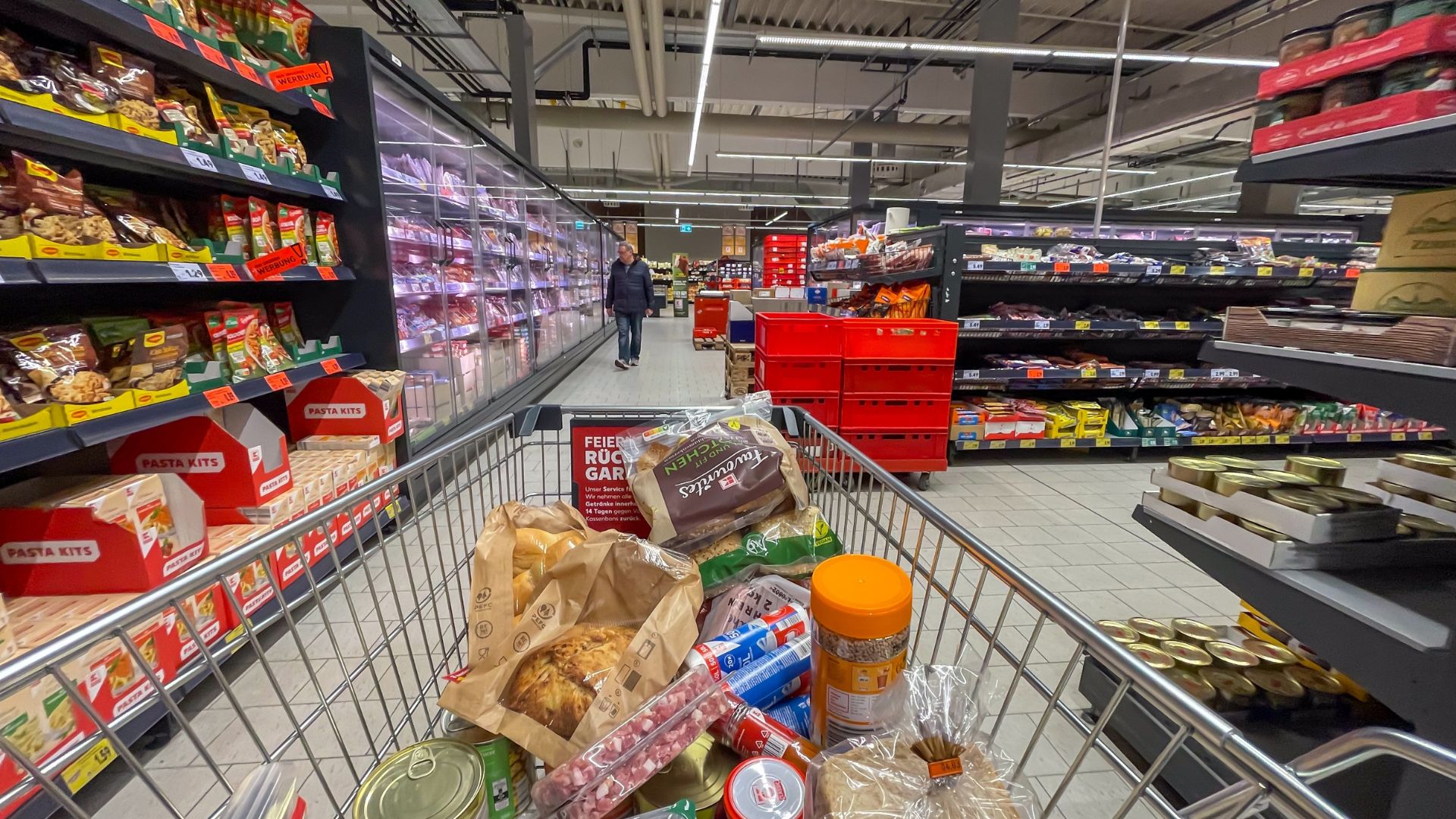
German supermarkets offer a wide range of vegetarian products, from fresh produce to plant-based alternatives. Understanding store layouts, labeling systems, and common ingredients helps shoppers easily find suitable options while exploring Germany’s diverse grocery culture.
Finding Vegetarian Food in German Supermarkets
Germany’s supermarkets offer one of the most comprehensive vegetarian and vegan product ranges in Europe, reflecting the dramatic growth of plant-based eating and the competitive pressure between the major German supermarket chains to develop the finest plant-based product offerings throughout the retail food sector.
Major German supermarket chains and their vegetarian offerings:
| Supermarket | Vegetarian Range | Own-Brand Vegan | Price Level |
| Edeka | Extensive | Good | Mid to premium |
| Rewe | Very extensive | Very good | Mid-range |
| Aldi | Good — growing | Growing range | Budget |
| Lidl | Good — growing | Growing range | Budget |
| Netto | Moderate | Limited | Budget |
| Kaufland | Extensive | Good | Mid-range |
| Whole Foods equivalent | Denn’s Biomarkt | Excellent | Premium |
| Organic specialist | Alnatura | Outstanding | Premium |
The Alnatura organic supermarket chain is Germany’s finest destination for quality vegetarian and vegan grocery shopping, with an extraordinary range of certified organic products, regional artisan food producers, and genuinely outstanding plant-based prepared foods throughout its stores in major German cities.
Cheese and Dairy: The Vegetarian’s Best German Friends
Cheese and dairy products play an essential role in German vegetarian cuisine, offering rich flavors and satisfying nutrition. From regional cheeses to creamy dairy specialties, these ingredients form the foundation of many comforting and traditional vegetarian dishes.
Germany’s Extraordinary Dairy Culture Supports Vegetarian Eating
Germany’s exceptional cheese and dairy culture is one of the most important supports for vegetarian eating in the country, providing protein-rich, flavour-intensive alternatives to meat that are both culturally authentic and genuinely outstanding in quality throughout the German food landscape.
The Quark, Germany’s most consumed fresh cheese, deserves particular attention as a vegetarian’s greatest German ally — versatile, protein-rich, available in multiple fat contents, and capable of functioning as a spread, a dessert base, a soup enricher, and a sauce ingredient throughout vegetarian German cooking.
Essential German dairy products for vegetarians:
| Product | German Name | Protein Content | Uses |
| Fresh cheese | Quark | High | Spread, dessert, cooking |
| Butter cheese | Butterkäse | Good | Everyday eating, cooking |
| Mountain cheese | Bergkäse | High | Käsespätzle, eating |
| Emmental | Emmental | High | Cooking, eating |
| Soft fresh cheese | Frischkäse | Moderate | Spread, cooking |
| Soured cream | Saure Sahne | Moderate | Topping, cooking |
| Yoghurt | Joghurt | Good | Breakfast, dessert |
| Cream cheese spread | Schmand | Moderate | Cooking, spreads |
Vegetarian German Baking and Pastry
Vegetarian German baking and pastry traditions feature a remarkable variety of cakes, breads, and sweet treats. Using ingredients like butter, eggs, fruits, and nuts, these recipes highlight the craftsmanship and rich heritage of Germany’s celebrated baking culture.
Germany’s Extraordinary Baking Tradition Is Largely Vegetarian
Germany’s celebrated baking culture is almost entirely naturally vegetarian, providing an extraordinary range of breads, cakes, pastries, and sweet treats that contain no meat whatsoever and that represent some of the finest naturally vegetarian food experiences available anywhere in the country throughout the year.
The German bread tradition — with over 3,000 officially recognised varieties — provides vegetarian visitors with an almost endless range of flavour, texture, and nutritional character that makes bread-based eating in Germany a genuinely satisfying and varied experience throughout any length of stay.
Vegetarian German baked goods:
| Category | Examples | Where to Find | Notes |
| Sourdough rye | Roggenbrot, Pumpernickel | Every bakery | Naturally vegan |
| Wheat rolls | Brötchen, Semmel | Every bakery | Usually vegan |
| Pretzel products | Brezn, Laugenbrötchen | Every bakery | Usually vegan |
| Sweet pastries | Plunderteilchen, Croissant | Every bakery | Contains dairy |
| Fruit cakes | Pflaumenkuchen, Apfelkuchen | Konditorei | Contains eggs |
| Cream cakes | Tortes, Sahnetorten | Konditorei | Contains dairy |
| Christmas cookies | Lebkuchen, Zimtsterne | Christmas markets | Usually vegetarian |
| Stollen | Dresdner Stollen | December | Contains dairy and eggs |
Communicating Dietary Requirements in Germany
Communicating dietary requirements in Germany is usually straightforward when you understand common food terms and dining customs. Knowing how to explain vegetarian preferences clearly helps ensure restaurant staff and hosts can accommodate your needs comfortably
Essential German Phrases for Vegetarian Visitors
Communicating vegetarian requirements in Germany has become progressively easier as awareness of plant-based diets has grown, but knowing the correct German terminology for dietary requirements remains essential for ensuring accurate communication throughout every dining experience.
The term vegetarisch is universally understood throughout Germany and clearly communicates the absence of meat and fish from the required meal, while vegan is equally well understood and requires no translation throughout the German restaurant and food retail landscape.
Essential vegetarian communication phrases:
| Situation | German Phrase | English Meaning |
| I am a vegetarian | Ich bin Vegetarier/Vegetarierin | I am vegetarian |
| I am vegan | Ich bin Vegan | I am vegan |
| Without meat | Ohne Fleisch | Without meat |
| Without fish | Ohne Fisch | Without fish |
| Is this vegetarian | Ist das vegetarisch | Is this vegetarian |
| Does this contain meat | Enthält das Fleisch | Does this contain meat |
| Do you have vegetarian options | Haben Sie vegetarische Gerichte | Do you have vegetarian dishes |
| Without chicken broth | Ohne Hühnerbrühe | Without chicken stock |
| I do not eat meat or fish | Ich esse kein Fleisch und keinen Fisch | No meat or fish |
| What do you recommend | Was empfehlen Sie | What do you recommend |
The specific question about chicken or meat-based stock — Brühe — is particularly important in Germany, where traditional soups, sauces, and stews are frequently prepared with pork or chicken stock, even when the visible ingredients appear entirely vegetarian throughout the dish preparation.
Regional Vegetarian Specialities: A Complete Map

Germany’s regions offer distinctive vegetarian specialties shaped by local ingredients, agricultural traditions, and culinary heritage. Exploring these dishes across the country reveals how regional cooking creates diverse plant-based meals enjoyed in homes, markets, and restaurants.
Germany’s finest regional vegetarian dishes:
| Region | Vegetarian Dish | Key Ingredients | Season |
| Swabia | Käsespätzle | Egg noodles, mountain cheese | Year-round |
| Swabia | Linseneintopf mit Spätzle | Brown lentils, vinegar | Winter |
| Bavaria | Obatzda mit Brezn | Camembert, butter, Brezn | Year-round |
| Bavaria | Dampfnudel mit Vanillesauce | Sweet steam bun, custard | Year-round |
| Rhineland | Reibekuchen mit Apfelmus | Potato pancakes, apple sauce | Year-round |
| Rhineland | Himmel und Erde | Apple, potato, onion | Year-round |
| Saxony | Quarkkeulchen | Quark, potato, cinnamon | Year-round |
| Thuringia | Thüringer Klöße | Potato dumplings | Year-round |
| Baden | Flammkuchen vegetarisch | Crème fraîche, onion | Year-round |
| Franconia | Schäufele mit Kloß | Potato dumpling accompaniment | Year-round |
| Hamburg | Rote Grütze | Red berry compote | Summer |
| Berlin | Kartoffelsuppe | Potato soup, herbs | Winter |
Himmel und Erde: A Naturally Vegetarian Rhineland Classic
Himmel und Erde — Heaven and Earth — is one of the Rhineland’s most poetically named and most naturally vegetarian traditional dishes, combining mashed potato from the earth with apple sauce from the trees of heaven in a combination of extraordinary simplicity and extraordinary satisfaction throughout its long history in Rhineland cooking.
The traditional version includes Blutwurst blood sausage and fried onions, but the purely vegetarian preparation of potato mash with apple sauce and caramelised onions is both entirely traditional and genuinely outstanding, representing one of the finest examples of German vegetarian comfort food throughout the regional repertoire.
Finding an authentic Himmel und Erde in its Rhineland homeland — in Cologne, Düsseldorf, or the surrounding region — provides one of the most satisfying and most genuinely regional vegetarian dining experiences available anywhere in Germany throughout the year.
Obatzda: Bavaria’s Greatest Vegetarian Cheese Spread
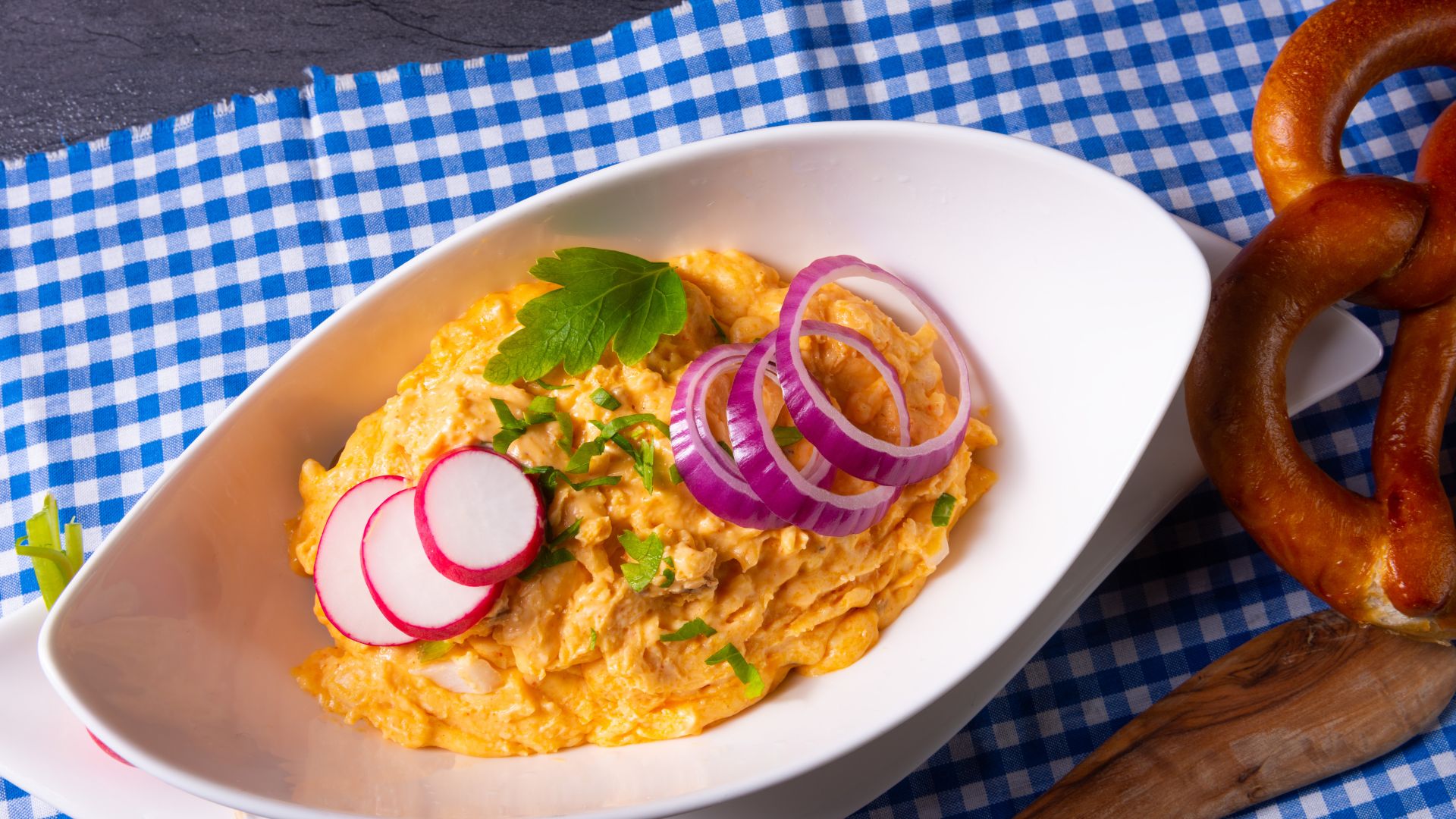
Obatzda is Bavaria’s magnificent contribution to the world of cheese spreads, a preparation of ripe Camembert, butter, cream cheese, caraway seeds, sweet paprika, and a splash of beer that creates a spread of remarkable complexity and genuine Bavarian character throughout its production and consumption.
The dish carries Protected Geographical Indication status, confirming its Bavarian heritage and the quality standards required for authentic production, and the finest Obatzda served at Munich’s Viktualienmarkt or a genuine Bavarian beer garden represents one of the most genuinely exceptional naturally vegetarian experiences in German food culture throughout the year.
Obatzda is served with fresh Brezn, Radieschen radishes, and a Weissbier wheat beer in the traditional Bavarian beer garden setting, creating a completely vegetarian and completely authentic Bavarian experience that requires absolutely no meat substitution or compromise throughout the enjoyment of the meal.
Vegetarian Eating at German Christmas Markets
German Christmas markets offer many vegetarian treats alongside traditional festive foods. From warm pretzels and roasted nuts to sweet pastries and potato dishes, vegetarian visitors can enjoy the rich flavors and festive atmosphere of these seasonal markets.
December’s Finest Vegetarian Street Food Opportunities
German Christmas markets provide some of the finest and most atmospheric vegetarian street food opportunities available anywhere in Germany, with the seasonal concentration of outdoor food vendors creating a rich landscape of naturally meat-free options that warm and nourish throughout the cold December evenings.
Christmas market vegetarian favourites:
| Food | Description | Where Best | Price |
| Reibekuchen | Potato pancakes with apple sauce | Rhineland markets | €3–5 |
| Schmalzkuchen | Tiny fried dough puffs, sugar | Cologne markets | €3–4 |
| Gebrannte Mandeln | Caramelised spiced almonds | All markets | €3–6 |
| Waffeln | Fresh waffles with cream | All markets | €3–5 |
| Glühwein | Hot mulled wine | All markets | €3–5 |
| Flammkuchen | Thin crispy vegetarian flatbread | Most markets | €7–10 |
| Kartoffelsuppe | Hot potato soup | Most markets | €4–6 |
| Maronen | Roasted chestnuts | Many markets | €3–5 |
| Lebkuchen | Gingerbread | All markets | €2–20 |
| Crepes | Sweet filled pancakes | All markets | €3–5 |
Practical Tips for Vegetarian Visitors to Germany
Vegetarian visitors to Germany can enjoy a wide range of dining options with a little preparation. Understanding local food terms, menu labels, and traditional ingredients helps travelers confidently find vegetarian meals while exploring the country’s diverse culinary culture.
Ten Essential Tips for Eating Well Without Meat
Understanding the practical strategies that make vegetarian eating in Germany genuinely excellent rather than merely adequate provides the most useful preparation for any plant-based visitor throughout their German travel experience.
Tip 1 — Learn the word vegetarisch. This single word clearly communicates requirements throughout Germany without ambiguity and is universally understood by restaurant staff throughout every region.
Tip 2 — Always ask about stock. Traditional German soups and sauces frequently use meat-based stock invisibly, making the specific question Ohne Fleischbrühe essential for genuinely meat-free eating throughout traditional establishments.
Tip 3 — Explore Käsespätzle everywhere. This dish appears throughout southern and central Germany in genuine vegetarian form and consistently delivers outstanding quality, representing the very best of German comfort food throughout any visit.
Tip 4 — Visit Alnatura for supermarket shopping. This organic chain provides Germany’s finest range of quality vegetarian and vegan products throughout its stores and represents the best single destination for plant-based grocery shopping in Germany.
Tip 5 — Berlin deserves specific vegetarian exploration. The German capital’s extraordinary plant-based restaurant scene is genuinely world-class and warrants dedicated exploration throughout any Berlin visit, regardless of overall trip length.
Tip 6 — Order the Gemüse Döner for street food. The vegetable Döner Kebab provides outstanding, protein-rich, genuinely satisfying vegetarian street food at exceptional value throughout German cities at virtually any hour of the day.
Tip 7 — Embrace the bread and cheese tradition. Germany’s extraordinary bread diversity and its magnificent regional cheese culture collectively provide a vegetarian eating experience of genuine depth and satisfaction that requires no meat equivalent throughout the entire food experience.
Tip 8 — Seek Flammkuchen in the south and west. The vegetarian Flammkuchen represents one of Germany’s finest naturally meat-free dishes and deserves seeking out specifically throughout Baden-Württemberg and the Rhineland-Palatinate region.
Tip 9 — Christmas markets are vegetarian-friendly. The seasonal concentration of outdoor food vendors throughout December creates exceptional vegetarian street food opportunities that should be specifically sought out by plant-based visitors during the winter season.
Tip 10 — Download HappyCow before arriving. This global vegetarian restaurant finder has outstanding coverage throughout German cities and provides the most comprehensive and most reliable guide to dedicated vegetarian and vegan establishments throughout every major German city.
Frequently Asked Questions
Is Germany easy for vegetarians? Germany is significantly easier for vegetarians than its reputation suggests, particularly in major cities where dedicated vegetarian restaurants, comprehensive supermarket ranges, and widespread awareness of plant-based diets have created an excellent infrastructure for meat-free eating throughout the country.
What traditional German food is vegetarian? Many traditional German dishes are naturally vegetarian including Käsespätzle, Flammkuchen without Speck, Reibekuchen, Linseneintopf, Kartoffelsuppe with vegetable stock, Quarkkeulchen, Dampfnudel, Obatzda, and the entire German bread and baking tradition throughout the country.
Is vegetarian food easy to find in rural Germany? Rural Germany presents more challenges than urban areas for vegetarian eating, though traditional naturally meat-free dishes including Käsespätzle, potato dishes, and egg preparations appear on virtually every Gasthaus menu throughout the country. Communicating requirements clearly using the word vegetarisch and asking about stock is particularly important in rural establishments throughout Germany.
What is the best city in Germany for vegetarian food? Berlin is Germany’s outstanding vegetarian and vegan food capital, with a concentration of dedicated plant-based establishments in Prenzlauer Berg, Kreuzberg, and Mitte that collectively create one of Europe’s finest plant-based dining scenes throughout the year. Munich, Hamburg, and Cologne also offer excellent vegetarian options throughout their respective food scenes.
Are German Christmas markets good for vegetarians? German Christmas markets offer excellent vegetarian options including Reibekuchen potato pancakes, Schmalzkuchen fried dough puffs, Flammkuchen flatbread, caramelised almonds, waffles, roasted chestnuts, and Glühwein mulled wine that collectively provide a genuinely satisfying and genuinely festive vegetarian Christmas market experience throughout December.
Final Thoughts
Germany’s vegetarian food landscape is richer, more diverse, and more genuinely satisfying than the country’s international meat-focused reputation suggests, offering plant-based visitors access to outstanding traditional dishes, world-class modern restaurants, and a rapidly growing food culture that makes meat-free eating genuinely pleasurable throughout every region.
Explore the traditional meat-free classics, seek out Berlin’s extraordinary plant-based restaurant scene, embrace the bread and cheese culture, and approach Germany with the confidence that vegetarian eating here is not merely possible but genuinely excellent throughout your entire visit.
Hi, I’m Preeti Negi, a content writer who loves mixing creativity with smart strategy.
I have 3 years of experience writing about travel, digital marketing, and study abroad topics. I create content that is easy to read, engaging, and designed to connect with people while also performing well on Google.
When I’m not writing, I enjoy exploring new trends, learning new things, and thinking about fresh ideas for my next piece.
