

Tuscany may be known for its headline acts—Florence, Siena, and the Chianti wine region—but the soul of this storied landscape lies in its smaller, quieter corners. Scattered across golden hills and misty valleys, Tuscany towns are where the region’s true character comes alive: in sun-bleached stone walls, medieval piazzas, Renaissance churches, and the comforting aroma of fresh bread from a local forno. These are places where time slows, landscapes inspire, and every winding alley feels like a story waiting to unfold. In this guide, we’re taking you beyond the obvious—into the heart of the 28 most beautiful Tuscany towns to visit, where authenticity, charm, and timeless beauty await around every corner.
Please note that this article contains affiliate links. Learn more about it on our Disclosure page. We use ads to support our small business – we hope you don’t mind them too much.
Table of Contents
28 Best Towns in Tuscany to Visit
When Jacky and I explored Tuscany, we decided to rent a car, and it turned out to be the smartest travel choice we made. Having our own wheels meant we could venture beyond the usual tourist spots and uncover the quieter, lesser-known Tuscany towns and villages—those postcard-perfect places hidden among rolling vineyards and cypress-lined country roads. To fully experience the rhythm of Tuscan life, we recommend staying in a traditional Tuscan villa—where you can wake up to the scent of rosemary, views over olive groves, and mornings that feel like stepping into a Renaissance painting.
Tuscany is a region built on hilltops and history. Every town tells its own story—whether it’s a medieval village still surrounded by Roman-era walls, or a peaceful hamlet tucked away in the Chianti wine region. These picturesque Tuscany towns offer a romantic blend of architecture, local cuisine, artisanal culture, and landscapes that make every turn worth a pause.
So, wondering which Tuscany towns are worth visiting? This guide features the best of them—from ancient stone strongholds and winding cobbled streets to scenic countryside retreats. Whether you’re enjoying a glass of Vernaccia in San Gimignano, wandering the lanes of Volterra, or soaking in Saturnia’s famous hot springs, these are the most beautiful Tuscany towns to visit for a truly unforgettable Italian escape.
1. Florence

I’m technically cheating by including Florence here—it’s more of a city than one of the classic Tuscany towns—but leaving it off this list would be unthinkable. As the capital of the region and the birthplace of the Renaissance, Florence is the beating heart of Tuscany: rich in history, culture, and beauty at every turn.
In case you’re interested in seeing the best of Florence on foot, check out this highly-rated Florence Walking Tour.
Florence, or Firenze to Italians, is an open-air museum. The skyline is dominated by Brunelleschi’s dome atop the Cathedral of Santa Maria del Fiore, an architectural feat that remains one of the most remarkable in the world. At the time of its completion in the 15th century, it was the largest dome ever built—and it still inspires awe today.
Climbing to the top is a rite of passage, rewarding you with panoramic views that stretch across the terracotta rooftops and out into the rolling Tuscan hills. Inside, Giorgio Vasari’s vast fresco of The Last Judgment covers the dome’s interior, a swirl of vivid figures that pulls your gaze heavenward as you ascend.

Standing alongside the cathedral is Giotto’s Bell Tower, a slender Gothic masterpiece clad in white, green, and red marble. Its graceful design is matched by its function: climbing its 414 steps gives you one of the best vantage points in Florence, not least because from here you can look directly across at Brunelleschi’s dome.

Just opposite lies the Baptistery of St. John, one of the oldest buildings in Florence and a jewel of Romanesque architecture. Its octagonal structure is crowned by a glittering mosaic ceiling depicting the Last Judgment, where golden light seems to ripple across the surface.
On the outside, the Baptistery is most famous for its bronze doors—especially Lorenzo Ghiberti’s Gates of Paradise, whose panels narrate biblical scenes with astonishing detail and depth. Michelangelo himself is said to have given them that name, and standing before them you quickly understand why.
Stroll a few blocks, and you’re at the Uffizi Gallery, which houses Botticelli’s The Birth of Venus and da Vinci’s Annunciation. The sheer concentration of masterpieces here is mind-blowing. The museum itself is a work of art, with long corridors lined by marble busts and windows overlooking the Arno.

A few minutes away lies the Galleria dell’Accademia, home to Michelangelo’s David. Seeing it in person—towering, perfectly proportioned, filled with emotion—is unforgettable. The gallery also contains other works by Michelangelo and a fascinating collection of Renaissance paintings that put David into its broader artistic context.
But Florence isn’t just about grandeur. Some of my fondest memories here are quieter ones: sipping an espresso in Piazza della Repubblica, or watching the Arno River shimmer in the late afternoon light.

Then there’s the Ponte Vecchio, the iconic medieval bridge still lined with jewelry shops. Built in 1345, it’s the only bridge in Florence to have survived World War II intact—legend has it, Hitler himself ordered it spared. Today, its glittering shop windows and postcard-perfect views over the Arno make it one of the city’s most romantic strolls, especially at sunset when the river catches fire with gold.
Florence is also a culinary delight. Whether it’s a rustic bowl of ribollita (a hearty vegetable and bread soup), a juicy bistecca alla fiorentina.

Be sure to stop by All’Antico Vinaio, where towering panini filled with truffle cream, prosciutto, and aged pecorino are the stuff of legend. Yes, there’s a line—but it moves fast, and the first bite is worth every minute.
Afterward, treat yourself to a scoop (or two) of gelato from Gelateria dei Neri or La Carraia—some of the finest in Tuscany. And don’t even get me started on the wine—this is Tuscany, after all.
For a quieter slice of city life, cross the river into the Oltrarno district, where artisan workshops, hidden courtyards, and small wine bars reveal Florence’s more local, lived-in side. Here, the crowds thin, and the pace slows. It’s a wonderful contrast to the grandeur of the historic center.
Another popular Florence attraction here is the Pitti Palace. Once the grand residence of the Medici family, is a vast Renaissance palace that today houses several museums, including the Palatine Gallery with masterpieces by Raphael, Titian, and Rubens.

Behind it stretch the Boboli Gardens, a sprawling open-air museum of manicured lawns, grottoes, fountains, and classical statues. Together, the palace and gardens offer a glimpse into Medici opulence and make for one of Florence’s most captivating cultural experiences.
And this is only the beginning. Florence brims with treasures beyond the obvious highlights—from the frescoes of Santa Maria Novella and the tombs of Santa Croce, to the Brancacci Chapel’s revolutionary paintings, the ornate Medici Chapels, and the fascinating Galileo Museum. Don’t miss Piazza della Signoria either, the city’s open-air gallery of Renaissance sculpture, anchored by the Palazzo Vecchio. Even after days of exploring, Florence continues to surprise.

While Florence may not be a hilltop village or medieval hamlet, it belongs without question on any list of the most beautiful Tuscany towns to visit. It captures the essence of the region—artful, storied, and endlessly captivating—and serves as both gateway and guide to the magic of Tuscany.
2. Siena

If Florence is the poised queen of Tuscany, then Siena is its noble, defiant duchess—smaller, more intimate, and imbued with fierce medieval pride. The first time I arrived in Siena, I stepped into Piazza del Campo, and I swear my breath caught in my throat. The shell-shaped square, with its amber-hued buildings radiating outward like sunbeams, might be one of the most beautiful urban spaces in the world.

At its center stands the Fonte Gaia, a graceful fountain that has refreshed the square since the 15th century, while towering above it all is the slender Torre del Mangia, offering sweeping views of the terracotta rooftops and rolling countryside. The piazza remains Siena’s beating heart, a gathering place where students, locals, and travelers alike stretch out on the warm bricks and savor the city’s timeless rhythm.
Siena’s entire historic center is a UNESCO World Heritage Site, and it shows. This is a city that has clung tightly to its medieval character. Gothic palazzos, narrow alleyways, and uneven brick facades all seem untouched by time. And unlike Florence, which can sometimes feel like it’s performing for visitors, Siena still feels fiercely local—loyal to its contrade (districts), its centuries-old traditions, and its unique rhythm.

The Palio di Siena is one of Italy’s most famous and historic festivals, held twice each summer on July 2 and August 16. At its heart is a furious bareback horse race around Siena’s shell-shaped Piazza del Campo, where jockeys representing the city’s 17 contrade, or districts, compete for glory. More than just a sporting event, the Palio is a deep expression of civic pride, identity, and rivalry, with traditions stretching back to the Middle Ages.
The race itself lasts only about 90 seconds, but the buildup includes elaborate pageantry—colorful banners, costumed parades, flag-throwers, and solemn blessings of the horses in local churches. Crowds pack the square and line the balconies, while the atmosphere blends tension, passion, and celebration. For Sienese people, the Palio is not a spectacle for tourists but a living tradition that binds the city together, as fiercely contested today as it was centuries ago.

Of course, no trip to Siena is complete without a visit to the Duomo di Siena, a cathedral so stunning it almost feels surreal. Its striped black-and-white marble, intricate façade, and lavish interior (including a library with illuminated manuscripts) make it one of Italy’s finest churches.
Don’t miss the Piccolomini Library, a jewel box within the cathedral. Its vivid frescoes by Pinturicchio burst with color and detail, illustrating the life of Pope Pius II in scenes so lively they feel almost cinematic. The library also preserves illuminated manuscripts of extraordinary beauty, their gilded pages a reminder of the cathedral’s role as a center of knowledge as well as faith.

Equally captivating are the floor mosaics, which together form one of the most elaborate marble inlays in Italy. Created over centuries by more than forty artists, they depict biblical scenes, allegories, and figures from antiquity in astonishing detail. Walking across them feels like treading on a vast illustrated manuscript, each panel a masterpiece in its own right.
The sheer density of masterpieces means every corner offers something to marvel at, while the play of light filtering through stained glass gives the vast interior a sense of sacred theatre. It’s a place where art, architecture, and faith combine to leave an unforgettable impression.
Climb the Torre del Mangia for incredible views over the rooftops, or visit the Museo dell’Opera del Duomo for a quieter but equally enriching cultural stop.
And let’s talk about food: Siena specializes in hearty Tuscan fare. Try a plate of pappardelle al ragù di cinghiale, pappardelle pasta with a rich, hearty ragù made from wild boar meat, or sample local sweets like panforte and ricciarelli, both of which originated here.
Siena is slower than Florence, more contemplative, maybe even a bit secretive—but that’s what makes it magic. It invites you to linger, to learn, to listen.
3. Pisa

Everyone knows Pisa for the Leaning Tower, and yes, it’s an absolute must-see. But if you stop there, you’ll miss a deeply historical, youthful, and vibrant Tuscan city with much more beneath the surface. I’ll be honest: I went in expecting a quick touristy photo stop, but Pisa surprised me. It has layers.
The Piazza dei Miracoli (Square of Miracles) lives up to its name. Not only does it host the famous tower, but it also includes the Cathedral of Santa Maria Assunta, the Baptistery, and the Camposanto Monumentale—a walled cemetery filled with 14th-century frescoes. The Baptistery’s acoustics are otherworldly; a guard demonstrated them when I visited, and the sound seemed to hang in the air like incense.

Inside the cathedral, the scale and richness are overwhelming. Marble stripes stretch along the vast nave, gilded ceilings shimmer in the light, and the pulpit carved by Giovanni Pisano is a masterpiece of Gothic sculpture. The combination of Byzantine mosaics, Romanesque structure, and Renaissance details makes the interior a tapestry of centuries, each layer adding to the grandeur of the space.
One of the most moving features is the mosaic of Christ Pantocrator in the apse, dating back to the 13th century. Its luminous gold background and solemn expression dominate the space, a reminder of Pisa’s wealth and spiritual ambition during its maritime heyday. The cathedral also houses countless chapels adorned with frescoes and paintings, each corner offering a glimpse into the devotion and artistry of generations past.

Yes, the tower leans, but what struck me more was its elegance. Its creamy stone glows golden at sunset, and the view from the top is far better than I’d expected. It’s well worth the climb. And of course, no visit is complete without the obligatory “holding up the Leaning Tower of Pisa” photo—it’s silly, yes, but also part of the fun.
But Pisa isn’t just that one square. Cross the Arno River and you’ll find an authentic, lived-in city with vibrant student life (thanks to the University of Pisa, founded in 1343), cozy wine bars, and atmospheric side streets. The Borgo Stretto is a lively medieval street lined with cafes, boutiques, and bookstores. I found a little hole-in-the-wall place serving truffle tagliolini, and it turned into one of my best meals in Tuscany.

Don’t miss the Palazzo Blu, a striking blue-painted palace on the Lungarno that now serves as Pisa’s premier art museum. Inside, the elegant halls host a permanent collection of Tuscan artworks from the Middle Ages to the 20th century, alongside temporary exhibitions that often feature big international names—from Chagall to Dalí. The museum also preserves beautifully decorated historic rooms, giving visitors a sense of the building’s aristocratic past.

And the Church of Santa Maria della Spina, perched dramatically on the riverbank, is a small Gothic gem. Its intricate marble spires and delicate carvings make it one of the most ornate and photogenic buildings in Pisa, despite its modest size.
Pisa isn’t trying to win you over. It knows you came for the tower, and it’s okay with that. But if you’re curious and unhurried, it reveals something far richer: a dynamic city with deep roots, real people, and a quiet sense of pride.
4. Livorno

As Tuscany’s third-largest city (after Florence and Prato) and the site of one of Italy’s busiest ports, you might expect Livorno to be brimming with architectural grandeur. Sadly, history had other plans. The city’s strategic position on the Tyrrhenian coast made it a prime target during World War II, and its docks suffered extensive bombing.
Much of the historic center was reduced to rubble, and the postwar rebuilding prioritized function over beauty. As a result, Livorno’s modern commercial core is more practical than picturesque—a far cry from the romantic stone villages and hill towns we tend to associate with Tuscany.
And yet, that’s precisely what makes Livorno intriguing. It’s a defiantly un-Tuscan city: maritime, multicultural, and proudly working-class. It’s not about rolling vineyards and medieval piazzas; it’s about salty sea breezes, busy fish markets, and the hum of a port that’s been connecting Tuscany to the wider world for centuries.
The heart of its seafaring legacy lies at the Porto Mediceo, a 16th-century harbor commissioned by the Medici family. Today, it’s still a focal point of the city, with yachts, fishing boats, and ferries bound for Corsica and Sardinia.

From here, it’s a short stroll to one of Livorno’s most distinctive landmarks: the Quattro Mori (Four Moors) statue, a striking bronze-and-marble monument honoring Grand Duke Ferdinando I and depicting four chained pirates—a bold, if somewhat controversial, reminder of the city’s naval power. Commissioned in the early 1600s to celebrate the victories of the Tuscan fleet against Mediterranean pirates, the monument originally featured only the duke’s figure, with the moorish prisoners added later by sculptor Pietro Tacca.

Another of Livorno’s surprises is its Venetian-style canal district, known as Quartiere Venezia. Built in the 17th century to connect warehouses directly to the sea, its network of waterways and arched bridges once bustled with merchant traffic. Today, the canals are a picturesque reminder of the city’s trading past, best explored by boat or on foot during the summer Effetto Venezia festival, when the neighborhood comes alive with music, food, and lights.

A popular attraction in Livorno is the Mascagni Terrace, a sweeping checkerboard promenade that stretches along the seafront. Its black-and-white marble pattern and open views of the Tyrrhenian Sea make it one of the most photogenic spots in the city, especially at sunset.
Of course, no visit to Livorno is complete without indulging in its signature dish: cacciucco. This hearty, spicy fish stew—traditionally made with at least five types of seafood to match the five “c”s in its name—is a testament to the city’s maritime roots. Served over toasted bread rubbed with garlic, it’s rustic, robust, and best enjoyed with a glass of strong red wine.

I’ve had it in a tiny family-run trattoria where the chef, a fisherman’s daughter, swore her recipe came from her great-grandfather, who “caught more octopus than he had fingers.”
While Livorno may lack the postcard charm of other Tuscany towns, it offers something rare: a taste of the region without the polish. It’s gritty, authentic, and deeply tied to the sea—a reminder that Tuscany is more diverse than its golden hills and Renaissance cities suggest.
5. Lucca

Lucca feels like a city made for walking—and falling in love, slowly and without realizing it. It doesn’t shout to get your attention; instead, it lures you in with understated elegance, leafy promenades, and a near-perfect blend of medieval charm and modern life. I ended up staying here longer than planned, and I don’t regret a minute.
The most distinctive feature of Lucca is its fully intact Renaissance-era city walls, which you can actually walk or bike along. They’re so wide and flat, it feels more like a park than a fortification. Locals jog here, ride bikes, walk dogs, or just sit and people-watch. At golden hour, with the bell towers glowing in the distance, it’s the most peaceful place in Tuscany.
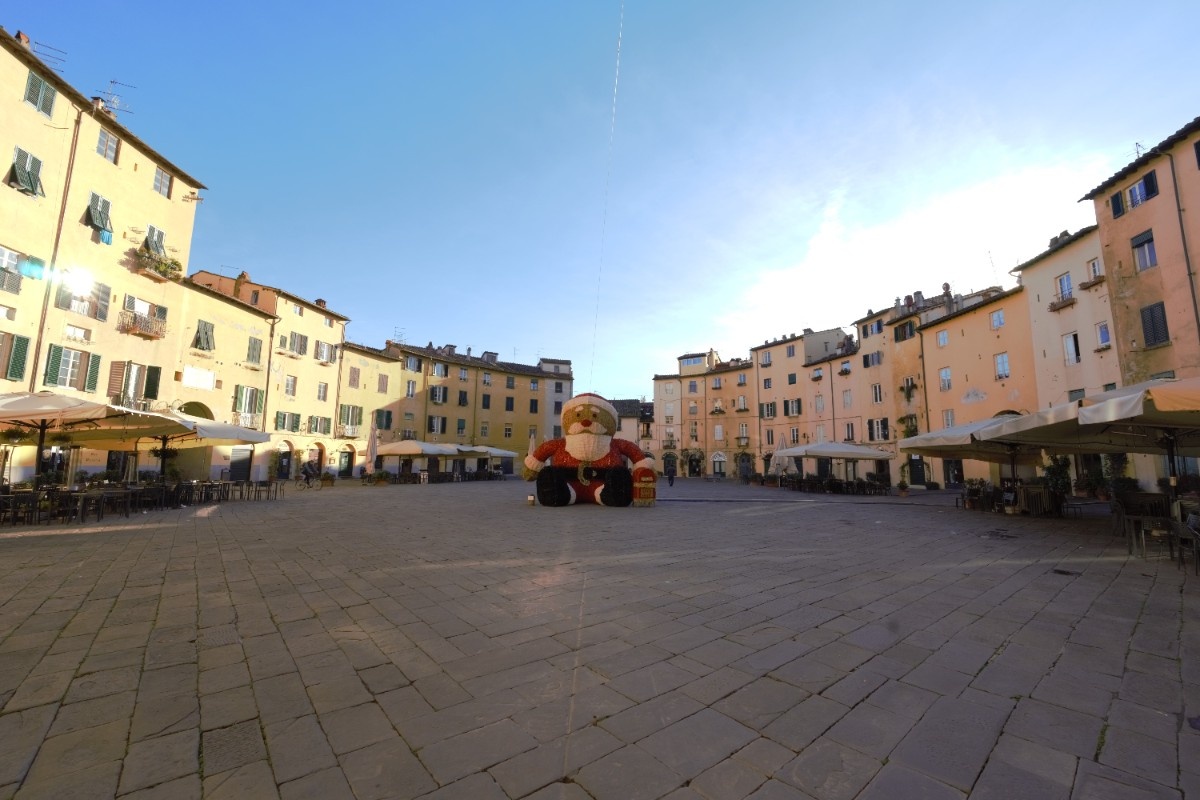
Inside the walls lies a grid of narrow streets and piazzas, filled with Romanesque churches and beautiful old palazzi.

The city’s layout has Roman roots—Piazza dell’Anfiteatro sits atop an ancient amphitheater and retains its oval shape, now filled with restaurants and cafes.

A major sightseeing draw in Lucca is the Duomo di San Martino, home to the famous Volto Santo, a wooden crucifix said to have been carved by Nicodemus himself. The relic has drawn pilgrims for centuries and remains one of the most venerated icons in Italy, housed within an ornate marble chapel that adds to its aura of mystery and devotion.
The cathedral’s soaring nave, striped columns, and richly decorated chapels showcase a blend of Romanesque and Gothic styles that make the interior as captivating as the relic it shelters.

Another highlight is the Church of San Michele in Foro, which boasts one of the most striking facades in Italy, like a wedding cake sculpted in marble. Step inside and you’ll find a more understated interior, with soaring arches and a serene nave that contrasts beautifully with the ornate exterior.
Among its treasures is a painting of the Archangel Michael by Filippino Lippi, a reminder that even within its quiet walls, the church holds masterpieces of Renaissance art.
And if you’re up for a bit of a climb, the Torre Guinigi, crowned with ancient oak trees, offers breathtaking views.
Lucca’s music legacy is equally rich—this is the birthplace of Giacomo Puccini, and his home is now a museum. During the summer months, the city fills with music, from classical concerts to rock festivals held in its historic squares.
Food in Lucca is as comforting as the city itself. Try farro soup, local cured meats, and buccellato, a sweet aniseed bread. Wash it down with a glass of Montecarlo red or white, a lesser-known local wine that deserves more love.

Wandering the labyrinth of alleys in the old town is one of Lucca’s greatest pleasures, each turn revealing quiet corners, hidden courtyards, and unexpected views of medieval towers. It’s the kind of aimless exploration that makes you feel like the city belongs just to you.
Of all the towns in Tuscany, Lucca may be the one I could most easily see myself living in. It’s graceful, walkable, and steeped in history—yet refreshingly real and unpretentious. A place that feels like home, even if only for a while.
6. Volterra

There’s something weighty about Volterra—both literally and emotionally. Perched high on a rugged plateau, surrounded by thick walls and brooding clouds, it carries the gravitas of a town that has seen civilizations rise and fall. This is one of the oldest continuously inhabited hill towns in Tuscany, with roots stretching back to the Etruscans, and you feel that ancient pulse everywhere.
When Jacky and I first visited Volterra, it was on a moody, misty morning, and I’ll never forget how perfectly the atmosphere matched the city’s character. Its medieval architecture is impressive, yes, but what sets Volterra apart is its sense of ancient continuity. You don’t just see history—you feel it underfoot, in the black volcanic stone, in the ruins that peer out from grassy hillsides, and in the ghostly quiet that drapes the town.
Start your visit at the Porta all’Arco, one of the original Etruscan gates into the city. Its massive stone blocks have survived more than 2,000 years, still holding the shape carved by their builders.

Nearby is the Etruscan Museum “Mario Guarnacci,” a treasure trove of funerary urns, sarcophagi, and ceremonial artifacts. It’s one of the best places in Italy to glimpse this pre-Roman world. The museum’s vast collection offers a rare chance to see how the Etruscans honored their dead and celebrated daily life through art.

Volterra’s Roman Theater, unearthed in the 1950s, adds another layer to its multi-era charm. Overlooking the valley below, the site still echoes with the grandeur of imperial spectacle. There’s a wonderful free viewpoint from Via Lungo le Mura del Mandorlo, where you can look down into the partially reconstructed arena.

The town’s spiritual centerpiece is the Cathedral of Santa Maria Assunta, a Romanesque gem rebuilt in the 12th century after an earthquake. Step inside and you’re greeted by soaring arches, gilded coffered ceilings, and chapels glowing with Renaissance frescoes. The play of light filtering through stained glass onto marble altars gives the whole space a hushed majesty, a reminder of how faith and artistry were once inseparable here.
In town, the Piazza dei Priori is the beating heart of civic life, flanked by the formidable Palazzo dei Priori—the oldest town hall in Tuscany. Climb its tower for a vertiginous view over the rooftops and surrounding countryside.
Volterra is also known for alabaster, a translucent stone that’s been sculpted here since Etruscan times. You’ll find artisan shops where you can watch modern sculptors carry on this ancient tradition—it’s a tactile, quiet form of art that suits the town’s energy.
Dinner in Volterra is a slow, atmospheric affair. Try wild boar pappardelle or pecorino with truffle honey at a cozy trattoria, paired with a glass of bold red from nearby Bolgheri or Chianti.
Volterra doesn’t try to dazzle—it broods, it whispers, it endures. And in doing so, it leaves a lasting mark.
7. San Gimignano

San Gimignano is Tuscany’s medieval showstopper. The first time you see its skyline—those iconic stone towers piercing the horizon—it’s hard not to feel like you’ve stumbled into a fairytale. And yet, the town’s grandeur was born from very real, very human rivalries.
Nicknamed the “Medieval Manhattan,” San Gimignano was once home to 72 tower houses, each built by feuding noble families to outdo one another in wealth and status. Only 14 of those towers remain today, but even that’s enough to give the town an awe-inspiring verticality that few places can match.

I’ll admit, I came here half-expecting a tourist trap—and yes, the crowds do swell midday—but even in peak season, San Gimignano feels like a cinematic dream. The stone streets wind upward toward Piazza della Cisterna, the central square, where we spent the afternoon just soaking in the atmosphere and watching the world drift by.
Speaking of wine, San Gimignano is the birthplace of Vernaccia di San Gimignano, a crisp white with a bit of a mineral backbone—perfect for a Tuscan summer. I’m not really a wine guy, but this is Tuscany… so naturally, I had a glass. You can taste it in any enoteca, but for a memorable experience, head to a vineyard just outside the city walls.
- Click here to book a Tuscan Vineyard Lunch with Wine Tasting
- Click here to book a tasting of Tuscan Wines and Cheeses in San Gimignano

The Torre Grossa, the tallest tower in town, is climbable—and I highly recommend it. From the top, you get sweeping views of the Tuscan countryside, undulating in golden and green stripes as far as the eye can see.
Also worth a visit is the Duomo di San Gimignano (Collegiata), modest from the outside but absolutely bursting with 14th-century frescoes by Ghirlandaio and others. The entire biblical narrative comes alive on those walls in astonishing color and detail.

The Palazzo del Podestà, also known as the Palazzo Comunale, stands as a sober anchor to the town’s medieval civic life. Built in the late 13th century, its stone façade and crenellated tower reflect the authority once exercised within its walls. Inside, the Sala di Dante is the most resonant space: a restrained yet powerful chamber where Dante Alighieri is believed to have spoken in 1300 while serving as an ambassador of Florence. The room’s frescoes, softened by time, depict moral allegories and civic ideals, and the atmosphere feels contemplative rather than grand.
For history buffs, the Rocca di Montestaffoli, a ruined fortress with gorgeous gardens, offers a quiet place to walk and reflect—and it’s one of my favorite secret corners in town.

And if you have a sweet tooth, don’t miss Gelateria Dondoli, a world-famous gelato shop whose inventive flavors have won multiple awards. The lines can be long, but the quality more than lives up to the hype, with options ranging from classics like pistachio and stracciatella to inventive creations such as saffron cream and Vernaccia wine sorbet.
San Gimignano knows it’s beautiful, but it doesn’t take itself too seriously. Despite the crowds, the gelato shops, and the souvenir stands, it has retained its soul. Stay overnight if you can. When the tour buses leave, and the lamps cast long shadows on ancient stone, the town transforms. That’s when it really casts its spell.
8. Montepulciano

High on a limestone ridge in southern Tuscany, Montepulciano greets you with sweeping vistas, grand Renaissance palaces, and the scent of oak-aged red wine drifting from cellar doors. If you like your hill towns with a side of sophistication and a deep glass of vino, this is your place.
Montepulciano is all about angles: uphill climbs, sloping piazzas, vertical wine cellars dug deep into the rock. Wear good shoes; your calves will thank you.

The town’s centerpiece is Piazza Grande, a dramatic square framed by Palazzo Comunale, Palazzo Nobili-Tarugi, and the Duomo of Montepulciano. The civic palace’s tower looks almost like a miniature Palazzo Vecchio, and if you climb it, you’ll be rewarded with a jaw-dropping panorama of the Val d’Orcia and Val di Chiana.
But let’s be honest—most people come here for the wine. Montepulciano is the birthplace of Vino Nobile di Montepulciano, one of Tuscany’s most prestigious reds. Deep, complex, and aged in oak barrels, this wine is a revelation.
Many wine cellars are hidden beneath the palazzi, and tours often include tastings in cool, atmospheric caves. One of my favorite experiences was sipping wine in a dimly lit 13th-century cellar beneath the town, surrounded by ancient barrels and flickering candles.

Beyond wine, there’s plenty of art and architecture. The Church of San Biagio, located just outside the town, is one of the finest examples of High Renaissance architecture in Tuscany. With its symmetrical design, travertine glow, and bucolic setting, it’s worth the detour.
And don’t miss a quiet wander through the backstreets. The crowds stick to the main drag, but I found myself completely alone in the upper lanes, where laundry fluttered from windows and cats lazed in sunbeams.
Montepulciano has that rare blend of cinematic beauty and lived-in charm. It’s a place to linger, to taste slowly, to savor every detail. Just like its wine.
9. Arezzo

Perched on a gentle rise in southeastern Tuscany, Arezzo is a city that manages to feel both noble and lived-in—a place where grand piazzas host medieval jousts and locals still gather for their evening passeggiata. It’s one of the larger Tuscany towns, yet it often escapes the crowds that fill Florence or Siena, which makes it a joy to explore at a more leisurely pace. In fact, it was Jacky’s favorite large town in Tuscany, thanks to its lively atmosphere and graceful mix of history and everyday life.
Arezzo’s story begins with the Etruscans, who established it as a prosperous settlement centuries before Rome’s rise. Under Roman rule, it became renowned for its fine terra sigillata pottery, shipped far and wide across the empire. That rich past still lingers in its streets, where medieval churches, Renaissance palaces, and traces of ancient walls coexist within a compact, walkable center.

The beating heart of the city is Piazza Grande, a sloping, irregularly shaped square that somehow feels perfectly balanced. Twice a year, it bursts into color and noise during the Giostra del Saracino, a medieval jousting tournament that has been thrilling spectators since the Middle Ages. Outside of festival days, it’s simply a beautiful spot to sit with a coffee and watch the rhythm of city life.
If you happen to be here on the first weekend of the month, the Arezzo Antique Fair is a delight. As Italy’s oldest and one of its largest, it transforms the historic center into a treasure hunter’s paradise, overflowing with vintage curiosities and centuries-old heirlooms.
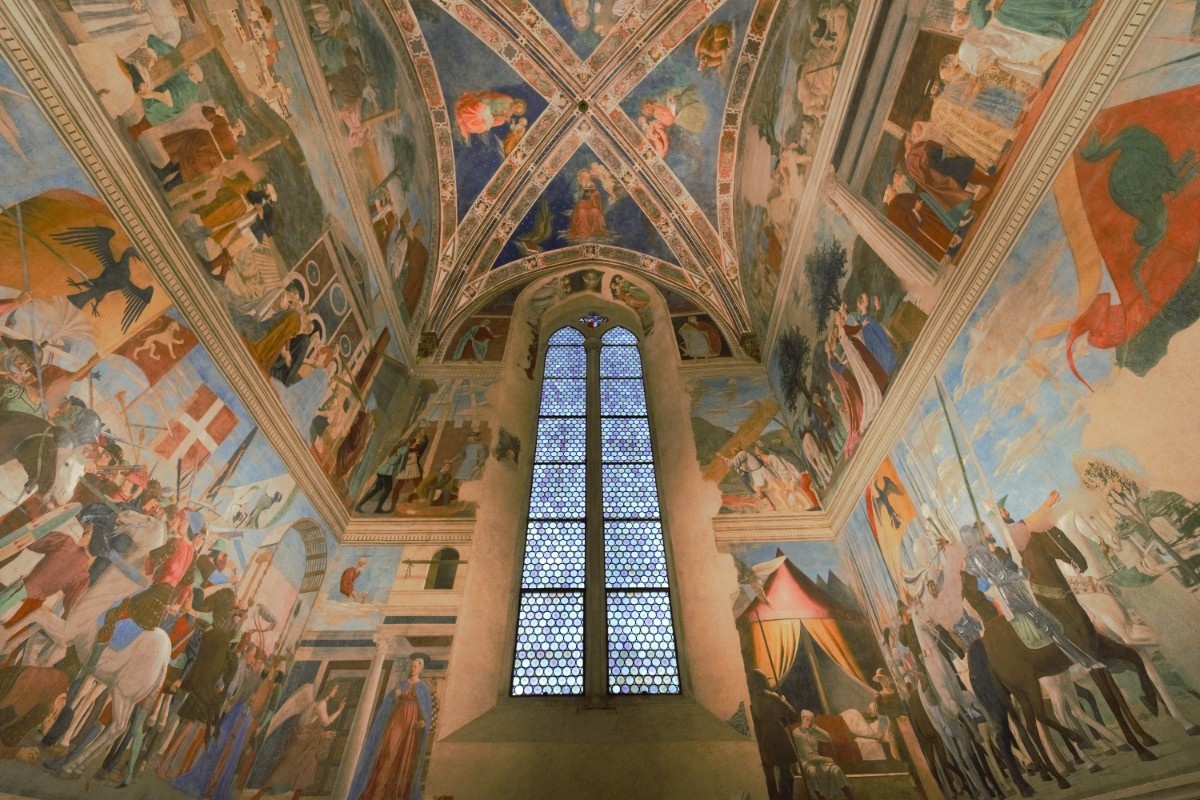
For art lovers, Arezzo is an unmissable stop. The Basilica of San Francesco shelters Piero della Francesca’s masterpiece, The Legend of the True Cross, a fresco cycle of astonishing clarity and depth. Its vivid storytelling and refined use of perspective make it one of the greatest achievements of Renaissance art. Jacky and I sat quietly beneath the frescoes for a long while, completely spellbound, as if time itself had slowed to let us absorb every detail.
The hilltop Duomo di Arezzo boasts works by Giorgio Vasari and offers panoramic views of the surrounding countryside. In between these landmarks, narrow streets lead to antique shops, artisan studios, and osterie serving rich Tuscan fare.
What sets Arezzo apart—at least for us—is its balance. It’s grand without feeling showy, historic without feeling staged, and welcoming without being overrun. Among all the Tuscany towns we visited, it’s the one that stayed with Jacky the most, and I can see why.
10. Pienza

If a single town could embody the idea of perfection, Pienza might be it. Nicknamed the “ideal Renaissance city,” Pienza is not only stunningly harmonious in its proportions but also intimately walkable, serene, and surrounded by one of the most jaw-droppingly beautiful landscapes in all of Tuscany. I don’t say this lightly—Pienza truly feels like it was sculpted by a benevolent dream.
The town as we see it today was born from a single man’s vision: Pope Pius II, who was born here in 1405 under the name Enea Silvio Piccolomini. After ascending to the papacy in 1458, he ordered the transformation of his humble hometown, then called Corsignano, into a utopian city built on principles of symmetry, humanism, and classical beauty.
The result? A compact town center reimagined by architect Bernardo Rossellino—with the luminous Piazza Pio II at its heart, flanked by architectural masterpieces like Palazzo Piccolomini, Palazzo Borgia, and the strikingly elegant Cathedral of Santa Maria Assunta. Palazzo Piccolomini, in particular, is worth touring; its hanging gardens overlook the Val d’Orcia and provide one of the most serene views I’ve ever experienced.

But Pienza isn’t just about aesthetics—it’s also the undisputed capital of pecorino cheese. You can smell it wafting through the air as you walk down Corso Rossellino, the town’s main thoroughfare. I sampled slices aged in walnut leaves, truffle-laced rounds, and fresh pecorino drizzled with honey—all sublime. Pop into a shop like Marusco e Maria or La Bottega del Naturista for a tasting.
What I love most about Pienza, though, is how it balances cultural sophistication with countryside warmth. It’s a place where farmers sell honey beside Renaissance palaces, where time slows down, and where the light seems to hit every surface just right. If you visit in spring or early autumn, the golden hills are brushed with mist in the morning and flushed with rose and gold by evening.
11. Cortona

Set high above the Val di Chiana, Cortona is a quintessential Tuscan hill town—a place where cobblestone streets wind between honey-hued stone houses, and every turn seems to open onto a view worthy of a Renaissance canvas. Founded by the Etruscans, Cortona has the kind of layered history you can feel underfoot, from ancient walls that still gird the town to medieval piazzas humming with daily life.

The Piazza della Repubblica is its heart, framed by the 13th-century Palazzo Comunale and lined with cafés perfect for a mid-morning espresso. A short climb takes you to the Cathedral of Santa Maria Assunta, while higher still, the Fortezza del Girifalco offers sweeping views across the valley and Lake Trasimeno.
If your timing’s right, you might catch the international photography festival, Cortona On The Move, which transforms the fortress and other corners of the town into open-air galleries.

Cortona’s museums are small but rich. The MAEC – Museo dell’Accademia Etrusca houses an extraordinary collection of Etruscan artifacts, while the Diocesan Museum shelters Fra Angelico’s luminous Annunciation. Cortona’s museums are small but rich. The MAEC also includes fascinating Roman and Egyptian collections, making it a true treasure trove for history lovers.

The Basilica of Saint Margaret of Cortona crowns the hilltop with both spiritual and architectural grace. Dedicated to the town’s patron saint, the church blends Gothic and Renaissance elements, its striking façade opening onto a serene interior adorned with frescoes and relics of Saint Margaret herself. Inside, the warm light filtering across gilded altars and painted chapels creates an atmosphere of quiet reverence.
Cortona will always have a special place in our hearts for one very indulgent reason: the most sumptuous Vin Santo Jacky and I have ever had in our lives was here. Sweet, amber, and impossibly complex, it was served with almond cantucci in a craft brewery ironically (Birrificio Birrificio Cortonese) — and I swear the memory alone still warms me on a winter’s day.
Cortona is elegant but not precious. It’s both steeped in history and humming with life, the kind of town that makes you want to stay indefinitely—maybe even buy a little villa and never leave. Trust me, it’s easy to see why so many people do.
12. Pitigliano

There are hill towns, and then there’s Pitigliano—a town so dramatically perched atop a sheer tuff cliff that it seems to grow out of the stone itself. It’s one of the most visually arresting towns in all of Tuscany, maybe in all of Italy.
Located in the southern Maremma region, near the Lazio border, Pitigliano is often called La Piccola Gerusalemme (“Little Jerusalem”) because of its once-thriving Jewish community. In fact, a large part of what makes Pitigliano so fascinating is its deep and layered cultural history—Etruscan, Roman, Medieval, Jewish, and Renaissance influences all coexist here.
Begin your visit by wandering the old Jewish ghetto, where you’ll find the beautifully restored synagogue, a small museum, and remnants of a ritual bath, bakery, and wine cellar. It’s a poignant and moving place, especially given how rare it is to see preserved Jewish heritage in such a small Italian town.

The main thoroughfare, Via Roma, is lined with stone buildings and bustling little shops, but wander off the path and you’ll find eerie, quiet alleys that open suddenly onto sweeping views of the surrounding valley. Pitigliano’s Cathedral of Saints Peter and Paul and the massive Orsini Palace (home to a museum of sacred art) anchor the historical center.
If you’re up for a bit of nature, walk the Vie Cave—a network of Etruscan roads literally carved into the stone. These sunken paths, some as deep as 20 feet, feel like ancient canyons, and they radiate a strange, sacred energy. It’s impossible not to feel the presence of the people who first chiseled them thousands of years ago.
Pitigliano’s food is earthy and bold—wild game, foraged herbs, and mushrooms dominate the menu. Try acquacotta, a hearty vegetable soup with poached egg and stale bread, or tagliatelle with wild boar. The local Bianco di Pitigliano wine is crisp and pairs beautifully with the regional dishes.
This is a town of shadows and stone, of quiet resilience. It feels slightly haunted, in the best way—mysterious, deeply rooted, and unforgettable.
13. Sovana

Tiny Sovana feels like a place where time has paused, holding onto its medieval grace with quiet pride. Its main artery, Via di Mezzo, is more or less the town in its entirety—a broad, sun-warmed stretch of herringbone brick that has been guiding footsteps for centuries. First laid in 1580 under the orders of Grand Duke Ferdinando I de’ Medici, the paving has been beautifully restored, and today it glows in the soft Tuscan light.
At one end, the weathered remains of the Aldobrandeschi Castle stand guard. Built in the 11th century atop ancient Etruscan foundations, the fortress has seen many masters—the Sienese, the Orsini, and finally the Medici, who in the 1600s tried to breathe new life into Sovana by bringing in 58 families from Albania. Time, however, continued to whittle away at the castle walls, leaving behind the romantic ruins you see today.
Wander to the far end of Via di Mezzo and you arrive at Piazza del Pretorio, a harmonious medieval square that feels like a perfectly staged set. To one side stands Santa Maria, arguably one of the most beautiful churches in southern Tuscany. Built in the 13th century with a blend of Romanesque and early Gothic lines, its stone interior is serene and understated—save for its true treasure, an intricately carved ciborium dating back to the 8th or 9th century.

This pre-Romanesque masterpiece, rare in Italy, predates most of the town itself and remains astonishingly well preserved. Delicate early frescoes still adorn the walls, their soft pigments whispering across the centuries.
Facing the church is the Loggia del Capitano, a modest, low-arched structure adorned with carved coats of arms marking the Medici era. Beneath its arches, you’ll find a small café with a scattering of tables—an ideal spot for a coffee while watching the gentle flow of village life. Next door, the 13th-century Palazzo Pretorio now houses a compact but fascinating museum dedicated to the area’s Etruscan heritage.
Sovana may be small, but it is dense with history. Its single street, framed by ruins, palazzi, and treasures of sacred art, tells a story spanning the Etruscans, the Middle Ages, and the Medici—and rewards those who take the time to listen.
14. Sorano

If Pitigliano is the dramatic showpiece of the Maremma and Sovana its polished jewel, Sorano is the brooding elder sibling—rugged, atmospheric, and carved into the tufa cliffs as though it has grown straight from the rock itself. Perched high above the Lente River, this compact hill town feels more fortress than village, its honey-brown walls and steep lanes shaped as much by defense as by beauty.
The town’s history is long and layered. First settled by the Etruscans, Sorano was later fortified by the Aldobrandeschi family in the Middle Ages, then passed to the powerful Orsini counts, who transformed it into a strategic stronghold. Even today, the massive Fortezza Orsini dominates the skyline, its thick ramparts and angular bastions a reminder of the centuries when Sorano was a bulwark in the tug-of-war between Siena and Florence. You can explore its passageways, towers, and dungeons, and from the top, the views across the surrounding valley are nothing short of cinematic.
Beneath the modern streets, an even older Sorano lies hidden: a network of Etruscan Vie Cave—narrow sunken roads carved directly into the tufa rock, their high walls draped in moss and shadow. Walking these ancient paths feels like stepping back into pre-Roman Tuscany, and they link the town to nearby necropolises, where weathered tombs open into the cliffs.
In the heart of Sorano, the main square, Piazza Busatti, is a quiet, stone-paved space framed by weathered palazzi and the modest yet elegant Collegiata di San Niccolò. Inside, you’ll find 15th-century frescoes and an atmosphere of cool, subdued light—a welcome respite on hot summer afternoons.

What sets Sorano apart from many other Tuscany towns is its raw, slightly unpolished beauty. The stone here is darker, the streets steeper, and the buildings seem to cling to the cliffs with fierce determination. In the early morning or at twilight, when the light softens and the town seems to melt into the rock, Sorano feels less like a destination and more like a secret—one you’ve somehow stumbled upon by chance.
15. Montalcino

Montalcino is bold, brash, and unapologetically proud. Best known as the birthplace of Brunello di Montalcino, one of the most prestigious wines in all of Italy, this hilltop town in the Val d’Orcia is a haven for wine lovers, but also offers so much more than just what’s in the glass.
The town’s fortress, built in 1361, still looms at the edge of town, and climbing its ramparts gives you a cinematic view over vineyards that stretch endlessly across the valley below.

The Fortezza di Montalcino also hosts wine tastings—you can sample a range of Brunellos right inside the ancient stone walls. I did a flight of five, each deeper, more complex, and more expressive than the last. Brunello is made from 100% Sangiovese Grosso and aged for at least five years. It’s structured, earthy, and a little bit wild—just like the town itself.

The main street, Via Mazzini, is lined with enotecas and craft shops. Stop at Enoteca la Fortezza or Osticcio—the latter has a wine bar with a terrace view that might ruin you for all others. Between sips, explore Montalcino’s understated but charming Duomo, the Museo Civico e Diocesano, and the Church of Sant’Agostino with its atmospheric frescoes.
If you’re in the mood for a short hike or drive, venture to Abbazia di Sant’Antimo, just a few kilometers away. This 12th-century Romanesque abbey sits in an olive grove at the foot of the hill, and the monks’ chants (if you’re lucky to hear them) are spine-tingling.
Montalcino isn’t flashy—it’s firm, storied, and quietly confident. It’s the kind of place that reminds you to take your time, to swirl the glass, and to listen to the land.
16. San Quirico d’Orcia

Halfway between Montalcino and Pienza, San Quirico d’Orcia is a small but perfectly formed Tuscan gem, set amid the rolling hills and cypress-lined lanes of the Val d’Orcia. Once an important stop on the Via Francigena pilgrimage route, its medieval center is compact yet full of charm. Highlights include the Collegiate Church of San Quirico, with its elegant Romanesque portals, and the manicured Horti Leonini gardens, a peaceful green escape just inside the old walls.

But for many visitors—including us—the real magic lies just outside town. Here you’ll find two of Tuscany’s most Instagram-worthy scenes. First, the Cipressi di San Quirico d’Orcia—possibly the most photographed cluster of trees in the world. This perfectly arranged cypress grove crowns a gentle hilltop, and though it looks like it’s been there forever, it was actually planted by hunters to lure birds.
Then there’s the Chapel Vitaleta, a solitary little church standing in open fields, framed by two slender cypress trees. According to local legend, it marks the spot where the Virgin Mary appeared to a shepherdess—a story that gives this already enchanting place an almost ethereal air.

We took endless photos at both spots, lingering as the sun shifted and the landscape changed from soft morning haze to glowing afternoon gold. The surrounding hills and winding lanes make every angle a new masterpiece, and it’s no exaggeration to say we could have stayed all day.
Back in town, life moves at a gentle pace. Narrow streets are lined with ivy-draped houses, and there’s always a café terrace where you can sip an espresso and watch the world go by. San Quirico may be small, but it captures the Val d’Orcia’s essence—timeless landscapes, golden light, and a serenity that’s hard to leave behind. Stay for sunset if you can; when the last rays spill across the fields, it’s pure Tuscan poetry.
17. Anghiari

If you’ve never heard of Anghiari, you’re not alone—but once you visit, you’ll wonder why it isn’t more famous. This postcard-perfect village clings to the slopes of eastern Tuscany near the Umbrian border and offers storybook streets, ancient stone houses, and a sweeping view over the Valtiberina that makes your heart flutter.
Anghiari is best known historically for the Battle of Anghiari in 1440, where Florentine forces defeated the Duchy of Milan. The battle was so significant that Leonardo da Vinci was commissioned to paint it—though the fresco he created is sadly lost. Still, the town proudly displays its military legacy at the excellent Museo della Battaglia di Anghiari, which brings the event to life through models, artifacts, and maps.
But this isn’t a warlike place—it’s gentle, romantic, and elegant. The main drag, Via Giuseppe Garibaldi, runs along the ancient walls and offers beautiful panoramic views. The town’s slope means there’s a natural flow to walking around—you feel like you’re cascading gently through time.
The Palazzo Taglieschi, now a museum, showcases local history, sacred art, and folk traditions. I especially loved the collection of domestic objects from centuries past—it gives a real sense of how everyday life once looked in these parts.

Anghiari is a place for slow wandering. The narrow alleys are lined with climbing vines and flowerpots, and there’s a rustic charm in every detail—from the iron knockers on the doors to the uneven flagstones underfoot. It’s also a haven for artisans, especially weavers and woodworkers, who keep traditional crafts alive.
Food here is simple and rustic. Try bringoli, a type of handmade spaghetti served with meat or mushroom ragù, or a warm plate of local sausage with cannellini beans. There’s an old osteria near the main gate called Talozzi, where I had a glass of Sangiovese and watched the fog roll in over the valley—it felt like stepping into a Tuscan fable.
18. Greve in Chianti
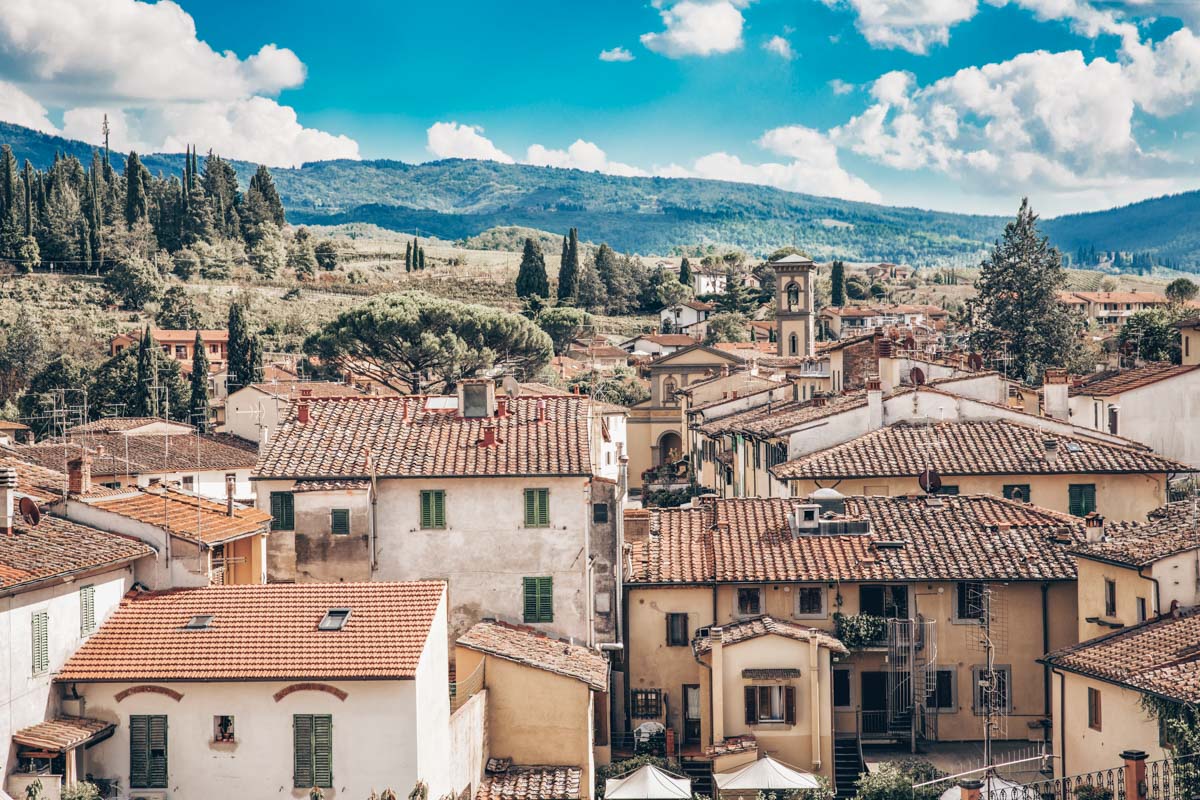
If Chianti were a kingdom, Greve would be its capital. Located almost equidistant between Florence and Siena, Greve in Chianti is the ultimate wine town, sitting in the heart of Tuscany’s most celebrated wine region: Chianti Classico. For oenophiles and romantics alike, this place is sacred ground.
The main piazza, Piazza Matteotti, is a unique triangle ringed with covered arcades. It buzzes with local life and slow travelers alike, a place where you can sample the day’s wine beneath fluttering flags and terracotta tiles. The Wine Museum here may sound a bit kitschy, but it actually offers a fantastic overview of the region’s viticultural traditions—and you can taste dozens of varietals by the glass or sip.

Greve is home to one of the oldest and most respected butchers in Tuscany: Antica Macelleria Falorni, open since 1729. Walking into this place is like walking into carnivorous heaven—hams hang from the rafters, wild boar salami lines the walls, and jars of truffle-infused everything tempt at every turn.
Just outside town, vineyards roll out like green silk carpets. There are endless opportunities to taste Chianti Classico, identified by the black rooster emblem.

Jacky and I really enjoyed the wine tour of Castello di Verrazzano, which not only offered exceptional tastings but also a fascinating glimpse into the history of Chianti Classico. Neither of us is an oenophile, but we were captivated by the way the guides brought the story of the estate to life—from its ancient cellars carved into stone to the terraced vineyards that seemed to ripple across the hillsides.

The tour wove together history, landscape, and tradition, showing how Chianti has been shaped by centuries of craftsmanship. Even if wine isn’t usually your passion, wandering through those vaulted cellars and sipping a glass while overlooking the countryside feels like stepping into the heart of Tuscany itself.

The scenery around Greve is pure Tuscan poetry: rolling hills quilted with vineyards, silver-green olive groves, and slender cypress trees punctuating the skyline. In the late afternoon, the light washes over the land in golden hues, turning the vineyards into a shimmering patchwork of green and gold. Every curve in the road reveals another postcard view, the kind of landscape that makes you understand why Chianti has inspired painters, poets, and dreamers for centuries.
Greve is unpretentious. It’s the kind of town that lives by its rhythm, where locals sip espresso at sunrise and red wine by twilight, without trying to impress. It’s real, rustic, and wrapped in vines.
19. Montefioralle

Just outside Greve in Chianti, Montefioralle is what I imagine Tuscany looked like centuries ago, before guidebooks and hashtags. This miniature hamlet—often named one of the most beautiful villages in Italy—is perched on a hilltop, completely encircled by stone walls, and shaped like a perfect oval. It feels less like a destination and more like a secret.
Montefioralle is tiny—you can walk the whole village in ten minutes—but every step is enchanting. Worn flagstones, flower boxes, and ancient doorways whisper of old stories. It’s believed that Amerigo Vespucci’s family home still stands here (marked by a humble plaque), adding a dose of New World intrigue to the Old World setting.
What I love about Montefioralle is its complete lack of pretense. There are no big attractions, no ticket booths, and no crowds—just unfiltered Tuscan beauty. The views from the outer paths, especially in early morning when the fog clings to the vineyard-covered hills below, are nothing short of cinematic.

There’s a tiny church, San Cresci, with simple frescoes and a hushed interior. Nearby, a handful of family-run agriturismi and trattorias serve deeply satisfying food and house wines that are likely better than what you’d find in most major cities.
Montefioralle is best visited with no agenda. Go for a walk. Sip some wine. Watch the light change on the hills. This is the Tuscany you dream about when life feels too fast.
20. Monteriggioni

Monteriggioni is the kind of place that seems like it was built for a medieval movie set—because, quite frankly, it was. This small, circular, walled town is so impeccably preserved that it’s hard to believe it wasn’t dreamed up in a Renaissance painter’s imagination. And yet, it’s real. And walking through its gates feels like crossing a threshold into the 13th century.
Constructed by the Sienese in 1214 as a defensive outpost against Florence, Monteriggioni is encircled by a perfectly intact circular wall punctuated by 14 stone towers. In fact, Dante even referenced it in his Divine Comedy, likening the towers to giants encircling the Inferno.
When I first saw the town from the road below, it looked like a crown perched on a hilltop—stunningly symmetrical, silhouetted by the afternoon sun. There’s only one way in or out for visitors: through the Porta Franca, one of two original gates. Once inside, you’re met with a peaceful, almost storybook-like scene: a simple piazza, Piazza Roma, flanked by a church, a few cafés, and artisan shops.

Though the town is small—you can walk the entire perimeter in under 20 minutes—it packs a punch. The Church of Santa Maria Assunta is lovely in its simplicity, and several towers and parts of the wall are accessible, offering elevated views of the surrounding Chianti hills and olive groves.
One of the best experiences in Monteriggioni is walking along the fortified ramparts. You’ll feel like a medieval sentry gazing over the countryside, and the vistas are pure Tuscan magic.
Monteriggioni doesn’t require a long stay—just a few hours are enough—but it leaves an outsized impression. It’s perfect for a short detour from Siena or San Gimignano, especially if you crave a concentrated dose of medieval perfection.
21. Panzano

Perched on a ridge between Florence and Siena, Panzano feels like the heart of Chianti in miniature—rolling vineyards on all sides, stone houses glowing in the afternoon light, and a rhythm of life that seems to revolve around food, wine, and long conversations. Though smaller and quieter than nearby Greve, Panzano holds its own with a certain unhurried charm.
The town’s centerpiece is Piazza Bucciarelli, where you can sip an espresso in the morning, linger over a glass of Chianti Classico in the afternoon, and watch locals chat under the shade of ancient plane trees. On Sundays, the piazza comes alive with the weekly market—perfect for picking up olive oil, fresh pecorino, and whatever’s in season from the surrounding farms.

Panzano is perhaps most famous as the home of Antica Macelleria Cecchini, run by the larger-than-life Dario Cecchini—a master butcher and passionate ambassador of Tuscan meat traditions. Stepping into his shop is part culinary experience, part theater, with Dario himself often reciting poetry, offering generous tastings, and sharing his philosophy on food. Whether you stop for a quick porchetta sandwich or book one of his legendary feasts, it’s a meal you won’t soon forget.
22. Radda in Chianti
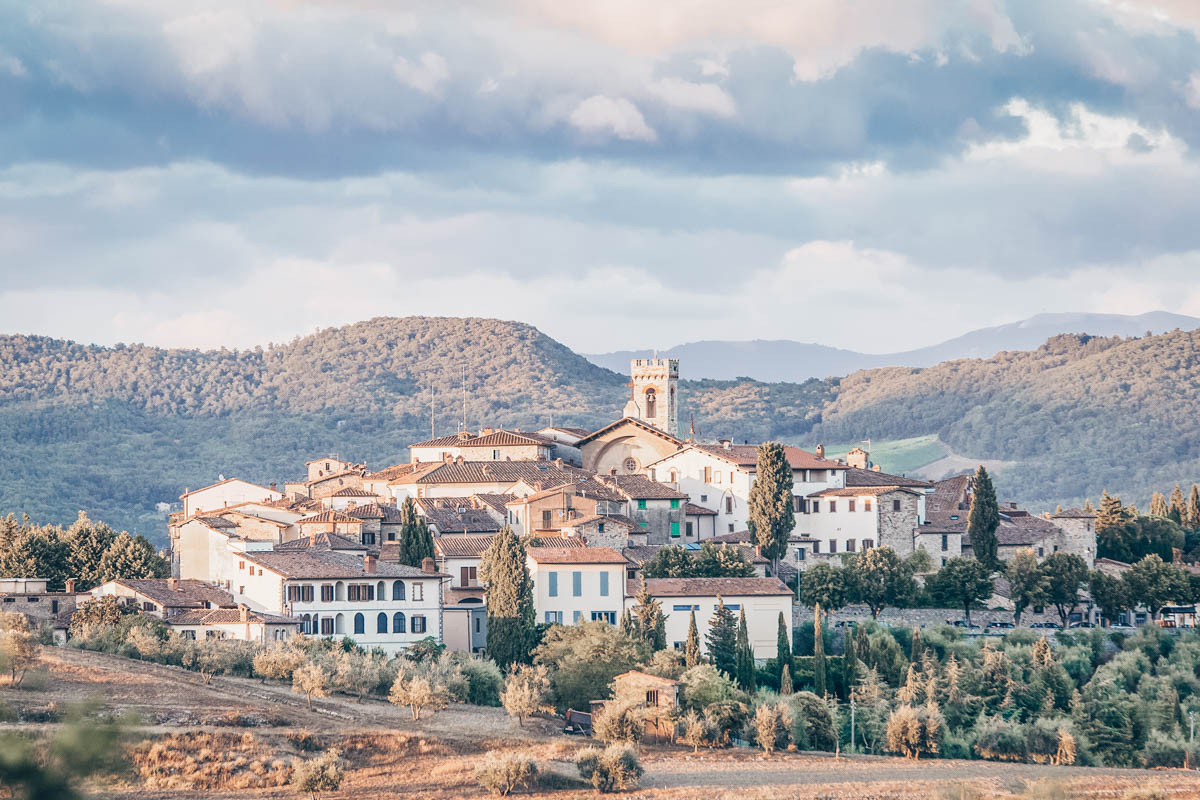
Nestled among the rolling vineyards of Chianti Classico, the compact hill town of Radda in Chianti isn’t flashy, but it quietly embodies everything we love about rural Tuscany: slow rhythms, scenic beauty, and wine that could bring tears to your eyes.
Radda has long been at the heart of Tuscan viticulture. It served as the capital of the Chianti League in the 13th century, an alliance of towns responsible for regulating trade and defense in the region. You can still feel that sense of rustic importance in the sturdy Palazzo del Podestà, with its coats of arms and stone façade watching over Piazza Ferrucci, the town’s modest main square.
Radda is best appreciated slowly. Stroll its narrow streets, which curve like vines between stone houses and low walls, then duck into wine shops like Casa Chianti Classico—part tasting room, part educational museum.
A short walk from the center brings you to Church of San Niccolò, a Romanesque beauty with a quiet interior perfect for a moment of cool reflection on a hot summer day.

If you have a car, the drives in and out of Radda are jaw-droppingly beautiful. Vineyards rise and fall with the rhythm of the land, cypress trees march across ridges, and stone farmhouses dot the hillsides. It’s pure Chianti, the way it was meant to be.
23. Barga

Tucked in the Serchio Valley, surrounded by the Apuan Alps and Apennine Mountains, Barga might just be Tuscany’s most poetic town—an alpine village with a distinctly artistic soul.
Barga is often called the “most Scottish town in Italy,” due to the wave of emigration to Scotland in the early 20th century. The connection runs deep—there’s even a red British telephone booth in the main piazza, now used as a BookCrossing library. It’s charmingly surreal to see while standing next to a centuries-old Italian bell tower.

The town’s crown jewel is the Duomo di San Cristoforo, a stunning Romanesque cathedral perched high above the rooftops. Built from pale grey limestone, it’s quietly commanding. Inside, the warm glow of candlelight softens the stone arches and illuminates beautifully carved pulpits and altars.
The view from the cathedral terrace is one of Tuscany’s finest—especially at dusk, when golden light spills across the valley below and the jagged peaks rise in the distance like guardians of a forgotten realm.
Barga is also deeply artistic. The town is home to numerous galleries and hosts the annual Barga Jazz Festival and the Opera Barga Festival, drawing musicians and creatives from all over Europe. In nearly every alleyway you’ll stumble upon an artist’s studio, often with the door open and soft classical music playing inside.
Cafés and trattorias line the old piazzas, and the food here reflects mountain influences: hearty soups, polenta, and grilled meats, often accompanied by local mushrooms and chestnuts. For a special meal, try Scacciaguai, which offers local dishes with a refined twist.
24. Lucignano

Lucignano is a town of concentric circles—a near-perfect medieval spiral perched on a hilltop between Arezzo and Siena. As we wandered its elliptical streets for the first time, I felt as if I were walking through the rings of a tree, each one older and more intriguing than the last. It’s compact, serene, and quietly golden in the late afternoon light.
What makes Lucignano especially unique is its layout: the town developed in a series of oval rings, with the main street gradually spiraling inward toward the top. This pattern gives it a strange but satisfying symmetry, and it makes exploring feel a bit like unraveling a mystery.

The heart of town is Piazza del Tribunale, home to the Town Hall and Collegiata di San Michele Arcangelo, a Baroque church with a commanding facade. Inside the town hall, you’ll find the Museo Comunale, which houses the town’s most precious treasure: the Tree of Life (L’Albero d’Oro). This 14th-century gilded reliquary, made of coral, gold, and crystal, is as enchanting as it is rare—thought to be the only one of its kind in the world.
Lucignano is also a town of traditions. In spring, it hosts the Maggiolata, a floral festival with floats, music, and costumed parades. It’s one of the few times this sleepy town becomes truly lively.
Local food is rustic and soulful—look for salsiccia all’uva (sausages with grapes), rabbit stew, and seasonal chestnut-based desserts. The wine is mostly Chianti Colli Aretini, lesser-known than Classico but often just as good.
25. Pistoia

Pistoia is like that cultured friend everyone overlooks until they start talking—and then, you’re captivated. Just 30 minutes west of Florence, this city is often overshadowed by its bigger neighbors, but don’t let that fool you. Pistoia is elegant, historic, and brimming with understated charm.

At its heart is Piazza del Duomo, one of the most beautiful squares in Tuscany. It’s framed by the Cathedral of San Zeno, the Baptistery of San Giovanni, and the Palazzo del Comune—each building with a distinct architectural personality. The baptistery’s green and white marble stripes are a quieter echo of Florence’s flamboyance.

Inside the cathedral, the Silver Altar of St. James is a breathtaking sight—an elaborate masterpiece of medieval silversmithing that rivals anything in Italy. Few people know about it, which means you often get it all to yourself.
One of my favorite discoveries was Ospedale del Ceppo, a former hospital with a Renaissance-era ceramic frieze that runs across its façade, depicting scenes of charity and healing. It’s vivid, beautifully preserved, and utterly unexpected.
Pistoia also has an edge—literally. It was famous during the Middle Ages for its production of weapons, particularly short swords known as “pistole,” from which the word “pistol” may derive. That gritty past lends the town an authentic, slightly rebellious energy.
The town comes alive during Pistoia Blues, a summer music festival that has hosted legends like Bob Dylan and Lou Reed in its medieval piazzas.
26. Massa Marittima

Massa Marittima feels like a jewel tucked into the hills of southern Tuscany. Far from the crowds of Florence or the wine-lovers of Chianti, it sits quietly in the Maremma region—an area known for wild beauty and medieval resilience.
The name “Massa” dates back to Roman times—meaning a large country estate—and the “Marittima” was added in the Middle Ages, when it stood as the preeminent town of this coastal territory. The sea, however, has long since retreated, now lying some 20 kilometers away across a silted plain barely visible from the hilltop.

The town is unexpectedly refined, with one of the most dazzling main squares in all of Tuscany. Piazza Garibaldi unfolds like a Renaissance stage set. At the top is the Cathedral of San Cerbone, whose Romanesque facade rises in tiered perfection.
Across the piazza sits the elegant Palazzo Comunale and the Palazzo del Podestà, now home to the Museo Archeologico. The entire scene is one of composure, balance, and golden stone kissed by the sun.

But Massa Marittima has surprises. The most unexpected? A 13th-century fresco known as the Albero della Fecondità—the “Tree of Fertility”—which depicts, quite openly, a tree sprouting phallic fruit. It’s tucked away in the old city walls and never fails to shock and amuse. This is Tuscany with a sense of humor.
Another highlight is the Torre del Candeliere, a watchtower with panoramic views over the town and out toward the Tyrrhenian Sea. Climbing it is a workout, but the view is worth every step.
The surrounding countryside is rugged and rich in minerals, which once made this a hub of mining activity. Now, it’s more about vineyards, olive groves, and untouched trails through chestnut forests.
27. Poppi

Located in the Casentino Valley, east of Florence, Poppi is one of Tuscany’s best-kept secrets. Its majestic centerpiece, the Castello dei Conti Guidi, rises like a crown over the rooftops—so striking it inspired the design for Florence’s Palazzo Vecchio.
This fortress-palace was built in the 13th century and still dominates the skyline. Inside, the castle is equally captivating, with antique furnishings, frescoes, and a historic library that smells like old parchment and leather—pure magic.

Beyond the castle, Poppi’s town center is a quiet, cobbled delight. Via Mino da Poppi leads you through a tight network of alleys and courtyards, where time seems to trickle instead of tick. Poppi is peaceful, but not sleepy—it’s living history.
One of the lesser-known gems here is the Abbey of San Fedele, a Romanesque-Gothic church with stark stone interiors that invite contemplation. The surrounding Casentino Forests, now a national park, are also incredible for nature lovers. Hike through oak and beech forests, spot deer and birds of prey, or visit the Hermitage of Camaldoli, a spiritual retreat nestled in the woods.
28. Saturnia

Saturnia is not so much a town as it is an experience—one that involves steaming, turquoise-blue waters cascading down stone terraces in the open air. The Cascate del Mulino, Saturnia’s iconic thermal waterfalls, are nature’s own spa.
Located in southern Tuscany near the border with Lazio, Saturnia has been known for its sulfur-rich springs since Etruscan times. According to Roman mythology, the god Saturn created the springs when he hurled a lightning bolt at the Earth in frustration at humanity’s violence. From that strike, warm, healing waters bubbled up—meant to calm mankind. Whether or not it worked is debatable, but the waters are heavenly.

The Cascate are free and open 24/7, and visiting them at dawn is surreal: mist hovers over the pools, birds call in the distance, and the water’s warmth envelopes you in instant serenity.
The town of Saturnia itself is small but charming. The Church of Santa Maria Maddalena and the nearby Rocca Aldobrandesca are worth a brief wander, but most visitors don’t linger too long before heading back to the springs or checking into a local agriturismo or thermal resort.
How to Get Around Tuscany
While Tuscany’s major cities and larger towns—such as Florence, Siena, and Pisa—are connected by trains and buses, the most rewarding way to experience the region is undoubtedly by car. Renting a car gives you the freedom to explore at your own pace, stop at panoramic viewpoints, and venture into tiny medieval villages perched on hilltops that public transport simply doesn’t reach.
Driving in Tuscany is relatively straightforward once you leave the cities, with well-maintained roads that wind through vineyards, olive groves, and cypress-lined hills. Parking in historic centers can be tricky, so it’s best to park outside the walls and walk in. I would recommend opting for an automatic over a stick shift, as Tuscany’s hilly terrain and undulating countryside roads can be demanding for those unaccustomed to manual driving.
For those who prefer to avoid driving, public transportation can still cover a fair amount of ground. Trains are reliable and efficient between larger hubs, like Florence to Pisa or Florence to Siena, but reaching smaller towns often requires a bus connection, which may run less frequently. Taxis are available in larger towns but scarce in rural areas, so planning ahead is key.
Cycling is another wonderful option, especially in regions such as Chianti and Val d’Orcia, where scenic backroads, rolling hills, and vineyards provide unforgettable rides. For longer journeys or those who want convenience without the stress of driving, private transfers and guided tours are available and can be a good way to maximize time while still enjoying the landscapes.
No matter which mode of transport you choose, the essential ingredient is flexibility—allowing space in your itinerary for detours, spontaneous stops, and lingering longer in the towns that capture your heart.
Where to Stay in Tuscany
Tuscany offers an abundance of accommodation options, ranging from rustic farmhouses and cozy boutique hotels to luxurious countryside estates. For a truly authentic experience, many travelers opt for an agriturismo—a working farm that provides rooms or apartments, often with homemade breakfasts and the chance to sample locally produced olive oil, wine, or cheese.
Villas and stone farmhouses nestled among vineyards or cypress-lined hills provide a romantic base for exploring. Cities like Florence, Siena, and Pisa have a broad selection of hotels and guesthouses, while smaller towns often charm visitors with family-run B&Bs that embody Tuscan warmth and hospitality.
Final Thoughts on the Most Beautiful Towns in Tuscany
Exploring Tuscany is less about ticking off a checklist and more about surrendering to its rhythms—the golden light, the timeless architecture, the aroma of rosemary and freshly baked bread wafting from village ovens. From Florence’s Renaissance grandeur to the quiet allure of towns like Pitigliano or Montefioralle, every stop reveals a new facet of the region’s character. Each town, no matter how small, carries centuries of history, artistry, and tradition within its walls.
For us, the magic of Tuscany lay in slowing down, wandering without hurry, and letting the landscapes and towns reveal themselves naturally. It was impossible not to fall under the spell of this region, and I am certain Jacky and I will visit again. This was one of our most pleasurable and memorable travel experiences—Tuscany’s towns have a way of pulling you back, not just for their beauty but for the way they make you feel: welcome, inspired, and connected to something timeless.
Do you agree with our list of the most beautiful towns in Tuscany? Which ones have captured your heart—or are still on your bucket list? Share your thoughts with us in the comments below!

Hello there, fellow globetrotters! I’m Mihir, a passionate travel blogger with an insatiable wanderlust. My journey across the world is fueled by curiosity and a hunger for unique experiences. As a travel writer, photographer, and adventurer, I’ve explored more than 35 countries, aiming to provide readers with a distinctive glimpse of our diverse world. Join me as I blend captivating storytelling with stunning visuals, guiding you through hidden gems and cultural treasures. Besides traveling, my other loves are my beloved cats, architecture, art, craft beer, classic movies, history, and Australian Rules Football (Go Dons!).
