

Germany is made for effortless exploration, where fast trains, smooth highways, and compact distances connect vibrant cities to storybook towns, riverside castles, alpine lakes, and hidden countryside escapes just hours away.
This curated guide features 15 incredible day trip destinations across Germany, each chosen for its character, scenery, and cultural richness. These places are not listed in any specific order, as every destination offers something uniquely memorable.
From dramatic cliffs and medieval squares to peaceful forests and fairytale castles, each location is described clearly and concisely to help you plan with ease, wherever you are starting your German adventure.
Please note that this article contains affiliate links. Learn more about it on our Disclosure page. We use ads to support our small business – we hope you don’t mind them too much.
Quick Overview Table
| # | Destination | Nearest Base City | Travel Time | Best For | Best Season |
| 1 | Sanssouci & Potsdam | Berlin | 30 minutes | Palaces & gardens | Spring/Summer |
| 2 | Saxon Switzerland | Dresden | 45 minutes | Rock climbing & gorges | Spring/Summer |
| 3 | Heidelberg | Frankfurt | 1 hour | Castle & university town | Year-round |
| 4 | Neuschwanstein Castle | Munich | 2 hours | Fairy-tale castle | Summer/Autumn |
| 5 | Lübeck | Hamburg | 45 minutes | Hanseatic architecture | Year-round |
| 6 | Rothenburg ob der Tauber | Nuremberg | 1 hour | Medieval walled town | Year-round |
| 7 | Zugspitze | Munich | 1.5 hours | Germany’s highest peak | Summer/Winter |
| 8 | Würzburg | Frankfurt | 1 hour | Baroque palaces & wine | Year-round |
| 9 | Spreewald | Berlin | 1.5 hours | Canals & nature reserve | Spring/Summer |
| 10 | Erfurt | Frankfurt | 2 hours | Medieval cathedral & bridges | Year-round |
| 11 | Berchtesgaden | Salzburg | 30 minutes | Alpine lakes & Eagle’s Nest | Summer |
| 12 | Regensburg | Munich | 1.5 hours | Roman history & old town | Year-round |
| 13 | Flensburg | Hamburg | 2 hours | Danish border & fjord | Summer |
| 14 | Wartburg Castle | Frankfurt | 2 hours | Luther & Romanesque fortress | Year-round |
| 15 | Rüdesheim am Rhein | Frankfurt | 1 hour | Rhine wine & gorge | Summer/Autumn |
Travel Smarter with 15 Best Day Trips in Germany
Germany offers far more than its iconic cities, rewarding travelers with scenic landscapes, medieval towns, and cultural treasures just a short journey away. Efficient trains and highways make unforgettable day trips both convenient and surprisingly accessible.
This guide explores 15 of the best day trips in Germany, carefully selected for their charm and diversity. These destinations are not listed in any specific order, as each offers a unique experience worth discovering.
1. Sanssouci and Potsdam — Berlin’s Royal Backyard
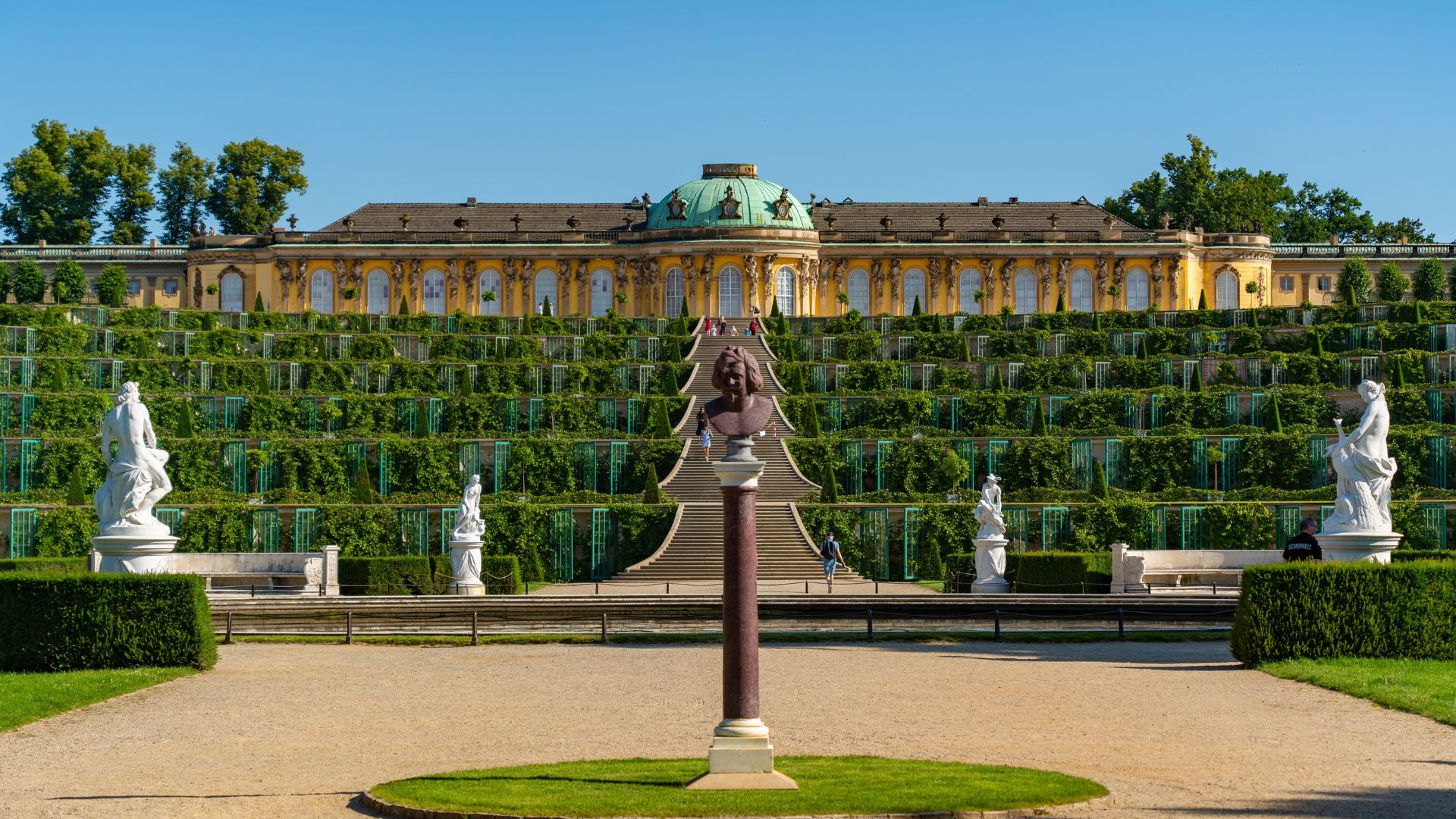
Potsdam is the single most popular day trip from Berlin and for very good reason. Just 30 minutes by S-Bahn from the city centre, it feels like a completely different world of royal palaces, landscaped gardens, and elegant Prussian architecture spread across a landscape of lakes and woodland.
Sanssouci Palace, the summer residence of Frederick the Great, is the crown jewel. Built between 1745 and 1747 in an exuberant Rococo style, it sits atop a terraced vineyard hill with formal gardens cascading down toward the park below. The interior is breathtakingly ornate and richly preserved.
The wider Sanssouci Park covers nearly 300 hectares and contains multiple palaces, fountains, follies, and garden temples scattered among ancient trees. The New Palace, the Chinese House, and the Orangery are all worth visiting and are connected by pleasant walking and cycling paths throughout.
Potsdam’s old town is equally rewarding. The Dutch Quarter, a compact neighbourhood of genuine 18th-century Dutch brick houses, is one of the most unexpected and charming urban surprises anywhere near Berlin. The Russian Colony of Alexandrowka adds yet another extraordinary cultural layer.
Things to do in Potsdam:
- Tour Sanssouci Palace and explore the terraced vineyard gardens on the hillside below the palace
- Walk or cycle through Sanssouci Park connecting the New Palace, Chinese House, and Orangery buildings
- Explore the Dutch Quarter and photograph its authentic 18th-century red-brick Dutch townhouses
- Visit Cecilienhof Palace where the 1945 Potsdam Conference between Allied leaders famously took place
- Take a boat trip across the Havel lakes surrounding Potsdam for views of the palaces from the water
How to get there: S-Bahn S7 from Berlin Hauptbahnhof takes approximately 30 minutes directly to Potsdam.
2. Saxon Switzerland — Dresden’s Dramatic Rocky Playground
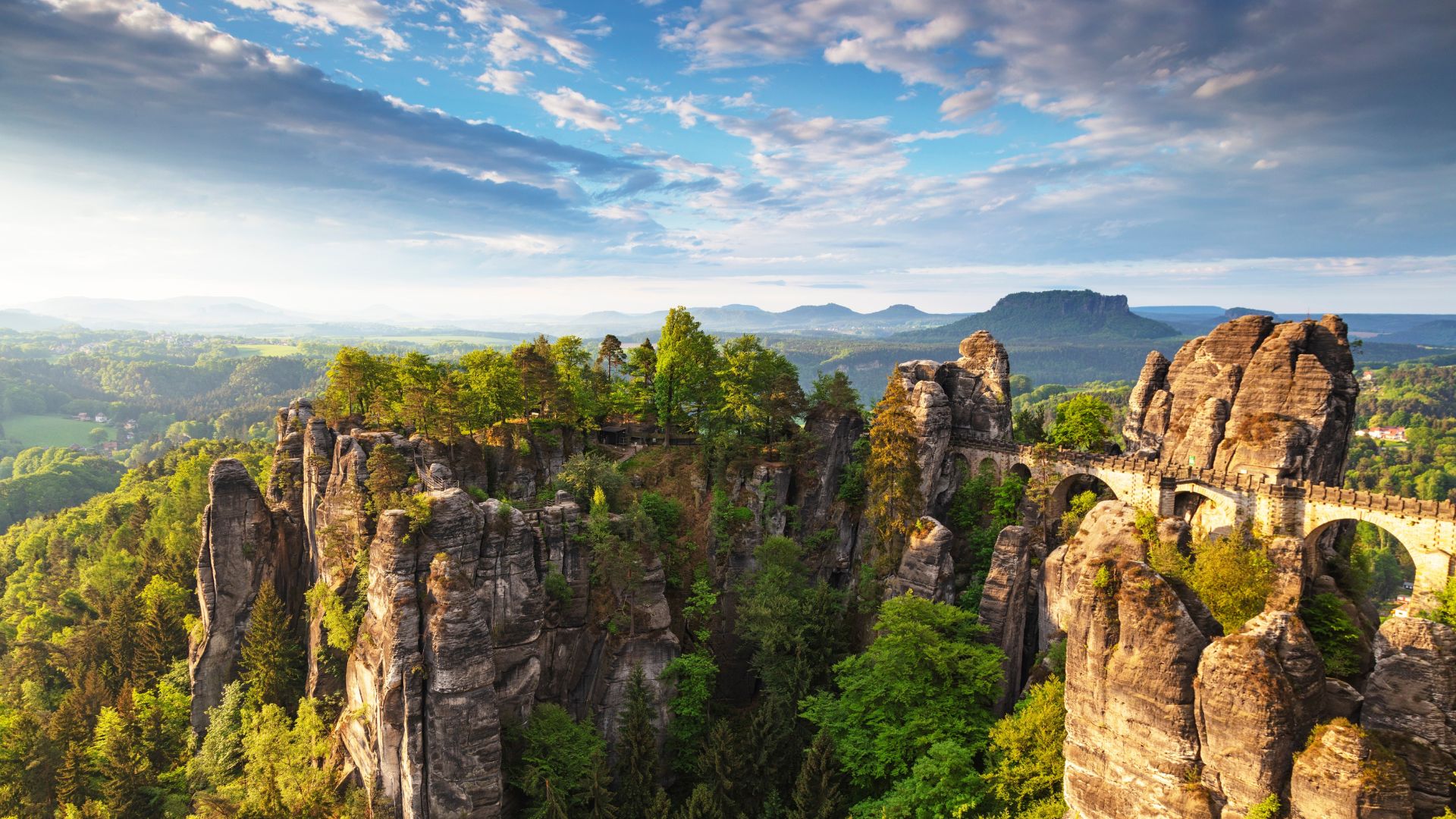
Saxon Switzerland National Park, just 45 minutes by train from Dresden, is one of the most dramatically beautiful landscapes in Germany. Bizarre sandstone formations, deep river gorges, forested plateaus, and towering rock pillars create a landscape that feels more like a fantasy novel than central Europe.
The Bastei Bridge is the signature image of the park, a sandstone bridge spanning a vertiginous gap between rock pillars high above the Elbe River gorge. Built in 1851, it offers views that are genuinely breathtaking in all directions and remains one of the most spectacular viewpoints in the country.
The Elbe Valley below the Bastei contains the charming town of Rathen, reachable by ferry from the opposite bank. From Rathen, well-marked hiking trails climb through ancient beech forest to the rock formations above, passing caves, viewpoints, and the ruins of medieval Neurathen Castle embedded into the sandstone cliffs.
Beyond the Bastei, the park offers days of further exploration. The Schrammsteine ridge, the Affensteine rock towers, and the Königstein Fortress — a massive hilltop citadel that was never captured in its entire history — each provide a completely different perspective on this extraordinary landscape.
Things to do in Saxon Switzerland:
- Walk across the Bastei Bridge and explore the surrounding sandstone pinnacles and dramatic viewing platforms
- Hike the marked trail from Rathen village up through the beech forest to the rock formations above
- Visit Königstein Fortress, the great hilltop citadel perched above the Elbe that was never once captured
- Take the Elbe ferry between Rathen and the opposite bank for classic views of the cliffs from the river
- Hike the Malerweg trail, one of Germany’s most celebrated long-distance walking routes through the national park
How to get there: Regional train from Dresden Hauptbahnhof to Kurort Rathen takes approximately 45 minutes.
3. Heidelberg — Germany’s Most Romantic University Town
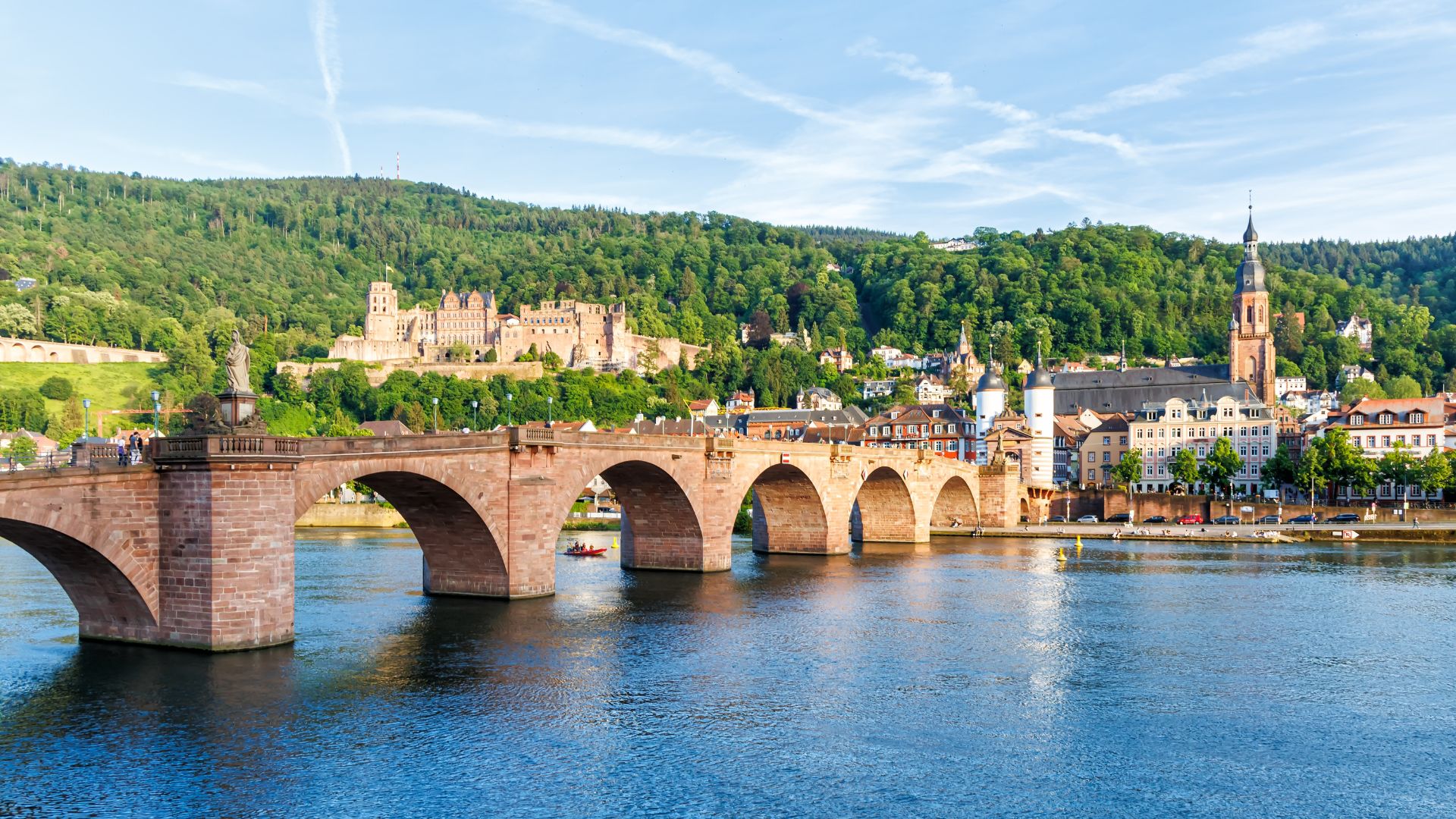
Heidelberg in Baden-Württemberg is one of Germany’s most visited destinations and one of its most genuinely beautiful. The combination of a ruined red sandstone castle towering above the old town, the Neckar River flowing beneath it, and a historic university founded in 1386 creates an atmosphere of romantic, intellectual grandeur.
The castle ruins are the centrepiece of any visit. Partially destroyed by French forces in 1693 and never fully rebuilt, the Heidelberg Castle is one of the greatest examples of Renaissance architecture in Germany despite its ruined state. The views from the castle terrace over the old town and river below are exceptional.
The old town below the castle is a long, lively pedestrian zone of Baroque townhouses, student pubs, independent bookshops, and excellent restaurants. The Hauptstrasse, Europe’s longest pedestrian shopping street, runs the full length of the old town and connects all of its major landmarks in one accessible walk.
The Philosophers Walk on the hillside opposite the castle is one of Germany’s most beautiful urban walks. Climbing through terraced gardens and vineyards above the Neckar, it offers an unbroken panoramic view of the castle, the old bridge, and the rooftops of the old town stretching below.
Things to do in Heidelberg:
- Tour Heidelberg Castle and stand on the terrace for panoramic views over the Neckar River valley
- Walk the Hauptstrasse from end to end and explore the Baroque townhouses and market square
- Climb the Philosophers Walk on the opposite hillside for the classic panoramic view of the castle
- Cross the historic Karl Theodor Bridge and photograph the castle from the north bank of the Neckar
- Visit the Old University and the famous Student Prison where students were once confined for minor offences
How to get there: Direct trains from Frankfurt Hauptbahnhof to Heidelberg take approximately 1 hour.
4. Neuschwanstein Castle — Bavaria’s Fairy-Tale Crown
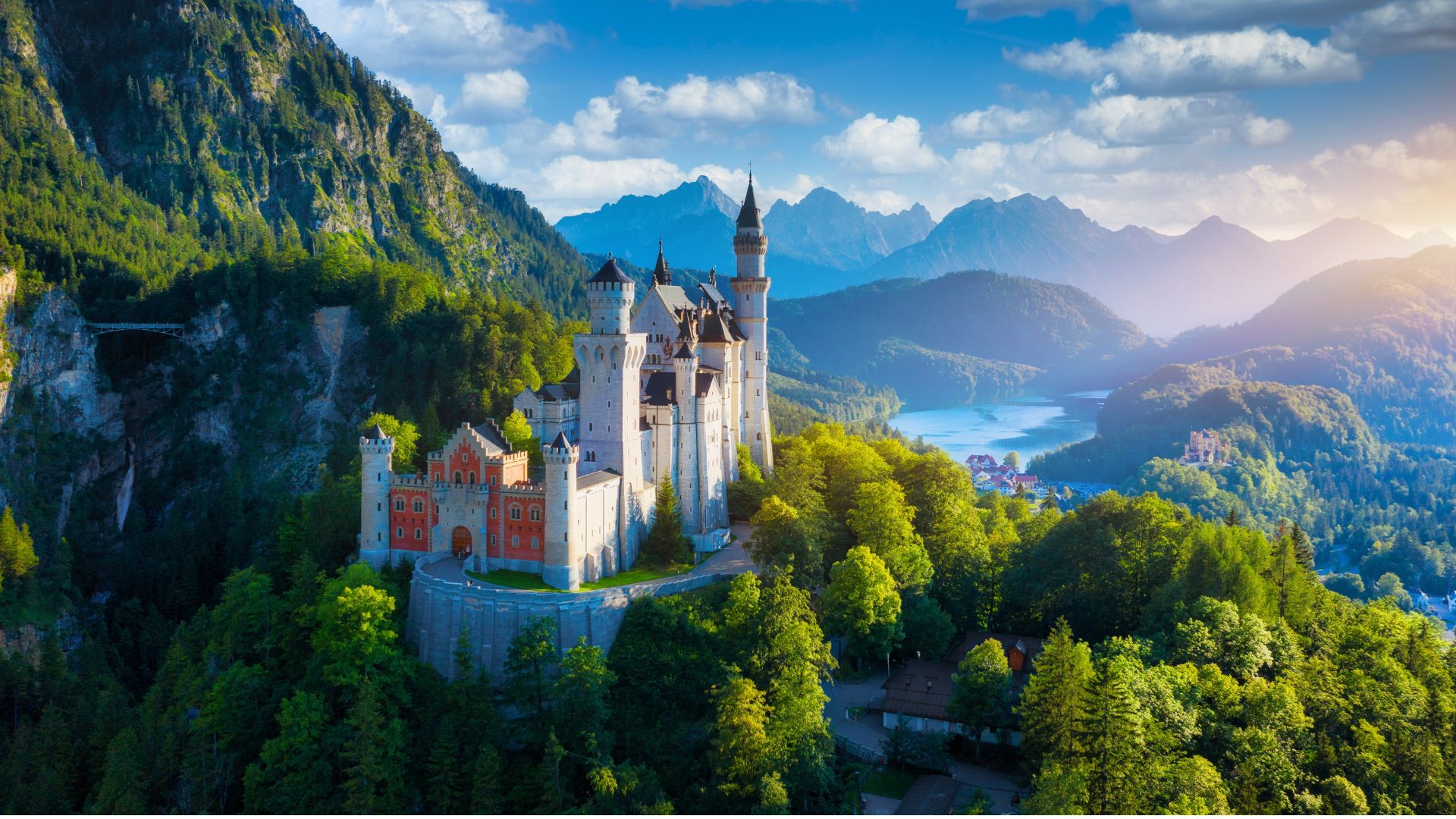
Neuschwanstein Castle near Füssen in Bavaria is probably the most photographed building in Germany and the inspiration for Disney’s Sleeping Beauty Castle. Built by the eccentric King Ludwig II between 1869 and 1886, it perches on a rocky outcrop above a gorge with the Alps rising dramatically behind it.
The interior is as extraordinary as the exterior. Every room is decorated with scenes from Wagnerian operas, elaborate wood carvings, hand-painted murals, and Byzantine gold mosaics. Ludwig lived in the completed rooms for only 172 days before his mysterious death in 1886 left the castle forever unfinished.
The best viewpoint is the Marienbrücke, a slender iron bridge spanning the gorge above the castle. From this bridge, the classic postcard photograph of Neuschwanstein framed by mountains and forest is taken by millions of visitors every year. Arriving early in the morning greatly reduces the crowds significantly.
Nearby Hohenschwangau Castle, where Ludwig spent his childhood, offers an equally fascinating and much less crowded alternative. The village of Füssen below is a pleasant medieval town in its own right, with an old abbey, a painted old town centre, and direct access to the crystal-clear Forggen and Alpsee lakes.
Things to do at Neuschwanstein:
- Book a guided interior tour of Neuschwanstein Castle well in advance to guarantee your entry slot
- Walk up to the Marienbrücke bridge for the classic panoramic photograph of the castle and mountains
- Visit nearby Hohenschwangau Castle for a less crowded and equally fascinating royal palace experience
- Swim in the stunning Alpsee lake directly below Hohenschwangau on a warm summer afternoon
- Explore the medieval old town and Benedictine abbey in the nearby charming town of Füssen
How to get there: Direct train from Munich Hauptbahnhof to Füssen takes approximately 2 hours each way.
5. Lübeck — Hamburg’s Hanseatic Neighbour
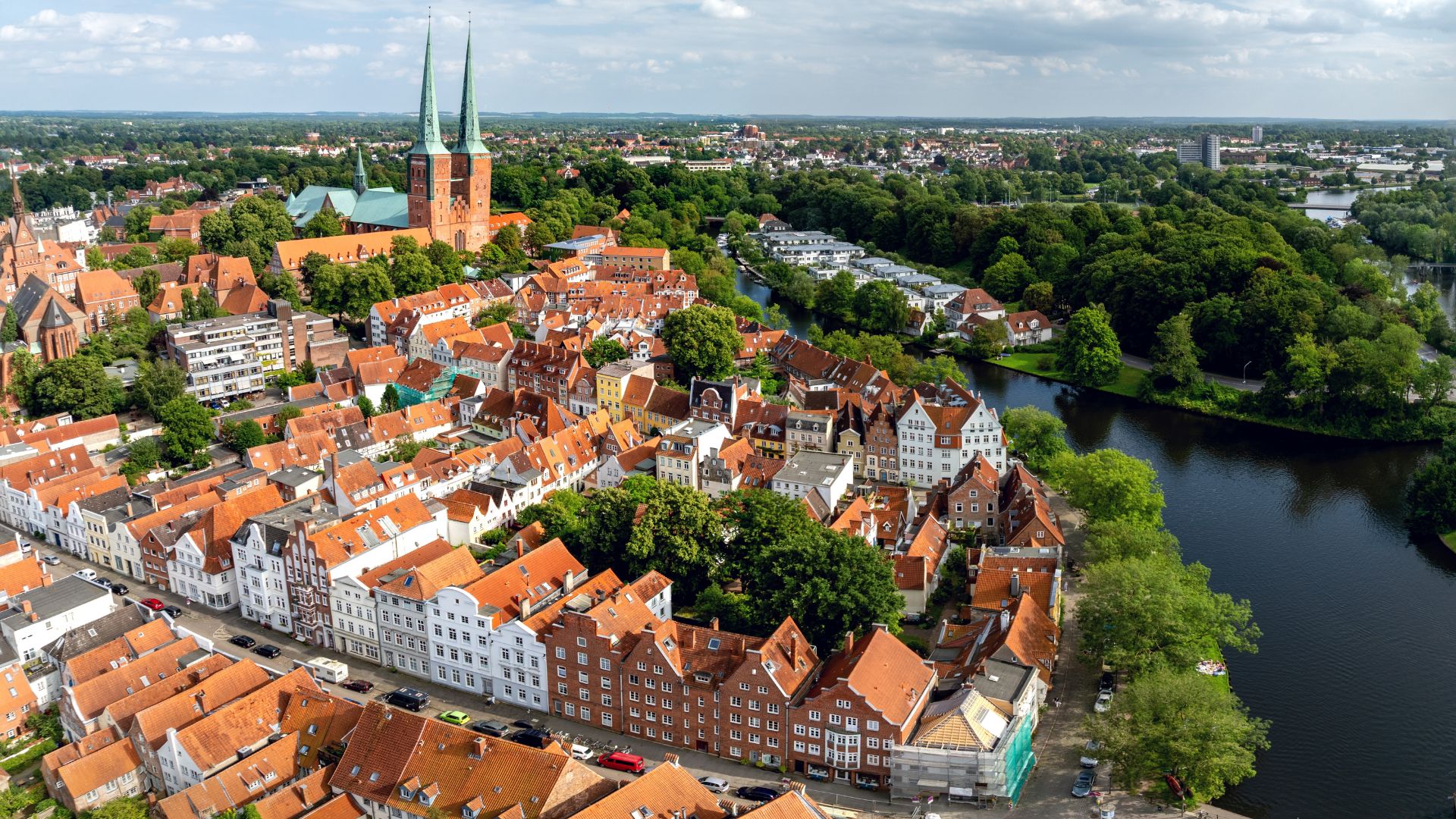
Lübeck in Schleswig-Holstein, just 45 minutes from Hamburg by train, is one of the greatest medieval cities in northern Europe. Once the undisputed capital of the Hanseatic League, it dominated Baltic Sea trade for centuries and accumulated wealth that is still strikingly visible in its remarkable brick Gothic architecture.
The Holstentor, Lübeck’s iconic twin-towered gateway from 1478, is one of the most recognisable buildings in Germany. Beyond it, the old town occupies an island encircled by the Trave River, its seven brick church towers defining a skyline that has barely changed since the Middle Ages.
The Marienkirche is the masterpiece of the old town. Its Gothic brick interior contains the world’s largest mechanical organ and the famous Death Dance painting. The church was badly damaged in a 1942 bombing raid and the ruins of two bells, which fell and embedded themselves in the floor, have been deliberately preserved as a memorial.
Lübeck is also the birthplace of Thomas Mann and the home of perhaps the finest marzipan tradition in the world. The historic Niederegger marzipan shop on Breite Strasse has been producing its famous almond confections since 1806 and remains an essential stop on any visit to the city.
Things to do in Lübeck:
- Pass through the Holstentor gateway and visit the museum inside this iconic 15th-century brick tower
- Explore the Marienkirche and see the preserved fallen bells embedded in the floor as a war memorial
- Visit the Buddenbrookhaus museum dedicated to Thomas Mann and his Nobel Prize-winning literary family saga
- Buy and taste genuine Lübeck marzipan at the historic Niederegger shop on the main Breite Strasse
- Walk the full circuit of the old town island along the Trave River waterfront at a leisurely pace
How to get there: Direct trains from Hamburg Hauptbahnhof to Lübeck take approximately 45 minutes.
6. Rothenburg ob der Tauber — The Ultimate Medieval Walled Town
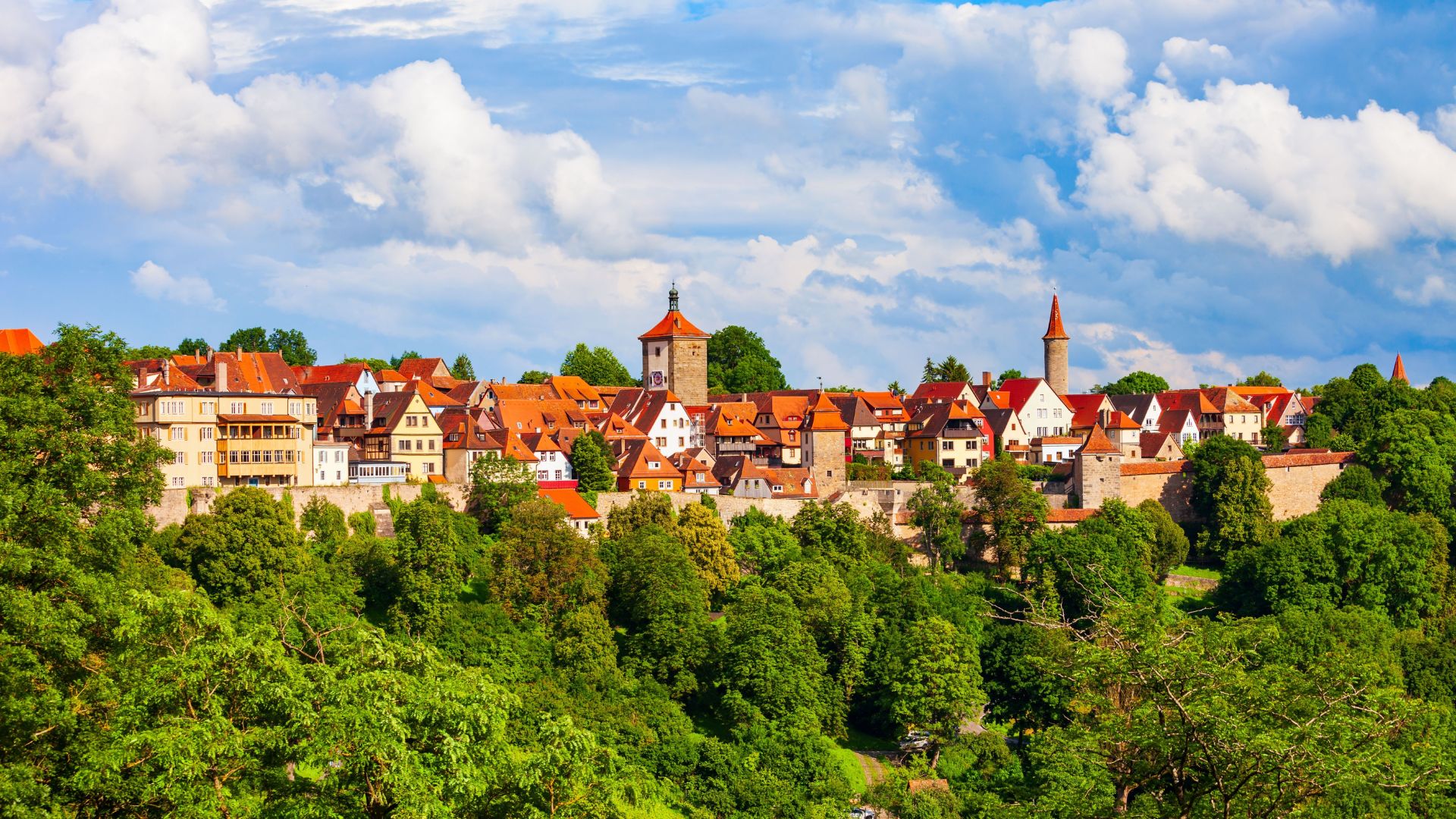
Rothenburg ob der Tauber in Bavaria is Germany’s most completely preserved medieval walled town and one of its most visited destinations. Every single medieval tower, gate, and stretch of town wall remains intact, enclosing a compact old town of half-timbered houses, Gothic churches, and cobbled squares that looks entirely unchanged from the 16th century.
The town wall itself is the defining experience of Rothenburg. Visitors can walk the full 3.5-kilometre circuit along the top of the wall, passing through towers, covered walkways, and open battlements with views over the red-roofed old town on one side and the Tauber Valley on the other.
The Marktplatz at the heart of the old town is surrounded by exceptional Renaissance and Gothic buildings. The Ratstrinkstube, with its famous Meistertrunk mechanical clock, the Gothic town hall tower, and the surrounding merchant houses create a perfectly composed historical square that is genuinely magnificent.
Rothenburg also hosts one of Germany’s most famous Christmas markets. The Reiterlesmarkt on the Marktplatz transforms the town into a winter wonderland every December, drawing visitors from across the world. The Christmas Museum on Herrngasse displays Christmas decorations and traditions throughout the year for those who cannot wait until December.
Things to do in Rothenburg ob der Tauber:
- Walk the complete 3.5-kilometre circuit of the intact medieval town walls and towers all the way around
- Climb the Rathaus tower for a panoramic view over the red rooftops and the surrounding Tauber Valley
- Watch the Meistertrunk clock mechanism perform on the Ratstrinkstube every hour on the Marktplatz
- Visit the Christmas Museum on Herrngasse for a year-round celebration of German Christmas traditions
- Try the famous Schneeballen, a traditional Rothenburg pastry made of fried dough rolled in sugar and spices
How to get there: Regional trains from Nuremberg to Rothenburg ob der Tauber take approximately 1 hour with one change.
7. Zugspitze — Standing on Top of Germany
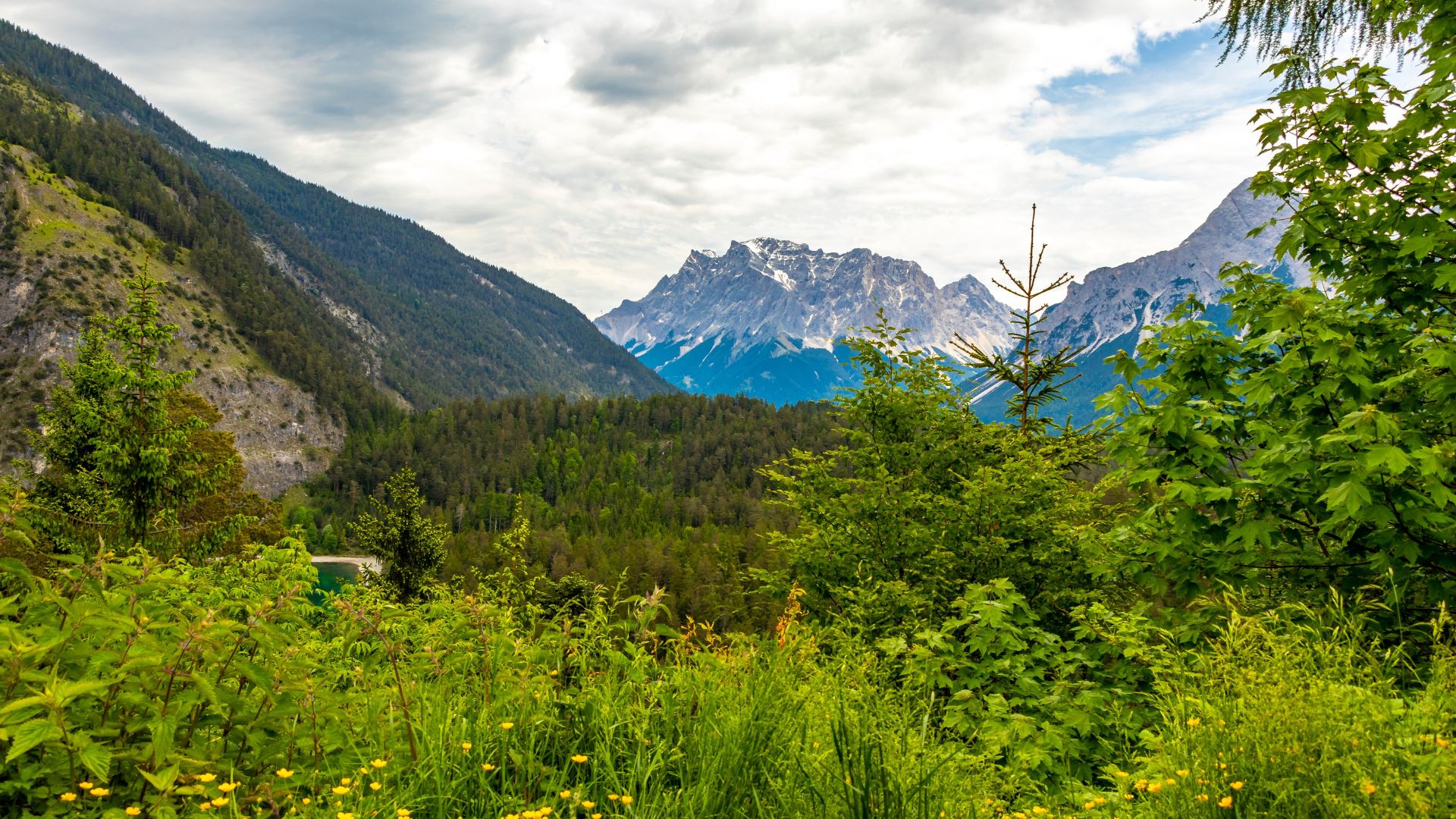
The Zugspitze, at 2,962 metres above sea level, is Germany’s highest mountain and one of its most extraordinary day trip experiences. Located near the town of Garmisch-Partenkirchen in Bavaria, it is reachable entirely without hiking via a combination of cogwheel railway and cable car from the valley below.
The summit offers views across four countries on a clear day: Germany, Austria, Switzerland, and Italy. The panorama of Alpine peaks stretching in every direction from the viewing platform is one of the most spectacular sights available to any visitor in the whole of Germany, summer or winter.
In winter, the Zugspitze transforms into a ski resort with guaranteed snow conditions year-round on its glacier. In summer, the summit provides a cool escape from valley heat, with hiking trails across the Zugspitzplatt plateau, a glacier to walk on, and the extraordinary border experience of stepping from Germany directly into Austria.
The journey itself is part of the experience. The historic Bayerische Zugspitzbahn cogwheel train climbs through forest and alpine meadows before entering a long tunnel to the summit station. The final section by cable car from the Zugspitzplatt to the very summit is thrillingly dramatic in clear weather.
Things to do at the Zugspitze:
- Ride the cogwheel Zugspitzbahn train and the cable car to reach Germany’s highest summit comfortably
- Stand on the summit cross and enjoy the four-country panorama of the Alps on a clear day
- Walk across the Zugspitzplatt glacier in summer on the marked plateau hiking trails above the snow line
- Ski or snowboard on the glacier slopes, which offer reliable snow conditions throughout the summer months
- Visit the summit museum covering the history of Alpine exploration and meteorological research on the mountain
How to get there: Direct train from Munich to Garmisch-Partenkirchen takes 1.5 hours, then Zugspitzbahn to the summit.
8. Würzburg — Baroque Palaces and Franconian Wine
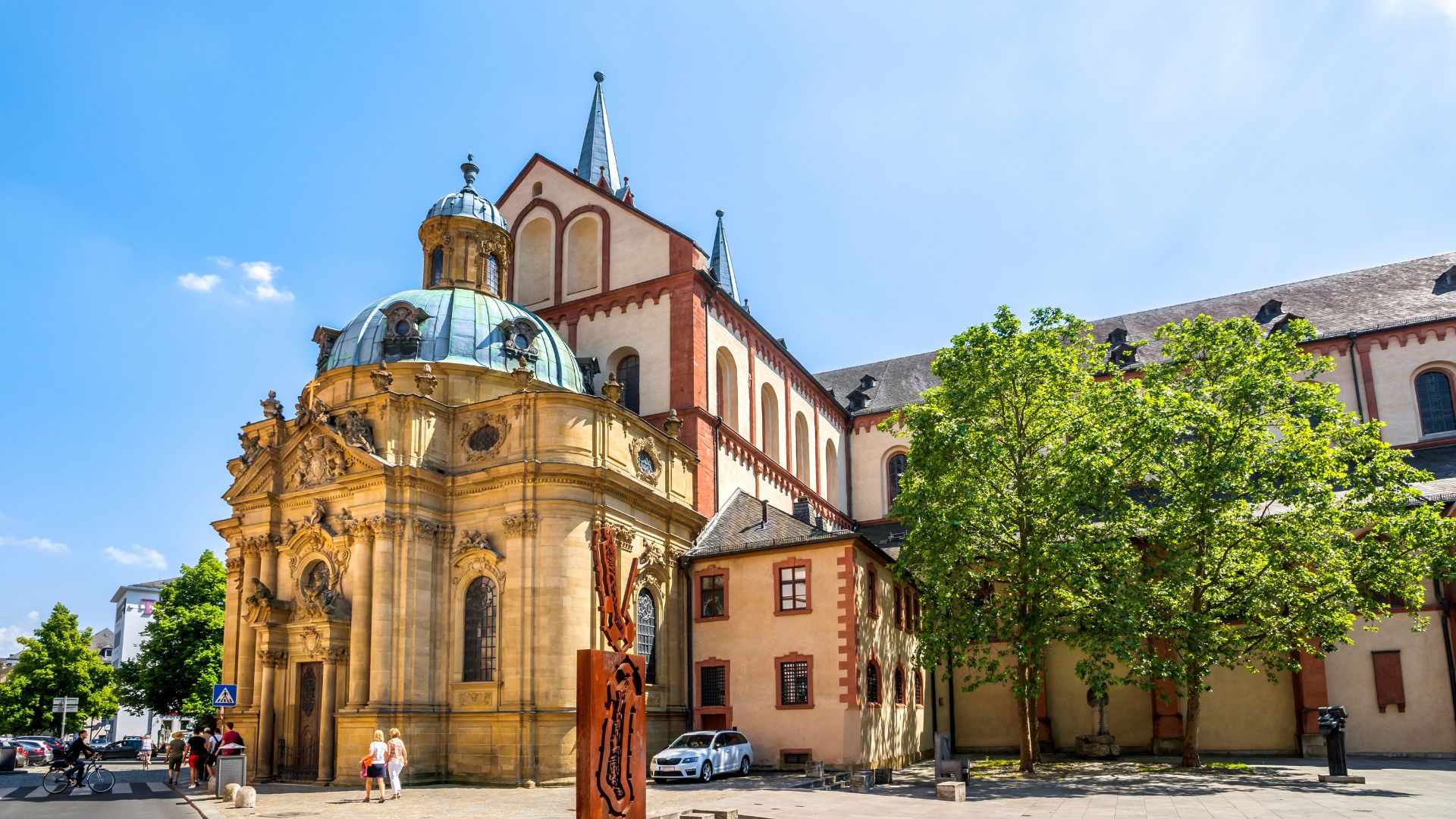
Würzburg in Franconia is one of Germany’s great Baroque cities, rebuilt magnificently after severe wartime bomb damage with the same elegance and ambition its architects originally intended. It sits in the heart of the Franconian wine region, surrounded by terraced vineyards, and combines outstanding architecture with excellent regional food and wine culture.
The Würzburg Residence is the centrepiece and one of the finest Baroque palaces in all of Europe. Its Grand Staircase is crowned by the world’s largest ceiling fresco, painted by Giovanni Battista Tiepolo between 1750 and 1753. The sheer scale, colour, and exuberance of this fresco is genuinely breathtaking and stops every visitor in their tracks.
The Marienberg Fortress on the opposite bank of the Main River is Würzburg’s second great landmark. A medieval castle that was gradually transformed into a Renaissance and Baroque residence, it houses the Mainfränkisches Museum with its exceptional collection of sculptures by Tilman Riemenschneider, one of Germany’s greatest medieval masters.
The old town between these two monuments is full of further pleasures. The Alte Mainbrücke bridge, lined with Baroque sandstone saints, is the place where locals traditionally drink Franconian wine from the barrel at sunset. The surrounding wine bars and taverns make Würzburg one of Germany’s most enjoyable evening destinations.
Things to do in Würzburg:
- Tour the Würzburg Residence and stand beneath Tiepolo’s extraordinary world’s largest ceiling fresco
- Visit Marienberg Fortress and explore the Riemenschneider sculpture collection in its outstanding museum
- Walk across the Alte Mainbrücke bridge and join locals drinking Franconian wine from the barrel at sunset
- Taste Franconian Silvaner white wine at a traditional Weinstube in the old town centre of Würzburg
- Explore the ornate Hofkirche palace chapel inside the Residence, one of Germany’s finest Baroque interiors
How to get there: Direct trains from Frankfurt Hauptbahnhof to Würzburg take approximately 1 hour.
9. Spreewald — Berlin’s Waterway Wilderness
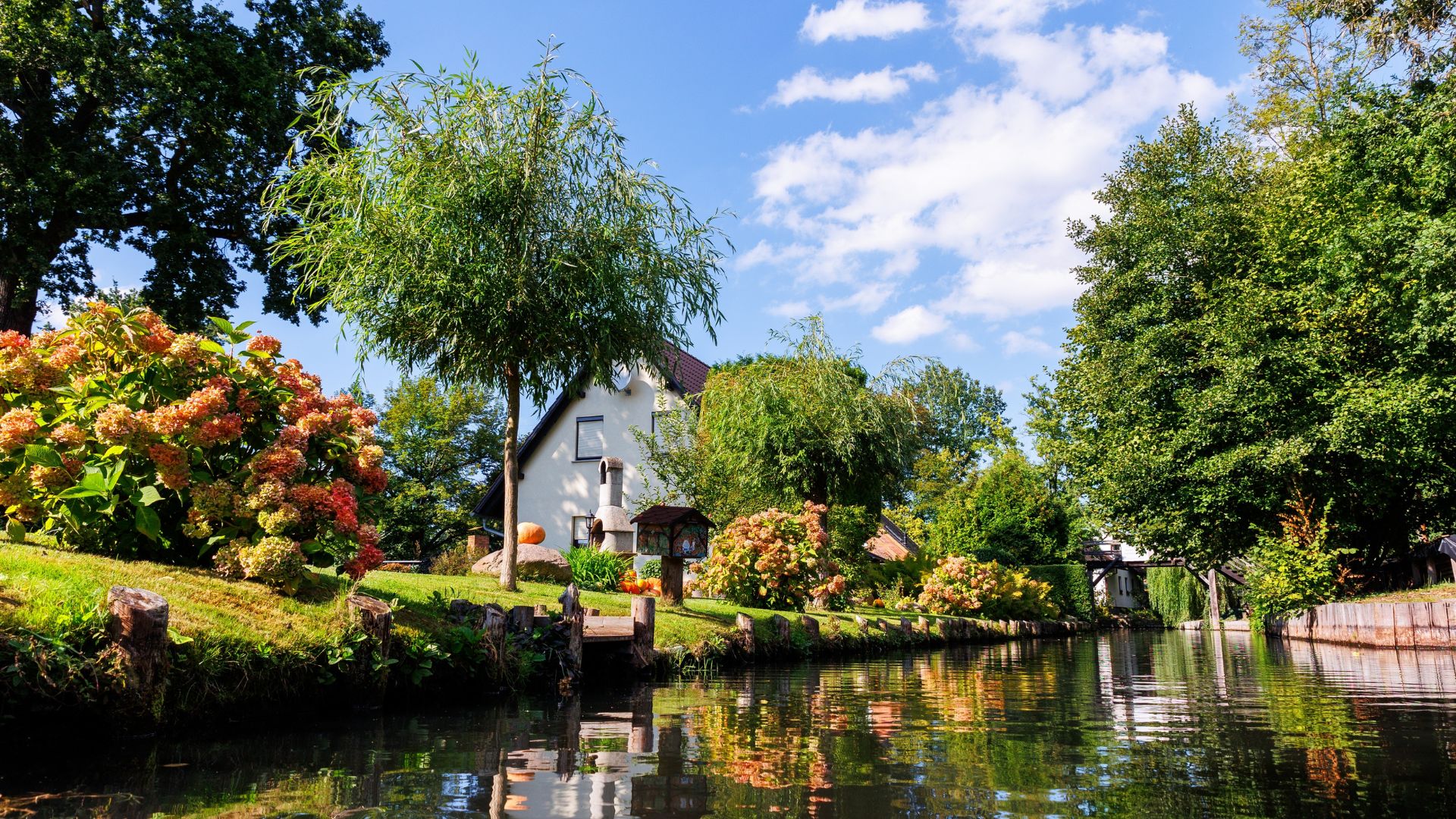
The Spreewald Biosphere Reserve, about 1.5 hours south of Berlin by train, offers one of the most unique and peaceful day trip experiences available from any major German city. A vast network of canals, rivers, and waterways threads through ancient alder forests, meadows, and traditional Sorbian villages.
Traditional flat-bottomed Kahn punt boats navigate the narrow channels, guided by punters using long wooden poles. This is the primary and most atmospheric way to explore the Spreewald, drifting silently beneath overhanging trees while kingfishers dart across the water and herons stand motionless in the shallows.
The market town of Lübbenau serves as the main gateway to the biosphere reserve. From its harbour, dozens of guided and self-guided boat tours depart daily throughout the spring and summer season. The surrounding open-air museum at Lehde village preserves traditional Sorbian farmstead architecture remarkably well.
Beyond boats, the Spreewald offers excellent cycling on completely flat paths through the forest and alongside the waterways. The region is also famous for its Spreewald gherkins, a locally produced pickle with protected geographical status, sold at every market stall and farm shop throughout the area.
Things to do in the Spreewald:
- Take a guided Kahn punt boat tour from Lübbenau harbour through the ancient Spreewald waterway network
- Hire a canoe or kayak and spend a full day exploring the quieter back channels completely independently
- Visit the Lehde open-air museum to see traditional Sorbian farmstead buildings preserved in their original setting
- Cycle the flat forest cycling paths connecting the main Spreewald villages through beautiful ancient woodland
- Buy and taste genuine Spreewald gherkins at a local farm shop or weekly market stall in the region
How to get there: Regional trains from Berlin Hauptbahnhof to Lübbenau take approximately 1 hour 20 minutes.
10. Erfurt — Thuringia’s Magnificent Medieval Capital
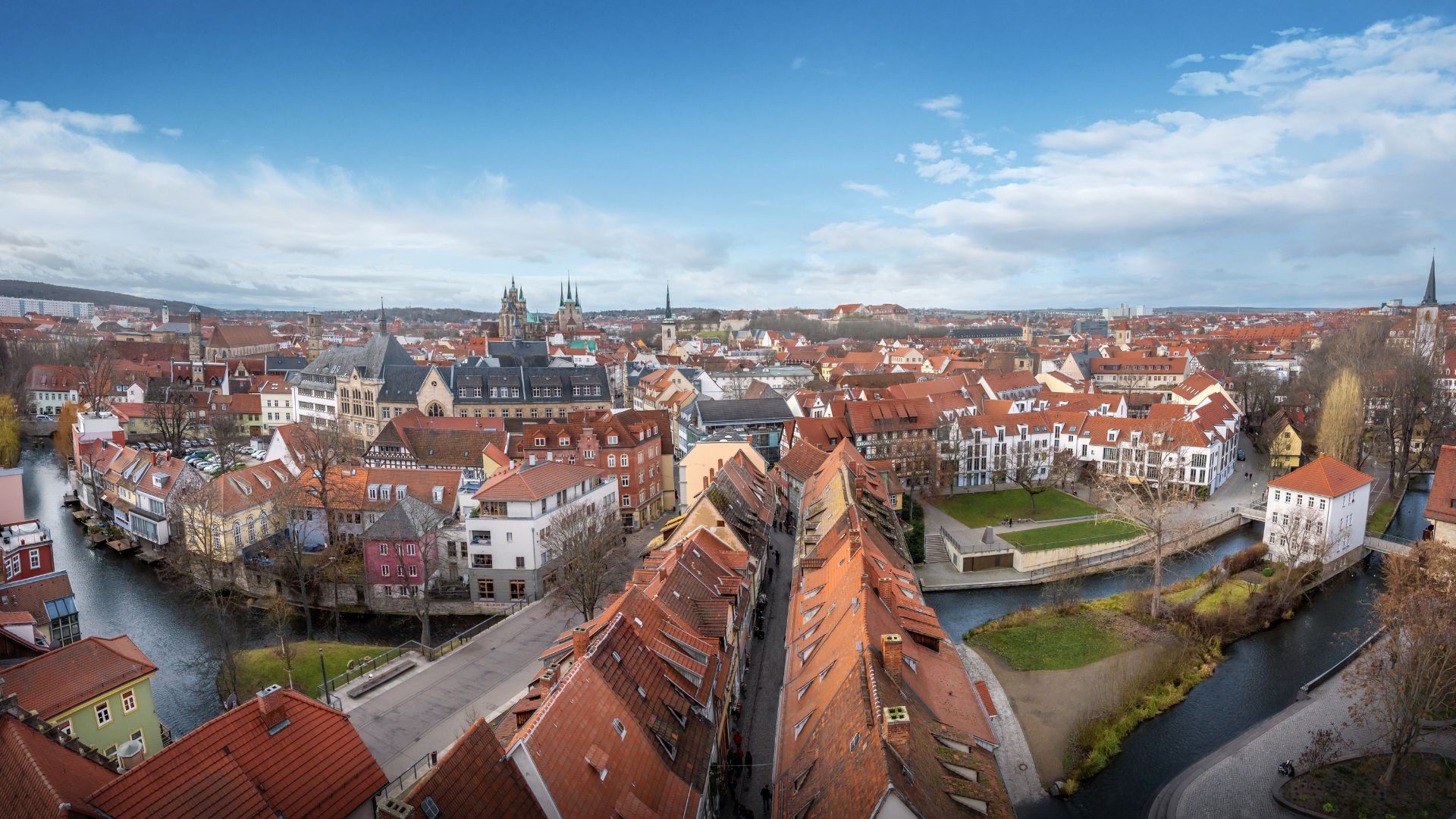
Erfurt in Thuringia is one of the most rewarding and undervisited day trips from Frankfurt. Its medieval old town is exceptional, anchored by the Cathedral Hill where the Erfurt Cathedral and the Severikirche stand side by side above a vast open square, creating one of the most dramatic ecclesiastical ensembles anywhere in Germany.
The Krämerbrücke, the Merchants Bridge, is Erfurt’s most famous and beloved landmark. A medieval bridge lined on both sides with inhabited half-timbered houses, it is the longest inhabited bridge in Europe and the only one north of the Alps to carry residential and commercial buildings continuously across its full length.
Martin Luther spent formative years in Erfurt as a university student and an Augustinian monk before his break with Rome. The Augustinian Monastery where he lived still stands and offers guided tours through rooms and spaces directly connected to one of the most consequential figures in European history.
The old town between these landmarks is a pleasure to explore slowly. The Fischmarkt square, the Baroque Merchant’s Hall, the web of medieval lanes, and the abundant churches and towers give Erfurt a density of historical interest that easily fills a full and satisfying day of unhurried exploration.
Things to do in Erfurt:
- Climb Cathedral Hill and visit both the Erfurt Cathedral and the adjacent Severikirche together
- Walk across the Krämerbrücke Merchants Bridge and explore the inhabited half-timbered shops along it
- Tour the Augustinian Monastery where Martin Luther lived and studied before the Protestant Reformation
- Explore the Fischmarkt square surrounded by Renaissance and Baroque merchants’ houses and the town hall
- Wander the medieval lanes of the old Jewish quarter and visit the restored medieval synagogue nearby
How to get there: Direct ICE trains from Frankfurt Hauptbahnhof to Erfurt take approximately 2 hours.
11. Berchtesgaden — Alpine Lakes and the Eagle’s Nest
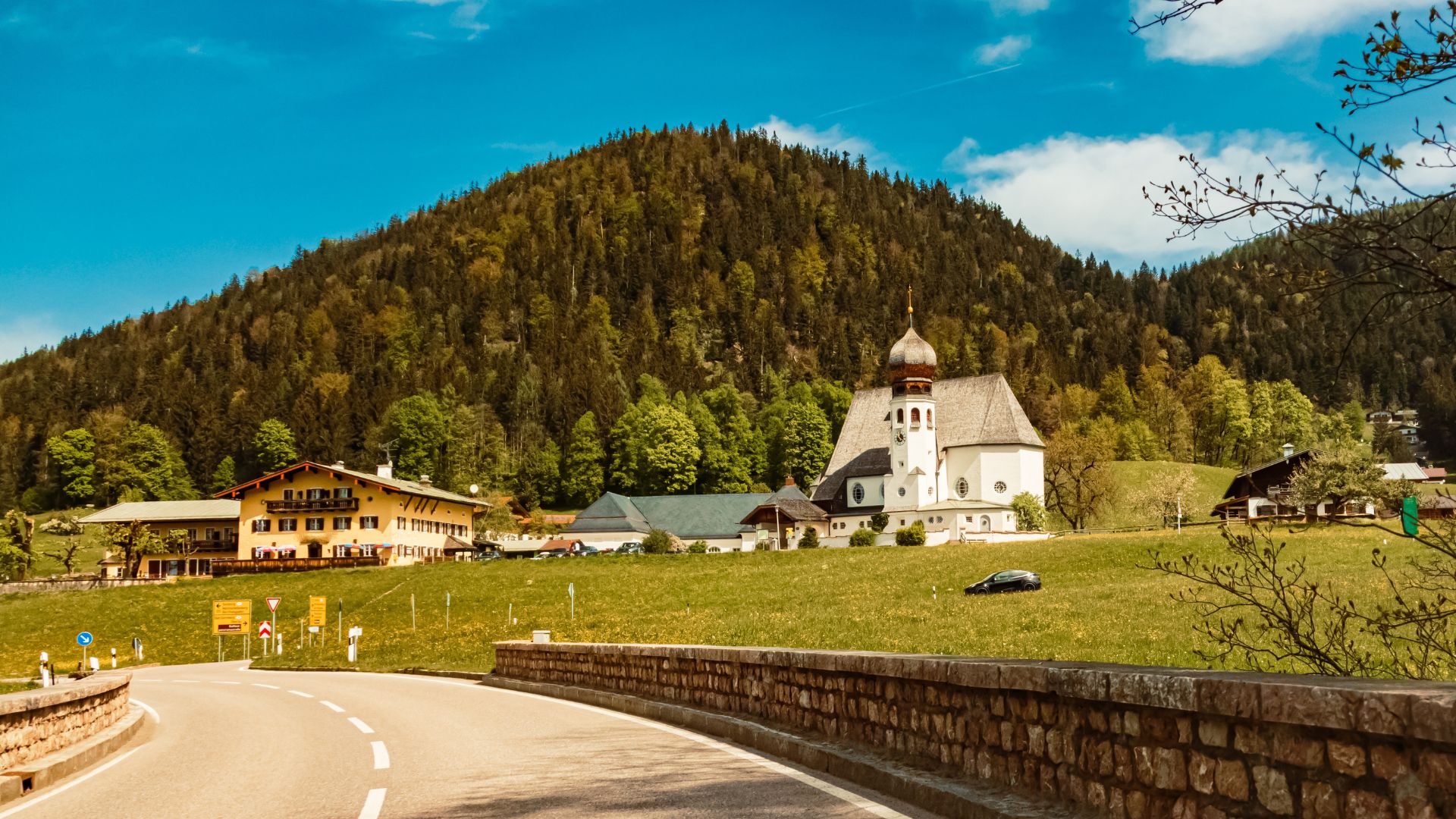
Berchtesgaden in the Bavarian Alps, just 30 minutes from Salzburg by bus, offers one of the most concentrated collections of natural and historical attractions of any day trip destination in Germany. The surrounding national park, the Königssee lake, and the Kehlsteinhaus all compete for attention in a landscape of overwhelming Alpine beauty.
The Königssee is the undisputed highlight for most visitors. Electric-powered boats carry passengers across its still, emerald-green waters, enclosed on all sides by vertical rock faces rising directly from the lake surface. The journey to the pilgrimage church of St Bartholomä is one of the most memorable boat trips in Europe.
The Kehlsteinhaus, known internationally as the Eagle’s Nest, sits at 1,834 metres above sea level on a rocky peak above Obersalzberg. Reached by a specially built mountain road and a brass-lined elevator blasted through 124 metres of solid rock, it offers absolutely panoramic 360-degree views of the surrounding Alps.
The Dokumentation Obersalzberg museum tells the full history of the Nazi presence on the mountain above Berchtesgaden with honesty and detail. The underground bunker system beneath the former Nazi complex can also be visited, providing a sobering and historically essential counterpoint to the surrounding natural beauty.
Things to do in Berchtesgaden:
- Take the electric boat tour across Königssee to the stunning pilgrimage church of St Bartholomä on the shore
- Visit the Kehlsteinhaus Eagle’s Nest and enjoy the extraordinary 360-degree Alpine panorama from the summit
- Tour the Dokumentation Obersalzberg museum and the underground Nazi bunker system below the complex
- Hike the Berchtesgaden National Park trails, including the path around the Königssee to the Obersee waterfall
- Visit the Salzbergwerk salt mine and experience 400 years of salt mining history underground on a guided tour
How to get there: Bus 840 from Salzburg Central Station to Berchtesgaden takes approximately 30 minutes.
12. Regensburg — Bavaria’s Best-Preserved Roman City
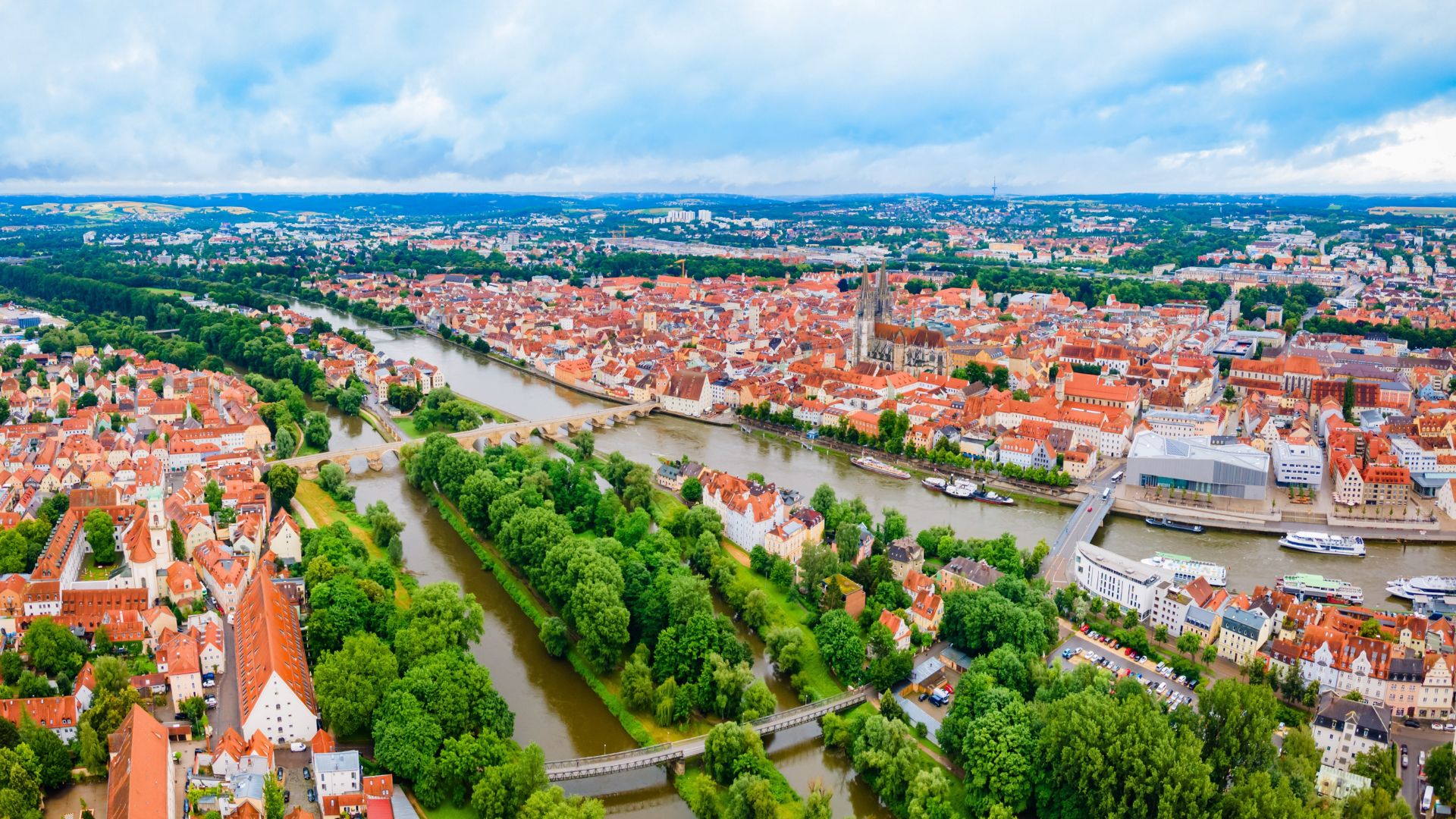
Regensburg in Bavaria is one of Germany’s oldest and best-preserved cities, its UNESCO-listed old town containing the most complete ensemble of medieval architecture in the entire country. Founded as a Roman legionary fortress in 79 AD, it was for centuries one of the most important cities in the Holy Roman Empire.
The Stone Bridge across the Danube, built between 1135 and 1146, is one of the oldest and most historically significant bridges in Germany. For centuries it was the only crossing point of the Danube for hundreds of kilometres, making Regensburg an indispensable hub of European trade and travel throughout the medieval period.
The Cathedral of St Peter is a masterpiece of High Gothic architecture, its twin spires rising above a remarkably intact medieval cityscape of towers, patrician palaces, and narrow lanes. The Regensburg Cathedral Boys Choir, the Domspatzen, has been singing in this cathedral since the early 11th century.
The old town is full of further treasures. The Porta Praetoria, a Roman gateway still standing to almost its original height, the Thurn und Taxis Palace housing an extraordinary carriage museum, and the vibrant Wurstkuchl sausage kitchen on the Danube bank serving grilled sausages since the 12th century all demand attention.
Things to do in Regensburg:
- Walk across the historic Stone Bridge and enjoy views along the Danube toward the cathedral towers
- Visit the Cathedral of St Peter and attend a choral performance by the famous Domspatzen boys choir
- Find the Porta Praetoria, the remarkably well-preserved Roman gateway standing in the heart of the old town
- Eat at the Wurstkuchl on the riverbank, Germany’s oldest continuously operating sausage kitchen since the 1100s
- Tour the Thurn und Taxis Palace and its extraordinary collection of historic royal carriages and palace interiors
How to get there: Direct trains from Munich Hauptbahnhof to Regensburg take approximately 1.5 hours.
13. Flensburg — Germany’s Danish Border Fjord Town

Flensburg in Schleswig-Holstein sits right on the Danish border at the end of a long, narrow fjord and has a character entirely unlike any other German city. Its historic harbour, once one of the busiest rum trading ports in northern Europe, is lined with beautifully restored brick warehouses that now house museums, restaurants, and independent shops.
The city has a genuinely bicultural identity. Danish is widely spoken, Danish shops and restaurants are common, and the cultural border between Germany and Denmark here is refreshingly blurry. Walking from the German to the Danish side of Flensburg Fjord by crossing into Padborg takes less than ten minutes on foot.
The old town around the Nordermarkt and Südermarkt squares retains an attractive mixture of merchant townhouses, Baroque churches, and traditional archways leading into hidden courtyards. The Welcome Centre in the harbour area tells the fascinating story of Flensburg’s rum trading past with impressive detail and genuine enthusiasm.
The Flensburg Fjord itself is one of the most beautiful waterways in northern Germany. Sailing, kayaking, and swimming are popular throughout the summer, and the gentle wooded shores of the fjord can be explored on well-marked cycling and hiking paths that wind along the water’s edge for many kilometres.
Things to do in Flensburg:
- Explore the historic harbour and visit the rum museum in the beautifully restored old trading warehouses
- Walk the old town between Nordermarkt and Südermarkt squares and explore the hidden merchant courtyards
- Cycle or walk along the Flensburg Fjord shore through woodland and past sailing harbours to the Danish border
- Cross into Denmark on foot at Padborg and experience the famously blurred German-Danish cultural border
- Swim or sail on Flensburg Fjord at one of the beaches or yacht clubs along the wooded western shore
How to get there: Direct trains from Hamburg Hauptbahnhof to Flensburg take approximately 2 hours.
14. Wartburg Castle — Where Luther Translated the Bible
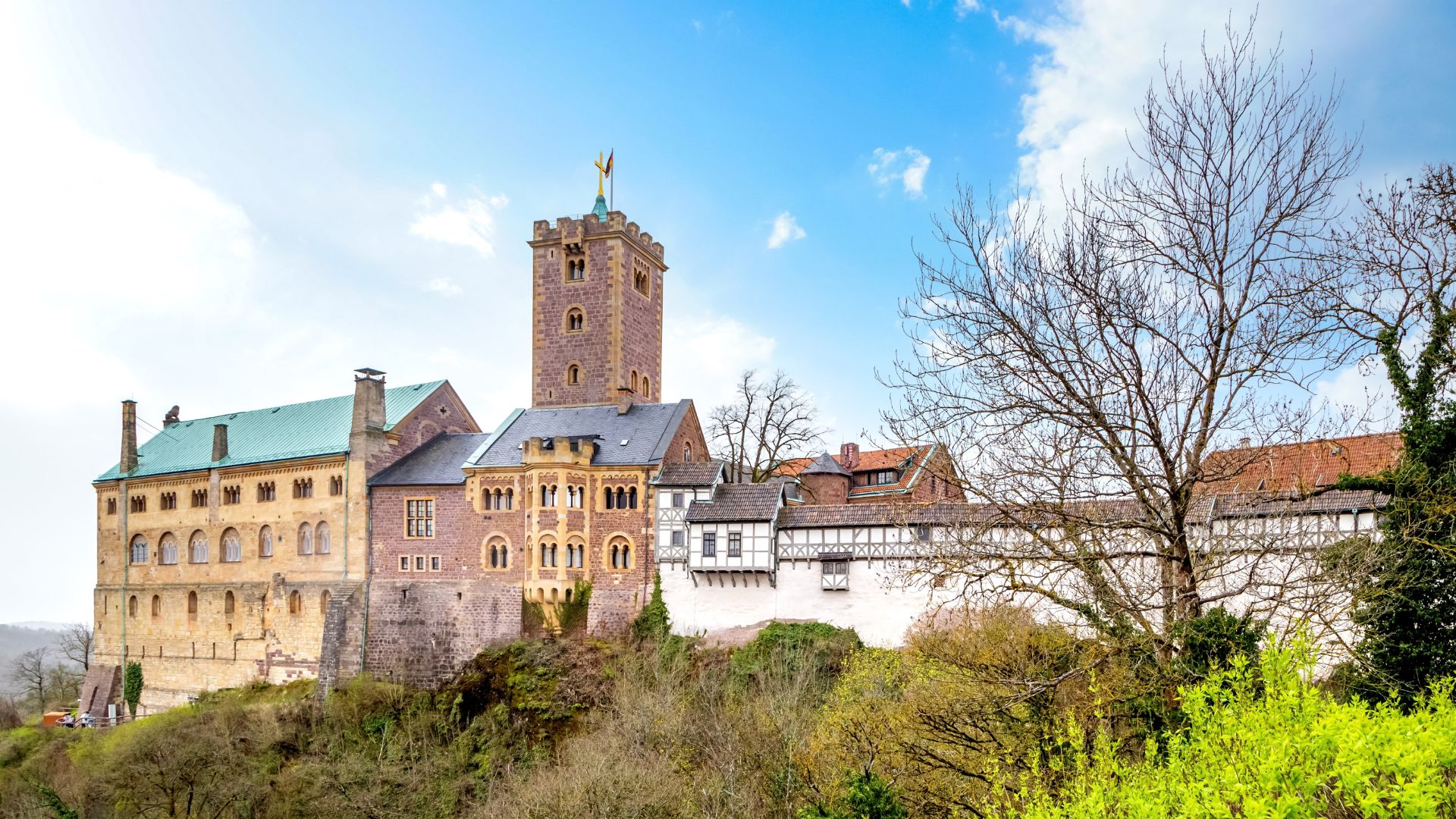
Wartburg Castle above the Thuringian town of Eisenach is one of the most historically significant buildings in Germany. A UNESCO World Heritage Site, it was here that Martin Luther hid under a false identity in 1521 and 1522, translating the New Testament into German in just 11 weeks, an act that helped create the modern German language.
The castle dates back to 1067 and its core Romanesque palace is one of the best-preserved examples of Romanesque secular architecture anywhere in Germany or indeed in Europe. The Great Hall and the Elizabeth Bower, decorated with extraordinary 19th-century mosaic cycles, are among the most atmospheric interior spaces in the country.
Elisabeth of Hungary lived at Wartburg in the 13th century before her path to sainthood. The castle’s association with both Luther and St Elisabeth gives it a remarkable dual historical identity. The 19th-century German nationalist movement also celebrated Wartburg as a symbol of German cultural unity.
The surrounding Thuringian Forest adds a further dimension to any visit. The climb from Eisenach through the forest to the castle takes about 45 minutes on foot and is extremely enjoyable on a clear day. The town of Eisenach below is also the birthplace of Johann Sebastian Bach, adding yet another layer of cultural significance.
Things to do at Wartburg Castle:
- Tour the Romanesque palace interior including the Great Hall and the Luther Room where he translated the Bible
- See the mosaic cycles in the Elizabeth Bower dedicated to the life of St Elisabeth of Hungary
- Hike up from Eisenach through the Thuringian Forest to reach the castle on foot through beautiful woodland
- Visit the Bach House museum in Eisenach, birthplace of Johann Sebastian Bach, before or after visiting the castle
- Walk the castle ramparts for panoramic views over the Thuringian Forest stretching in every direction below
How to get there: Direct trains from Frankfurt Hauptbahnhof to Eisenach take approximately 2 hours, then a short bus or walk to the castle.
15. Rüdesheim am Rhein — Wine, Gorges, and the Rhine in Full Glory
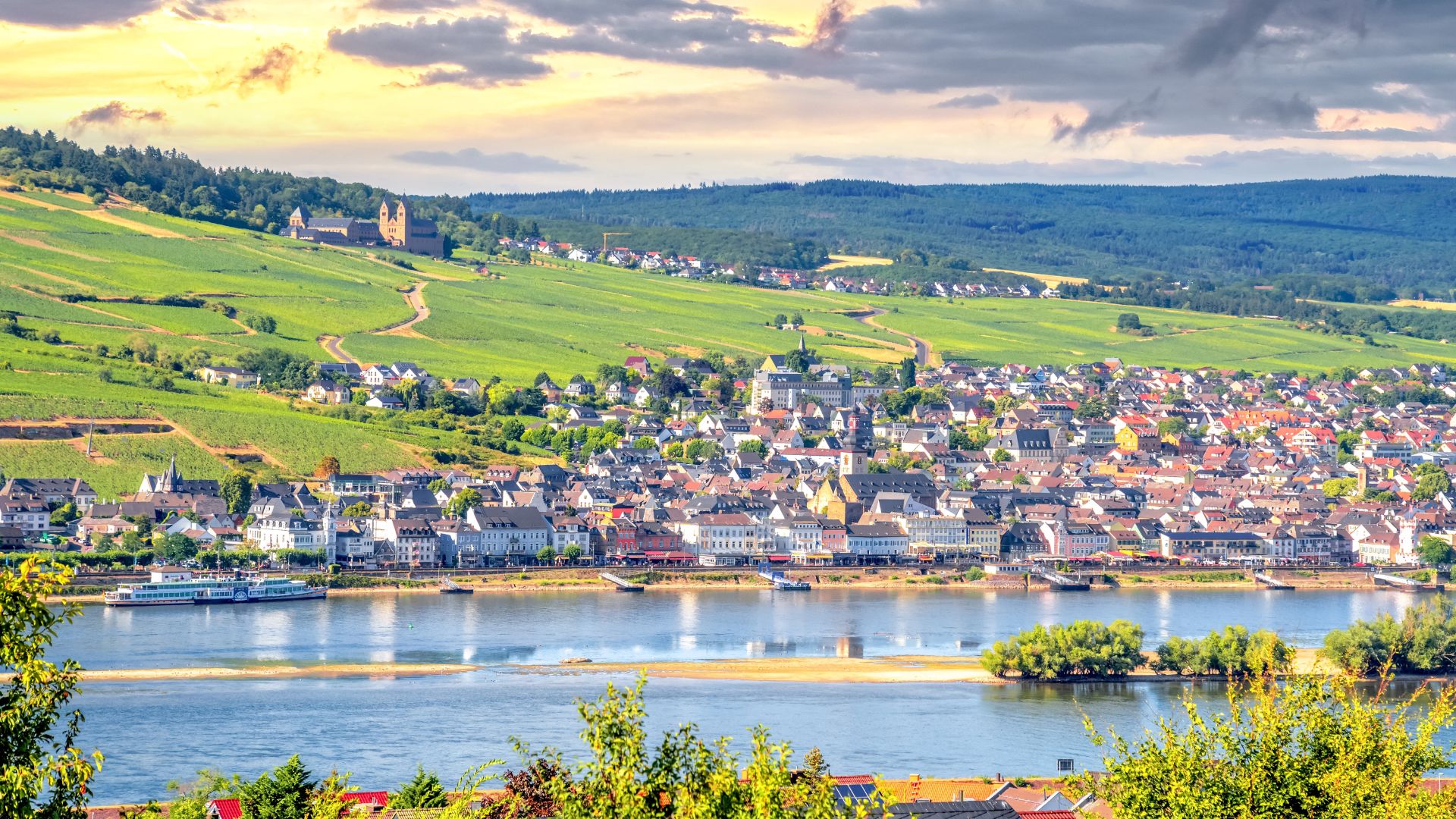
Rüdesheim am Rhein in Hesse sits at the northern entrance of the Rhine Gorge, the most scenic stretch of the Rhine Valley and a UNESCO World Heritage landscape. The town is compact, cheerful, and unashamedly focused on wine tourism, with the famous Drosselgasse alley lined with wine taverns offering Rheingau Riesling to visitors throughout the year.
The real highlight of Rüdesheim is the Rhine Gorge itself, which stretches 65 kilometres upstream to Koblenz. Dramatic slate cliffs, medieval castles on rocky outcrops, terraced Riesling vineyards, and the famous Lorelei rock create one of the most iconic river landscapes in all of Europe, best experienced from the water.
A cable car rises above Rüdesheim to the Niederwald Monument, a massive 19th-century allegorical statue commemorating the unification of Germany in 1871. From the monument, a vineyard trail winds along the ridge offering extraordinary views down over Rüdesheim, the Rhine, and the beginning of the famous gorge below.
Across the Rhine from Rüdesheim lies Bingen, from where passenger ferries and Rhine cruises operate regularly throughout the summer season. The combination of boat trips, wine tastings, cable car rides, and vineyard walks makes Rüdesheim one of the most activity-rich day trip destinations anywhere in the Frankfurt region.
Things to do in Rüdesheim:
- Take the cable car up to the Niederwald Monument for panoramic views over Rüdesheim and the Rhine Gorge
- Board a Rhine river cruise from Rüdesheim to Koblenz and see the gorge, castles, and Lorelei rock from the water
- Walk the Drosselgasse alley and taste local Rheingau Riesling at one of its traditional wine taverns
- Hike the vineyard ridge trail from the Niederwald Monument toward Assmannshausen through the vines
- Visit the Siegfried Mechanical Music Cabinet museum, a wonderfully eccentric collection of self-playing instruments
How to get there: Direct trains from Frankfurt Hauptbahnhof to Rüdesheim am Rhein take approximately 1 hour.
Key Travel Advice for Every Explorer
Travel becomes smoother and far more enjoyable when you plan ahead and know what to expect. From transport choices to local customs, a few smart decisions can save time, reduce stress, and enhance your overall experience.
These practical travel tips are designed to help you navigate confidently, whether you are exploring bustling cities or quiet countryside destinations. With thoughtful preparation, you can focus less on logistics and more on meaningful moments.
| Category | Details |
| Best Travel Pass | Deutschlandticket at €49/month covers all regional trains and buses across Germany |
| Booking Trains | Book ICE intercity tickets on the Deutsche Bahn app 6 weeks ahead for cheapest fares |
| Start Times | Leave by 8am for popular destinations like Neuschwanstein and Rothenburg to beat the crowds |
| Accommodation | Not needed for day trips but consider an overnight stay to explore destinations more fully |
| Food & Drink | Pack a picnic for nature destinations like Saxon Switzerland and the Spreewald to save money |
| Best Season | May to September offers the best weather for outdoor day trips across most of Germany |
Takeaways from Germany’s Best Day Trip Destinations
Germany is a country where extraordinary day trips are available from virtually every city and town. The rail network makes distances feel short, the landscapes are astonishingly varied, and the depth of history and culture means that no two day trips ever feel remotely similar to one another.
Whether you choose the Alpine drama of the Zugspitze, the medieval perfection of Rothenburg, the waterway silence of the Spreewald, or the Baroque grandeur of Würzburg, every destination on this list offers a day that will stay with you long after you return home.
The best advice is simply to start. Pick one destination, buy your train ticket, set your alarm for an early departure, and let Germany do the rest. A country this rich in beauty, history, and character rarely disappoints, and its best day trips prove that point beyond any doubt.
Hi, I’m Preeti Negi, a content writer who loves mixing creativity with smart strategy.
I have 3 years of experience writing about travel, digital marketing, and study abroad topics. I create content that is easy to read, engaging, and designed to connect with people while also performing well on Google.
When I’m not writing, I enjoy exploring new trends, learning new things, and thinking about fresh ideas for my next piece.
