

Germany is the world’s most celebrated beer nation, and ordering a beer here is never simply a transaction. It is a cultural ritual governed by regional customs, specific vocabulary, and unwritten rules that locals follow instinctively throughout their entire drinking lives.
The visitor who understands these rules does not merely order a drink more efficiently. They signal respect for one of the world’s oldest and most seriously observed food and drink traditions, earning a different and genuinely warmer reception from bartenders and brewing staff throughout Germany.
German beer culture varies dramatically between regions, between cities, and between individual establishments in ways that make a single universal approach to ordering entirely inadequate. What is correct in a Munich beer hall is wrong in a Cologne brewpub and completely different again in a Hamburg bar.
This complete guide provides everything needed to order beer in Germany with genuine local confidence — the vocabulary, the customs, the glassware knowledge, the tipping conventions, and the regional etiquette that transforms a beer order from a tourist transaction into a genuine cultural participation throughout Germany.
Please note that this article contains affiliate links. Learn more about it on our Disclosure page. We use ads to support our small business – we hope you don’t mind them too much.
Understanding German Beer Culture Before You Order
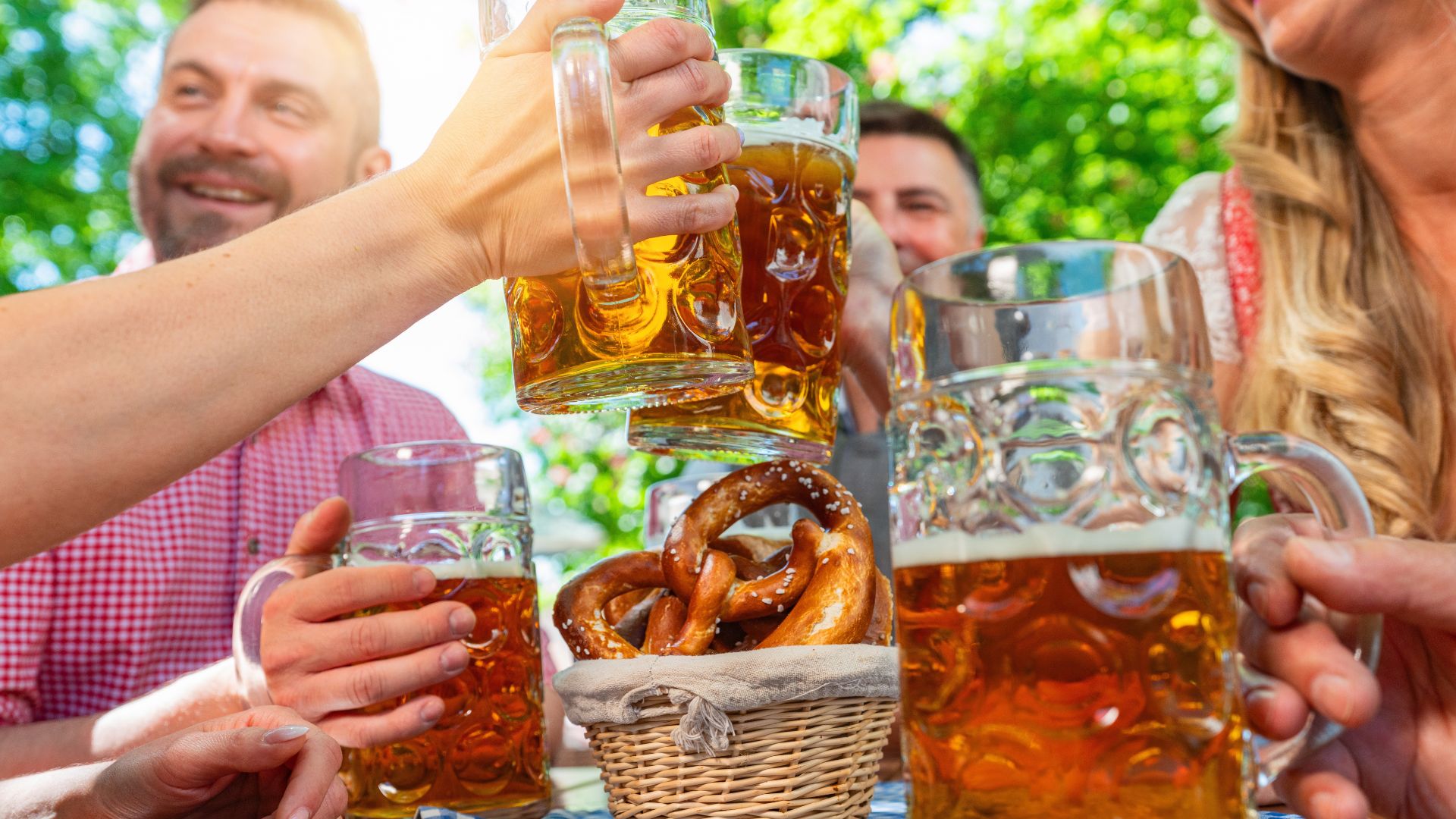
German beer culture is governed by a sense of regional identity and local pride so fierce that ordering the wrong beer in the wrong city is not merely a mistake but a genuine social statement about your level of cultural awareness throughout the country.
In Cologne, ordering anything other than Kölsch in a traditional Brauhaus is considered at best eccentric and at worst mildly offensive. In Düsseldorf, the corresponding loyalty to Altbier is equally absolute and equally seriously observed by local drinkers throughout the city.
Munich’s beer hall culture operates on entirely different principles, where the size of the vessel, the specific brewery whose beer you order, and your familiarity with the serving staff all carry social meaning that the uninitiated visitor cannot immediately read throughout the experience.
Understanding that German beer culture is intensely local and intensely proud is the single most important piece of knowledge any visitor can carry into any German drinking establishment before ordering their very first beer throughout the country.
Regional beer loyalty map:
| City | Local Beer Style | Loyalty Level | Ordering the Wrong Beer |
| Cologne | Kölsch | Absolute | Considered eccentric at minimum |
| Düsseldorf | Altbier | Absolute | Causes genuine local displeasure |
| Munich | Helles or Weissbier | Very strong | Acceptable to order either style |
| Hamburg | Pilsner | Strong | Other styles available but unusual |
| Berlin | Berliner Pilsner | Moderate | More relaxed beer culture overall |
| Bamberg | Rauchbier | Very strong | Smoked beer is the expected choice |
| Frankfurt | Apfelwein preferred | Beer culture secondary | Wine and cider dominate here |
Essential German Beer Vocabulary
Learning the correct German vocabulary for ordering beer is not merely a convenience — it is a demonstration of respect that German bar staff and brewery workers notice and genuinely appreciate throughout every region of the country.
Core beer ordering vocabulary:
| German | Pronunciation | English Meaning | When to Use |
| Ein Bier bitte | Ein Beer bit-teh | One beer please | Basic universal order |
| Noch ein bitte | Noch ein bit-teh | Another one please | Repeat order |
| Die Karte bitte | Dee Kar-teh bit-teh | The menu please | Requesting beer list |
| Was haben Sie vom Fass? | Vas hah-ben zee fom Fas | What do you have on draught? | Asking draught options |
| Prost | Prohst | Cheers | Universal toast |
| Zum Wohl | Tsoom Vohl | To your health | More formal toast |
| Zahlen bitte | Tsah-len bit-teh | Bill please | Requesting the check |
| Danke | Dank-eh | Thank you | After receiving anything |
| Entschuldigung | Ent-shool-dee-goong | Excuse me | Getting attention politely |
| Wie viel kostet das? | Vee feel kos-tet das | How much does that cost? | Asking the price |
The word bitte is the single most important word in any German ordering situation. It means please, but carries a softening, polite quality that Germans expect in every transaction throughout their daily service interactions in any establishment.
Saying bitte at the end of every order, every request, and every question is not merely politeness — it is the basic social currency of German bar and restaurant culture, and its absence is noticed and registered throughout every interaction.
German Beer Glass Sizes and How to Order Them
Understanding beer glass sizes and their correct names is essential for ordering with confidence throughout Germany. The size terminology varies significantly between regions and between beer styles, and ordering the wrong size using the wrong word reveals the tourist immediately.
Beer glass sizes by region:
| Size | Volume | German Name | Region | Beer Style |
| Small glass | 200ml | Stange | Cologne | Kölsch only |
| Small glass | 200ml | Becher | Düsseldorf | Altbier only |
| Standard glass | 300ml | Kleines | Various | General use |
| Standard glass | 500ml | Halbes | Various | Half litre |
| Large glass | 500ml | Helles Glas | Munich | Standard Munich order |
| Large mass | 1 litre | Masskrug or Mass | Bavaria | Oktoberfest and beer halls |
| Wheat glass | 500ml | Weizenglas | Nationwide | Weissbier only |
| Pilsner glass | 300ml | Pilsglas | Northern Germany | Pilsner styles |
The Masskrug, the iconic one-litre ceramic or glass vessel of Bavarian beer hall culture, is the most celebrated beer vessel in all of Germany. Ordering a Mass in a Munich beer hall is the most confident and most locally appropriate ordering choice available to any visitor throughout Bavaria.
Never ask for a pint in Germany, as this Anglo-American measurement is neither used nor understood in German beer culture. The correct request is always by volume in metric units or by the vessel name specific to the regional beer style being ordered throughout the establishment.
How to Order in a Munich Beer Hall
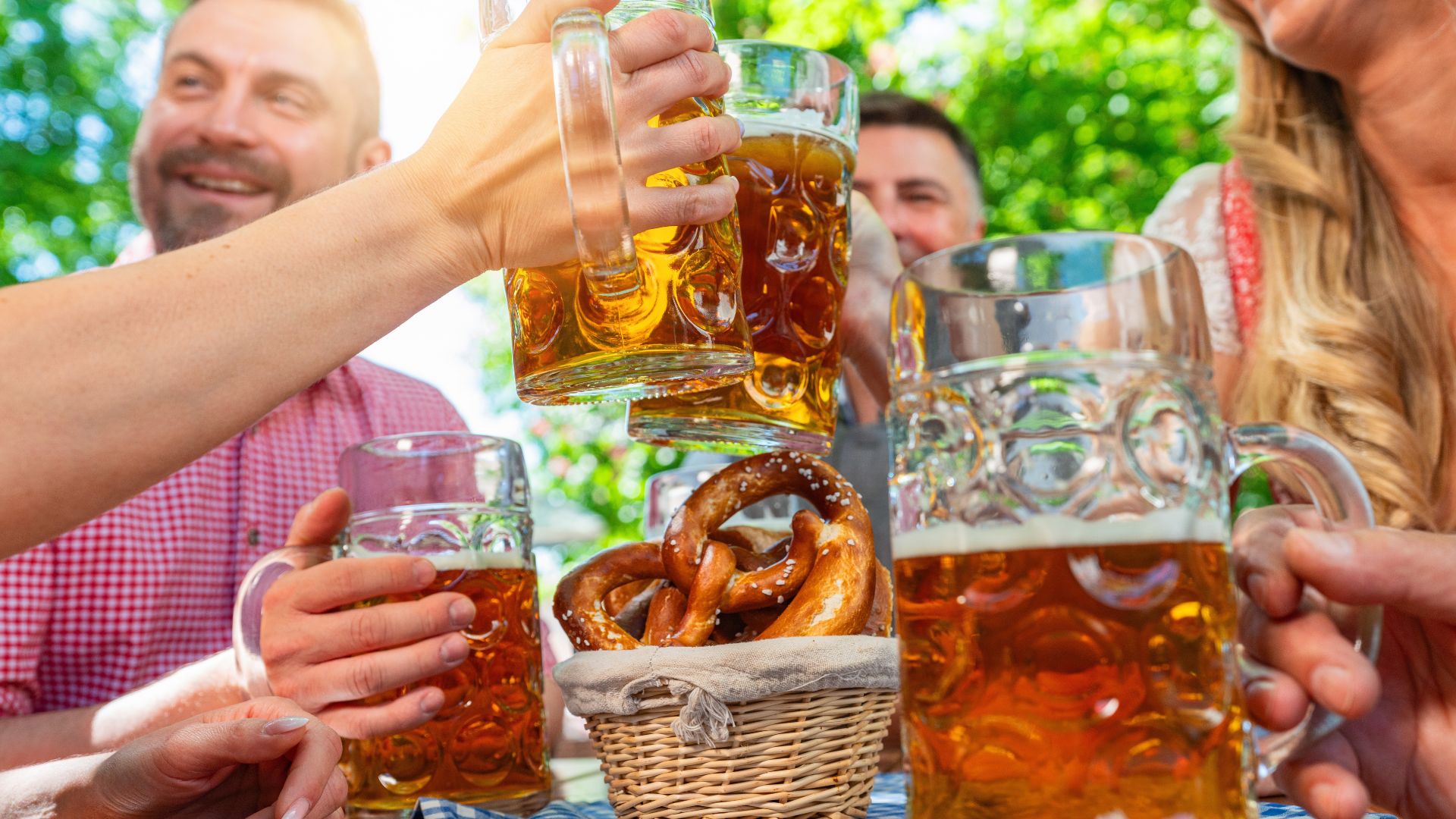
The Munich beer hall, whether the legendary Hofbräuhaus, the magnificent Augustiner Keller, or any of the dozens of traditional Wirtshäuser throughout the Bavarian capital, operates on protocols that differ significantly from any other beer-drinking establishment in the world.
Seating in a traditional Munich beer hall operates on the principle of Stammtisch reservation for regular customers and open communal seating for everyone else. Long communal tables are the norm, and sitting down next to strangers is not merely acceptable but genuinely expected and entirely normal throughout Bavaria.
The serving staff in a traditional Munich beer hall, usually formidable women in traditional Dirndl dress carrying up to ten Mass glasses simultaneously, do not wait for extended consideration from customers. When they arrive at your section of the table, a clear, immediate order is expected and appreciated throughout the interaction.
Making eye contact with your server and holding up the appropriate number of fingers while saying ein Mass bitte or zwei Mass bitte is the most efficient, most locally appropriate, and most respected method of ordering beer in a Munich beer hall throughout Bavaria.
Munich beer hall ordering etiquette step by step:
- Find a seat at a communal table — never reserve an empty table that belongs to regulars throughout
- Establish eye contact with your server when they pass — do not call out or wave from a distance
- Hold up fingers to indicate quantity and state your order clearly and immediately without hesitation
- Payment is typically collected immediately after serving in traditional beer halls throughout Munich
- Tipping is appreciated — round up to the nearest euro or add one to two euros per round
- The Masskrug stays on your table — do not carry it around the beer hall or take it outside
How to Order in a Cologne Kölsch Brauhaus
Ordering beer in a Cologne Kölsch Brauhaus is one of Germany’s most distinctive and most entertaining beer-ordering experiences, governed by customs so specific and so firmly observed that they have become an internationally recognised example of German regional beer culture throughout the world.
Kölsch is served exclusively in a Stange, a narrow cylindrical glass of exactly 200ml, which appears comically small to visitors accustomed to larger beer formats. This small size is entirely intentional — Kölsch is designed to be consumed fresh and cold before it warms, making the small format a quality decision rather than a stingy one.
The Köbes, the traditional Cologne waiter dressed in a blue apron and leather pouch, carries a round Kranz tray fitted with rings to hold multiple Stangen simultaneously and moves through the Brauhaus refilling glasses without being asked, using the automatic replacement system.
The critical custom to understand is that your glass will be automatically replaced with a fresh one as soon as it is empty or nearly empty, unless you specifically indicate that you do not want another. Place a beer mat on top of your empty glass to signal that you have finished for the round throughout the session.
Cologne Brauhaus ordering rules:
| Situation | Correct Action | Incorrect Action |
| Want another Kölsch | Do nothing — it arrives automatically | Waving or calling the Köbes unnecessarily |
| Do not want another | Leaving an empty glass without signalling | Asking for a bill in a restaurant |
| First order | Make eye contact with Köbes on arrival | Waiting passively without acknowledgement |
| Paying | Say zahlen bitte when ready | Asking for a bill as in a restaurant |
| Tipping | Round up or add one euro per visit | Leaving exactly the bill amount only |
How to Order in a Düsseldorf Altbier Brewpub
Düsseldorf’s old town Altstadt, known affectionately as the longest bar in the world for its extraordinary concentration of traditional brewpubs per square kilometre, operates on beer customs almost as specific as those of Cologne, though with a characteristically Düsseldorf directness throughout.
Altbier is served in a Becher, a small cylindrical glass of 200ml similar to the Cologne Stange but slightly wider and shorter, and the same automatic replacement convention applies in traditional Altbier establishments as in Cologne Kölsch Brauhauses throughout the city.
The four traditional Düsseldorf Altbier brewpubs — Zum Uerige, Füchschen, Schumacher, and Schlüssel — each brew their own distinct version of Altbier, and each has its own slightly different serving customs, atmosphere, and regular clientele that makes visiting all four a genuinely rewarding comparative tasting experience.
Ordering in a Düsseldorf Altbier brewpub requires the same basic confidence and eye-contact communication as in Cologne, but Düsseldorfers are generally more relaxed about the ordering process and less precious about their customs than their Cologne rivals throughout the long-running friendly competition between the two cities.
Comparing Cologne and Düsseldorf beer ordering customs:
| Element | Cologne Kölsch | Düsseldorf Altbier |
| Glass name | Stange | Becher |
| Glass size | 200ml | 200ml |
| Auto-refill | Yes — strictly observed | Yes — but less rigidly |
| Stop signal | Beer mat on glass | Beer mat on glass |
| Server name | Köbes | No special title |
| Beer colour | Pale golden | Dark copper-brown |
| Atmosphere | Loud, festive | Direct, convivial |
How to Order at Oktoberfest
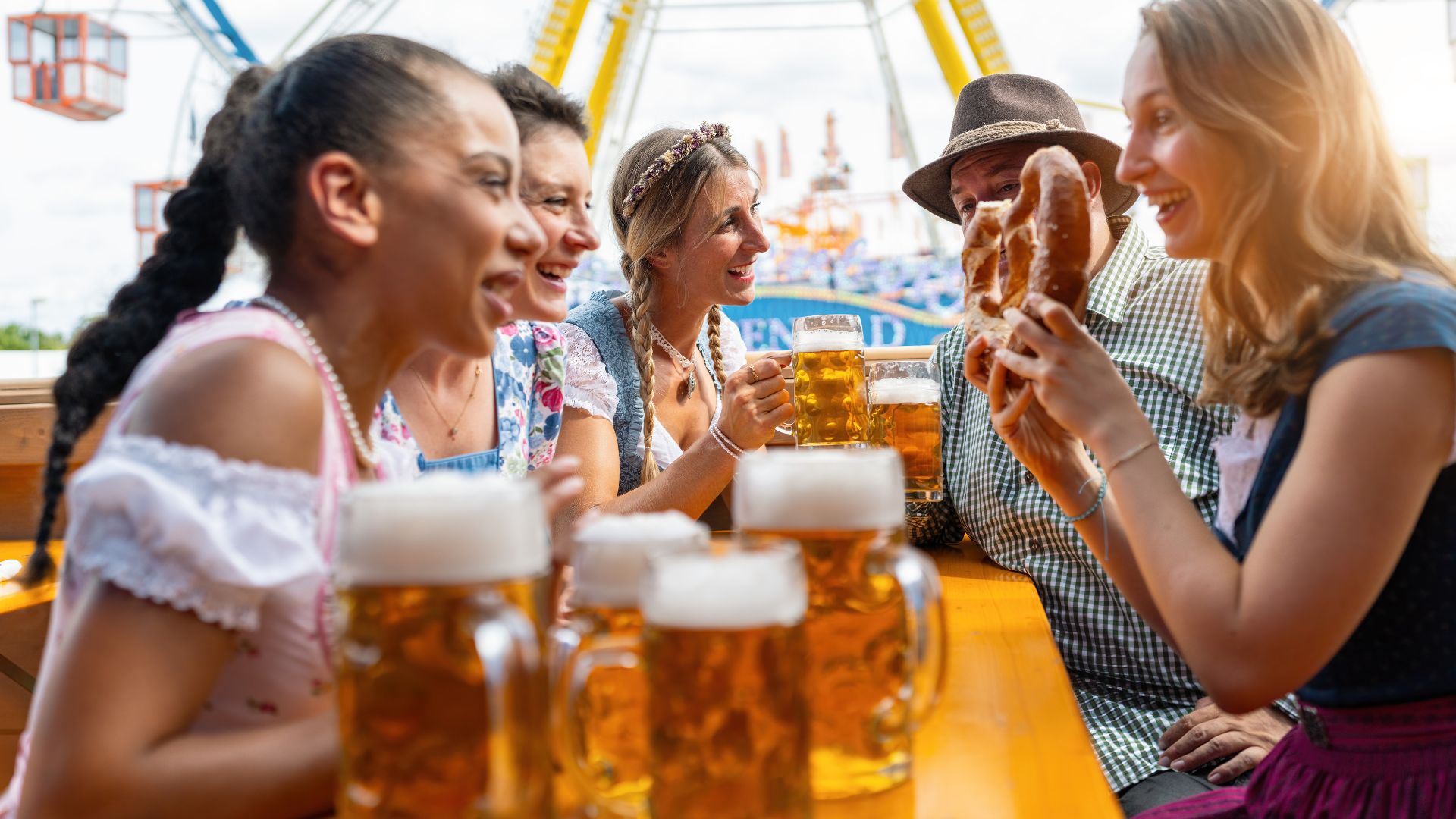
Ordering beer at Oktoberfest is one of the most exhilarating, most chaotic, and most culturally specific beer-ordering experiences available anywhere in the world and requires specific preparation that the uninitiated visitor who simply turns up and hopes for the best will not possess throughout their visit.
The official Oktoberfest is held on the Theresienwiese fairground in Munich from mid-September to the first Sunday in October, and the beer served inside the great festival tents is exclusively the six Munich brewery beers — Augustiner, Hacker-Pschorr, Hofbräu, Löwenbräu, Paulaner, and Spaten — in Mass glass format only.
Getting served inside a busy Oktoberfest tent without a table reservation requires establishing a physical presence at a table early, making assertive and confident eye contact with the circulating servers, and having cash ready in hand before the server reaches you throughout the interaction.
The server at Oktoberfest carries an almost impossible number of Mass glasses simultaneously and stops at tables only briefly — having your order clearly decided, your cash immediately accessible, and your fingers already raised to indicate quantity transforms a missed opportunity into a successful order throughout the festival.
Oktoberfest beer ordering survival guide:
- Book a table reservation months in advance for the most comfortable and most reliably served experience
- Arrive at the tent before eleven in the morning on weekdays for unreserved standing room throughout
- Have cash only — many traditional Oktoberfest tents do not accept card payment throughout the festival
- Order by the Mass — no smaller portions are available inside the official festival tents at any time
- The standard toast is Ozapft is on opening day and Prost throughout the rest of the festival
- Keep your Mass glass on the table — carrying it through the crowd risks spillage and complaints
The Toast — Prost and Its Correct Execution
The German toast of Prost is one of the most recognised words in international drinking culture, but its correct execution according to genuine German custom involves specific elements that many international visitors perform incorrectly throughout their German drinking experience.
When toasting with German beer, every person at the table must make eye contact with every other person individually during the clinking process. Avoiding eye contact during a German toast is considered disrespectful and is associated in German folklore with seven years of bad luck in intimate matters throughout the tradition.
The glasses must be clinked at a natural height — neither raised theatrically above the head nor thrust aggressively forward. The clink should be confident but gentle, making a satisfying sound without risking the structural integrity of either glass throughout the toast interaction.
After clinking, the correct sequence is to set the glass briefly on the table before drinking rather than drinking immediately from the raised position. This brief table-touching gesture acknowledges the table itself as the shared space of the gathering throughout the drinking occasion.
Complete Prost execution guide:
| Step | Action | Common Mistake |
| Raise glass | Lift to comfortable mid-chest height | Raising too high theatrically |
| Eye contact | Look each person in the eye individually | Looking away or at the glass |
| Clink | Confident, gentle contact | Aggressive thrust or timid tap |
| Table touch | Brief contact with table surface | Drinking immediately without touching down |
| Drink | First sip taken together | Drinking before everyone is ready |
| Response | Prost or Zum Wohl | Silence after clinking |
German Beer Types and How to Order Each One
Germany produces over 1,500 individual beer brands across more than 40 recognised beer styles, each with its own ordering vocabulary, its own appropriate glassware, and its own regional home territory throughout the country.
Complete ordering guide for Germany’s main beer styles:
| Beer Style | How to Order | Glass | Region | Flavour |
| Helles | Ein Helles bitte | Masskrug or Helles Glas | Munich | Soft, malty, gentle hop |
| Weissbier | Ein Weizen bitte | Weizenglas 500ml | Bavaria | Banana, clove, wheat |
| Kölsch | Ein Kölsch bitte | Stange 200ml | Cologne | Light, delicate, dry |
| Altbier | Ein Alt bitte | Becher 200ml | Düsseldorf | Malty, slightly bitter |
| Pilsner | Ein Pils bitte | Pilsglas 300-500ml | Northern Germany | Crisp, hoppy, dry |
| Märzen | Ein Märzen bitte | Masskrug | Bavaria | Rich, amber, malty |
| Bock | Ein Bock bitte | Tulip glass | Nationwide | Strong, malty, warming |
| Dunkles | Ein Dunkles bitte | Masskrug | Munich, Bavaria | Chocolate, roast, smooth |
| Rauchbier | Ein Rauchbier bitte | Standard Pint glass | Bamberg | Smoky, bacon, complex |
| Berliner Weisse | Ein Berliner Weisse bitte | Bowl glass | Berlin | Sour, wheat, refreshing |
Seasonal beers worth knowing:
- Starkbier in March during Munich’s Starkbierfest — order by saying ein Starkbier bitte throughout Bavaria
- Märzen from mid-September at Oktoberfest — this is the specific Oktoberfest beer style throughout Munich
- Maibock in May — a stronger spring bock ordered as ein Maibock bitte at traditional establishments
- Weihnachtsbier in December — Christmas beer available at all German breweries throughout the Advent season
Tipping and Paying for Beer in Germany
Paying for beer in Germany follows conventions that differ significantly from both American and British practice, and understanding these conventions prevents awkward situations at the end of an otherwise perfectly enjoyed drinking session throughout Germany.
German bar and beer hall staff do not receive the level of service charge built into prices that applies in many other countries, and tipping is genuinely appreciated rather than merely expected as automatic compensation throughout German drinking culture.
The correct method of tipping in Germany is not to leave cash on the table after paying, but to include the tip in the amount you hand over verbally when settling the bill. Say the total you wish to pay, including the tip, and the staff member returns the remainder throughout the transaction.
For example, if the bill is €13.50, handing over €20 and saying fünfzehn bitte, fifteen please, communicates that you want €5 back and are leaving €1.50 as a tip — a clear, clean transaction that German bar staff understand and appreciate throughout every establishment.
German tipping conventions for beer establishments:
| Establishment Type | Typical Tip | Method |
| Traditional beer hall | Round up + €1 per round | State the amount when paying |
| Craft beer bar | Round up to the nearest euro | 10-15% of the total bill |
| Oktoberfest tent | €1-2 per Mass ordered | Include when paying per round |
| Kölsch or Alt Brauhaus | State the amount when paying | State the amount when paying |
| Hotel bar | 10% of total | State amount when paying |
| Beer garden | Small rounding up | State amount or leave small change |
Beer Garden Etiquette — The Rules Every Visitor Must Know
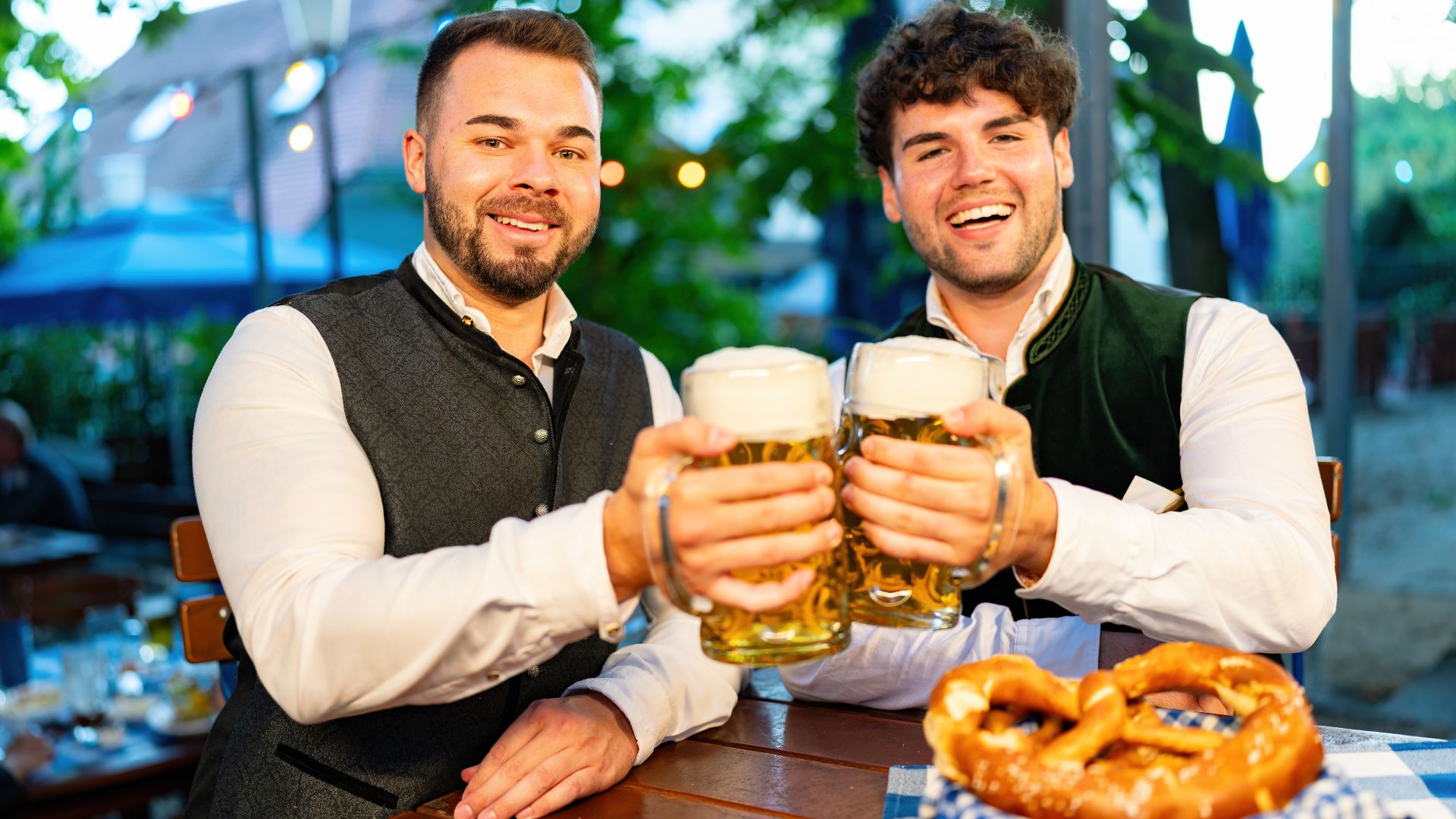
The Bavarian Biergarten is one of Germany’s most treasured and most specifically regulated social institutions, governed by customs established over two centuries that every visitor to Munich and Bavaria should understand before settling beneath the chestnut trees throughout summer.
The self-service section of a traditional Bavarian beer garden, where customers collect their own beer and food from a central service counter, follows different rules from the table-service section. Confusion between these two zones is one of the most common beer garden mistakes made by visitors throughout Bavaria.
Bringing your own food to a traditional Bavarian beer garden is entirely permitted and culturally accepted — a tradition established in the 19th century when brewery gardens encouraged customers to bring their own food while purchasing only drinks from the brewery throughout the session.
Tables with tablecloths are reserved for guests using the waiter service and must not be occupied by self-service customers. Uncovered wooden tables are for self-service customers who may bring their own food and are the correct seating choice for independent visitors throughout a traditional Bavarian beer garden.
Munich beer garden essential rules:
- Occupy only uncovered tables in the self-service area if bringing your own food throughout
- Bring your own Brotzeit food — this is a celebrated tradition not an imposition throughout Bavaria
- Return your empty Mass glass to the collection point — the glass deposit Pfand must be reclaimed
- No glass bottles are permitted inside most traditional beer gardens for safety reasons throughout
- Dogs are welcomed at most Munich beer gardens — Germany is exceptionally dog-friendly throughout
- Reservations for large groups are advisable at the most popular beer gardens throughout summer
Common Beer Ordering Mistakes to Avoid
Understanding what not to do when ordering beer in Germany is every bit as important as knowing the correct procedures, and the following mistakes are made regularly by international visitors whose otherwise excellent German beer experiences are slightly diminished throughout their visit.
Asking for a beer without specifying which beer at a specialist regional brewpub demonstrates a lack of preparation that regional brewing culture considers mildly disrespectful. In a Kölsch Brauhaus, a Bamberg Rauchbier brewery, or a Munich traditional Gasthof, knowing what you want before ordering is expected throughout.
Ordering Heineken, Budweiser, or any other non-German international beer brand in a traditional German brewery establishment is the single most effective way to mark yourself as a visitor entirely unfamiliar with local beer culture throughout Germany. It is not offensive but it is entirely unnecessary given the quality available locally.
Photographing your beer excessively before drinking it is increasingly tolerated by German bar staff but is still considered slightly eccentric behaviour in traditional establishments where beer is for drinking rather than documenting throughout the traditional German beer drinking experience.
Complete list of beer ordering mistakes to avoid:
- Ordering the wrong regional beer in a city with fierce local loyalty such as Cologne or Düsseldorf
- Asking for ice in your beer — this is considered an inexplicable request throughout all of Germany
- Refusing the automatic refill in a Kölsch Brauhaus without correctly placing a beer mat on the glass
- Ordering a round of different beers in a traditional regional brewpub that serves only one style
- Not making eye contact during the Prost toast — this is taken seriously throughout Germany
- Leaving cash on the table as a tip rather than stating the amount when paying your bill
Useful Phrases for Every Beer Situation
Having the right phrase ready for every situation that arises during a German beer-drinking session transforms the experience from a series of hesitant pantomime transactions into smooth and culturally respectful interactions throughout every establishment visited.
Complete phrase guide for German beer situations:
| Situation | German Phrase | Pronunciation |
| Ordering one beer | Ein Bier bitte | Ein Beer bit-teh |
| Ordering two beers | Zwei Bier bitte | Tsv-eye Beer bit-teh |
| Ordering a Mass | Eine Mass bitte | Eye-neh Mas bit-teh |
| Ordering Weissbier | Ein Weizen bitte | Ein V-eye-tsen bit-teh |
| Asking what’s on tap | Was haben Sie vom Fass? | Vas hah-ben zee fom Fas |
| Toasting | Prost! | Prohst |
| Health toast | Zum Wohl! | Tsoom Vohl |
| That was excellent | Das war ausgezeichnet | Das var ows-ge-tsikh-net |
| The same again | Das Gleiche nochmal | Das Gly-kheh nokh-mal |
| How much is it? | Was kostet das? | Vas kos-tet das |
| Paying | Zahlen bitte | Tsah-len bit-teh |
| Keep the change | Stimmt so | Shtimt zo |
| Very good beer | Sehr gutes Bier | Zair goo-tes Beer |
| I would like | Ich hätte gerne | Ikh het-teh gair-neh |
Frequently Asked Questions
Is it rude to order water with your beer in Germany? Ordering water alongside beer is entirely acceptable throughout Germany and many beer hall and restaurant establishments provide a small glass of still water alongside certain beer styles as a matter of course. Sparkling mineral water, called Sprudelwasser or Mineralwasser mit Kohlensäure, is the most commonly ordered water throughout Germany.
Can you order beer in English in Germany? Yes throughout most of Germany, particularly in cities and tourist areas. However, making the effort to use even basic German ordering phrases is noticed and genuinely appreciated by German bar staff, often resulting in warmer service, occasional conversation, and a more authentic overall experience throughout your visit.
What is the legal drinking age in Germany? Beer and wine may be legally consumed from the age of 16 in Germany. Spirits and mixed drinks containing spirits require a minimum age of 18. These rules are applied throughout Germany and German establishments take their legal obligations seriously, requesting identification from younger-looking customers throughout the country.
Is it acceptable to share a Mass at Oktoberfest? Technically possible but not culturally normal at Oktoberfest. The Mass is considered a single-person serving and the festive atmosphere encourages ordering individual beers throughout. Sharing is not prohibited but will mark you as unfamiliar with Oktoberfest culture to the observant locals and experienced festival attendees surrounding you.
What should I order if I am new to German beer? A Helles lager in Munich or a Kölsch in Cologne represents the most accessible and most universally appreciated entry point into German beer culture for any newcomer. Both styles are light, refreshing, and brilliantly made examples of their type that showcase German brewing excellence without challenging an inexperienced palate throughout the tasting experience.
Final Thoughts
Ordering beer in Germany like a local is ultimately about respect — respect for centuries of brewing tradition, respect for the fierce regional pride that makes German beer culture so diverse and so fascinating, and respect for the social rituals that transform a simple drink into a genuine cultural experience.
The visitor who learns even a few of these customs, masters a handful of the key phrases, and approaches each regional beer culture with genuine curiosity and genuine humility will be rewarded with a warmth and an authenticity of experience that no amount of money and no tourist infrastructure can manufacture throughout Germany.
German beer is not merely a drink. It is an expression of regional identity, agricultural heritage, brewing craftsmanship, and social tradition that has been refined over centuries into something that genuinely rewards the time and attention invested in understanding it throughout every glass.
Raise your Mass with confidence, make eye contact during the Prost, say bitte with every order, and discover in Germany’s extraordinary beer culture one of the world’s most rewarding and most generous drinking traditions available anywhere on the planet throughout the year.
Hi, I’m Preeti Negi, a content writer who loves mixing creativity with smart strategy.
I have 3 years of experience writing about travel, digital marketing, and study abroad topics. I create content that is easy to read, engaging, and designed to connect with people while also performing well on Google.
When I’m not writing, I enjoy exploring new trends, learning new things, and thinking about fresh ideas for my next piece.
